
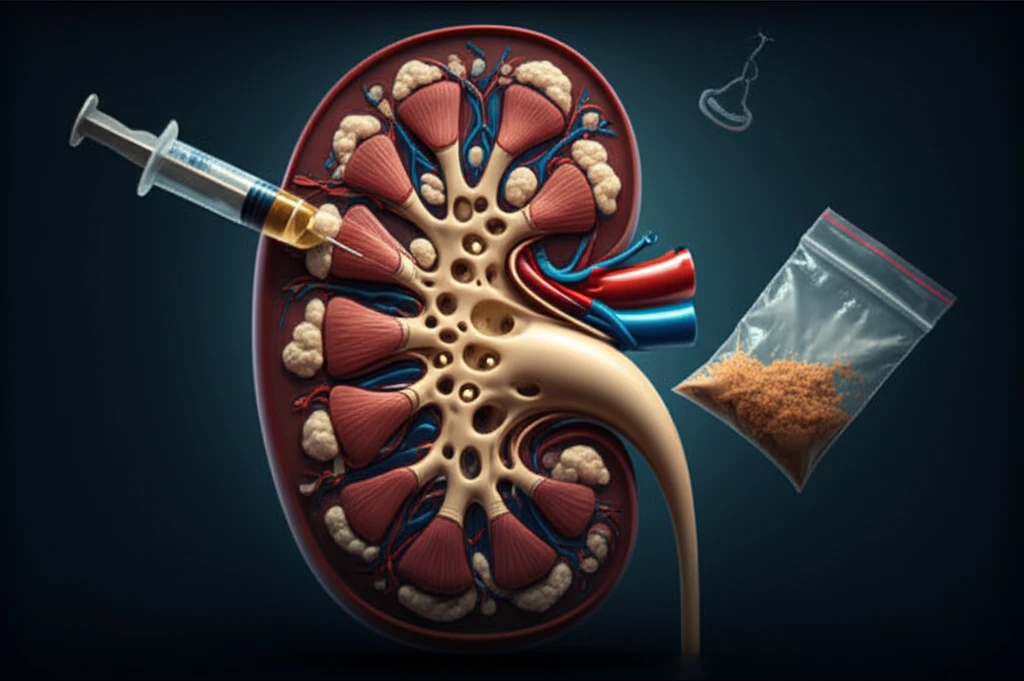
The Hidden Threat: How Heroin Use Fuels a Rare Kidney Disease

"Unveiling the Connection Between Opioid Addiction and Secondary Amyloidosis"
In the shadow of the opioid crisis, a lesser-known health threat looms: secondary amyloidosis, a rare but serious kidney disease, increasingly linked to heroin use and recurrent infections. This article delves into the connection, shedding light on the disease's causes, symptoms, and the urgent need for awareness and action.
Secondary amyloidosis is characterized by the buildup of abnormal protein deposits in the body's organs, primarily the kidneys. These deposits, known as amyloid fibrils, disrupt normal organ function, leading to a range of health complications. While the disease has various causes, emerging evidence points to a significant association with chronic inflammation, a common consequence of illicit drug use, particularly heroin.
This article aims to provide a comprehensive understanding of secondary amyloidosis in the context of the opioid crisis. We will explore the mechanisms by which heroin use contributes to the disease, examine the symptoms and diagnosis, and discuss the importance of early detection and treatment. This information is essential for both individuals at risk and healthcare professionals seeking to combat the disease's impact.
Heroin, Infection, and AA Amyloidosis
Reports link intravenous and subcutaneous heroin use with AA amyloidosis, a form of secondary amyloidosis. The most likely mechanism identified in one population is recurrent soft-tissue infection, which triggers hepatic production of serum amyloid A protein. CDC data resources include fatal and nonfatal overdose dashboards, clinical drug test data, and U.S. dispensing-rate maps, but the listed sources do not provide a specific national prevalence figure for heroin-associated AA amyloidosis.
A Cautious Diagnostic Approach
Diagnosing heroin-associated kidney amyloidosis generally requires clinicians to connect kidney findings with a history of opioid use and recurrent inflammation or infection. Because the available source material does not specify a single accepted diagnostic protocol or quantify its limitations, conclusions should be individualized and medically supervised. Proteinuria, reduced kidney function, and chronic inflammatory conditions may warrant further evaluation, but these findings alone do not establish the cause.
How Amyloidosis Was Understood
Amyloidosis refers to disorders in which misfolded proteins form persistent amyloid fibrils with substantial beta-sheet structure. These fibrils accumulate outside cells and can produce structural and functional tissue changes. Historical accounts also note that the term “amyloid” was introduced in the development of the field, while more recent reviews emphasize links to gene mutations, aging, and systemic disease.
Understanding Secondary Amyloidosis and Its Link to Heroin Use
Secondary amyloidosis, or AA amyloidosis, is a condition where abnormal proteins, specifically serum amyloid A protein (SAA), accumulate in various organs. This protein is produced in response to inflammation, and chronic inflammation triggers its overproduction and deposition in tissues. In the case of heroin users, recurrent infections, often stemming from injection drug use, create a continuous inflammatory state, fueling the development of AA amyloidosis.
- Recurrent Infections: Heroin users frequently experience skin infections (abscesses, cellulitis), bone infections (osteomyelitis), and bloodstream infections (bacteremia). These infections trigger the inflammatory response, leading to SAA production.
- Injection Practices: Unsterile injection practices can introduce bacteria into the bloodstream, causing infections and inflammation. The use of non-sterile needles and syringes, along with the injection of substances containing impurities, further elevates the risk.
- Impaired Immune Function: Heroin use can weaken the immune system, making users more susceptible to infections. This compromised immunity exacerbates the inflammatory response and accelerates amyloid formation.
- Chronic Inflammation: Heroin use is often associated with chronic inflammation, even in the absence of active infections. This sustained inflammatory state is a primary driver of SAA production and amyloid deposition.
Recent Evidence on Kidney Injury
Recent reports describe heightened risk of secondary amyloidosis affecting kidney function among people who use heroin subcutaneously. The 2025 Cureus report advises clinicians to maintain a high index of suspicion for AA amyloidosis when patients with long-term intravenous drug use present with proteinuria and acute kidney injury. A ResearchGate summary of the same report states that, after adjustment for age, race, sex, site, and biopsy year, any heroin use was associated with an estimated 170-times higher risk of kidney AA amyloidosis than no heroin use.
The Role of Chronic Skin Infection
The available evidence does not attribute AA renal amyloidosis simply to heroin exposure in isolation. One report associates the condition among heroin users with chronic suppurative skin infection caused by “skin popping.” It proposes that prolonged immune stimulation from exogenous antigens or repeated acute inflammatory episodes contributes to amyloid formation, highlighting an important limitation in overly simple causal explanations.
Comparing Possible Pathways
The available source material does not provide a direct comparative study of heroin-associated AA amyloidosis against other kidney diseases or causes of amyloidosis. Broadly, the condition can be understood as a secondary process in which ongoing inflammation may be more important than the drug exposure considered alone. Any comparison of risks, outcomes, or treatment effectiveness would require evidence beyond the sources supplied here.
Conclusion: A Call to Action
The rising prevalence of secondary amyloidosis among heroin users underscores the devastating consequences of the opioid crisis and the importance of proactive intervention. Raising awareness, promoting early detection, and expanding access to addiction treatment and harm reduction services are critical steps in addressing this emerging health threat. By understanding the link between heroin use, chronic infections, and secondary amyloidosis, we can work towards protecting individuals and communities from the insidious effects of this rare but serious disease.
A Multifactorial Kidney Threat
Taken together, the available material supports a cautious interpretation of heroin-associated AA amyloidosis as a kidney complication linked to chronic inflammation and recurrent infection. The evidence points toward an interaction among injection practices, soft-tissue or other infections, and sustained serum amyloid A production rather than a single isolated trigger. Because the supplied sources do not include expert consensus guidance, clinical decisions should not be inferred from these associations alone.
Improving Detection and Research
Future work may focus on recognizing proteinuric kidney disease earlier among people who inject drugs, particularly as severe injection-related wounds and substances such as xylazine receive increasing attention. A 2024 poster states that people who inject drugs with AA amyloidosis can progress rapidly to dialysis and have high mortality after diagnosis. Separately, a market forecast projects the amyloidosis therapeutics market will reach USD 6.34 billion by 2035 at an 8.18% compound annual growth rate, although that projection concerns the broader therapeutic market rather than heroin-associated disease specifically.
Inflammation Within the Opioid Crisis
The supplied sources place AA amyloidosis within a broader public-health context involving heroin use, recurrent infections, and chronic inflammation. Reports describe associations with intravenous or subcutaneous street-drug use, including heroin and cocaine, and note that affected patients may also have concurrent viral infections. A case summary involving a 49-year-old woman with polysubstance use disorder, recurrent cutaneous abscesses, spinal diskitis, and septic thrombophlebitis illustrates how multiple inflammatory conditions can converge around the kidney disease.
A Patient Behind the Diagnosis
A published case describes a woman actively using heroin and methamphetamine who presented with sepsis caused by osteomyelitis and an underrecognized complication of injection drug use. More generally, secondary amyloidosis involves deposition of fibrils formed from fragments of serum amyloid A, an acute-phase reactant, during chronic or recurring inflammation. The case underscores how severe infections and substance use can overlap before the kidney complication is recognized.