
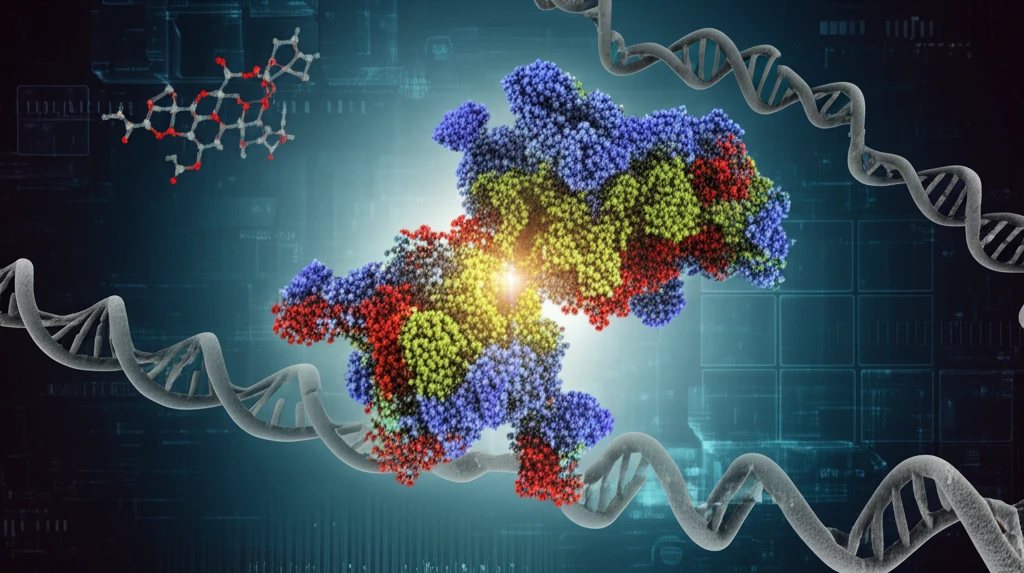
The Curious Case of Src Kinase: How Scientific Corrections Uphold Research Integrity

"Unraveling the story behind a critical correction in a molecular biology paper and what it means for scientific accountability."
In the ever-evolving world of scientific research, the pursuit of knowledge is often fraught with challenges. One such challenge is ensuring accuracy and integrity in published findings. Scientific literature, while aiming for perfection, is not immune to errors. When these errors come to light, the scientific community relies on a mechanism known as a corrigendum—a correction to a published paper—to set the record straight. This article delves into a specific case: a corrigendum published in the Journal of Molecular Biology concerning research on Src tyrosine kinase.
Src tyrosine kinase is a pivotal enzyme involved in numerous cellular processes, including cell growth, differentiation, and motility. Given its involvement in cancer and other diseases, understanding its structure and function is critical. The original paper, titled “A Catalytically-Disabled Double Mutant of Src Tyrosine Kinase Can Be Stabilized into an Active-Like Conformation,” explored how a modified version of this enzyme could be stabilized in an active-like state. However, an error in the attribution of authorship prompted a necessary correction.
This correction highlights not only the importance of accuracy but also the collaborative nature of scientific research. It's a story of unintended oversights and the proactive steps taken to rectify them, underscoring the values of transparency and accountability in the scientific community. As we dissect this corrigendum, we'll explore its implications and the broader context of scientific integrity.
A Signaling Rheostat, Not a Switch
Src family tyrosine kinases (SFKs) act as general modulators of immune cell signaling, serving both inhibitory and stimulatory functions in immunoreceptor and integrin signaling pathways. Researchers suggest these enzymes act as rheostats rather than simple on-off switches. The Src family has also been examined as a candidate protein tyrosine kinase responsible for triggering or mediating ischemic preconditioning. Structural databases such as KLIFS (Kinase-Ligand Interaction Fingerprints and Structures) catalog how kinase inhibitors interact with their targets, supporting the broader study of Src and related kinases.
Nine Members, One Modular Toolkit
Src family kinases comprise nine family members that share similar structure and function, and they play a critical role in cell adhesion, invasion, proliferation, survival, and angiogenesis during tumor development. As a subfamily of non-receptor tyrosine kinases, Src kinases are described as prototypical modular signaling proteins whose involvement spans diverse diseases. Because protein kinases can govern large-scale cellular changes in response to complex arrays of stimuli, much effort has been directed at uncovering the allosteric details of their regulation. Standard laboratory approaches, such as assaying protein kinase activity with radiolabeled ATP, have long supported these investigations.
From a Retrovirus to a Kinase Family
The history of Src begins with the discovery that the Src gene is responsible for the tumorigenicity of Rous sarcoma virus, marking it as one of the earliest cancer-linked genes. More recent work has identified a transient intermediate state in Src family kinases that enables rapid ADP release and processive phosphorylation without target dissociation, a state reported as essential for efficient cell migration and T-cell activation. Functional studies show Src kinase potentiates acetylcholine-induced currents, since a pp60 c-src inhibitory peptide reduced those currents while the tyrosine phosphatase inhibitor sodium orthovanadate augmented them. Industry projections suggest the proto-oncogene tyrosine protein kinase Src market is expected to grow at a CAGR of 13.4% during the forecast period from 2026 to 2033.
The Corrigendum: Setting the Record Straight
Published in March 2018, the corrigendum addressed an error in ascribing the author contributions. The original paper had inadvertently omitted Dr. Lalima G. Ahuja as a joint co-first author. According to the correction, this omission occurred because the authors lost track of the contributions during the revision process. The oversight was significant because Dr. Ahuja's contributions were substantial enough to warrant her inclusion as a joint co-first author alongside Yilin Meng.
- Acknowledgement of error in authorship.
- Official recognition of Dr. Lalima G. Ahuja as a joint co-first author.
- Expression of apology for the inconvenience caused.
- Reinforcement of collaborative integrity.
From Leukemia to Synaptic Strength
Recent research reveals that lymphocyte-specific Src family kinases are important clients of the HSP90 chaperone in acute lymphoblastic leukemia (ALL); treating patient-derived xenograft mice with the inhibitor NVP-BEP800 led to a decrease in ALL progression. In the nervous system, SFKs act as a molecular hub for the control of NMDA receptors, serving as a point of convergence for signaling pathways that enhance NMDAR activity and thereby regulate synaptic strength. Protein kinases more broadly are described as the molecular switches of the cell, controlling growth, division, communication, and survival by attaching phosphate groups to other proteins. Reviews continue to characterize Src kinases, a subfamily of non-receptor tyrosine kinases, as having multifaceted roles across diverse diseases.
Unexpected Positions in the Pathway
Src is a protein tyrosine kinase commonly activated downstream of transmembrane receptors and plays key roles in cell growth, migration, and survival signaling pathways. Yet its position in signaling cascades is not always straightforward: one report describes Src kinases acting downstream of Akt and being required for the transforming activity in question, an arrangement that complicates simple targeting logic. In leukemia research, Src-related protein tyrosine kinases were shown to be activated in leukemic cell lines, and inhibitors of such kinases were already in advanced clinical trials for breast and brain cancers. Studies on the therapeutic targeting of the Src-kinase Lyn in myeloid leukemia reflect ongoing attempts to translate these observations into effective treatments.
Comparing Kinase Networks Across Conditions
Comparative approaches to Src research often focus on how kinase networks respond differently across experimental conditions. In one study, network analyses of protein tyrosine kinase (PTK) and serine/threonine kinase (STK) substrates compared three treatment conditions against a vehicle control, with kinases and targets rendered as nodes colored by the median kinase statistic. Such diagram-based comparisons help researchers visualize which signaling routes are preferentially engaged under different stimuli.
The Broader Implications for Scientific Integrity
The corrigendum regarding the Src tyrosine kinase paper is a microcosm of the larger ecosystem of scientific research. It illustrates that errors can occur, even in high-impact journals, and that the scientific community has established mechanisms to address them. By correcting these errors transparently, scientists reinforce the public’s trust in the scientific process. Scientific integrity is more than just avoiding intentional misconduct; it includes being vigilant about accuracy, acknowledging mistakes, and promptly correcting them. This commitment to integrity ensures that scientific knowledge remains reliable and trustworthy, benefiting society as a whole.
One Kinase Within a Vast Family
Src sits within a much larger ecosystem of tyrosine kinases, which includes receptor tyrosine kinases such as anaplastic lymphoma kinase (ALK), an enzyme encoded by the ALK gene. In contrast to such receptors, Src is a non-receptor protein tyrosine kinase implicated in processes involved in cancer-induced bone pain, including cancer growth, osteoclastic bone degradation, and nociceptive signaling. Research has therefore investigated dasatinib, an oral Src family kinase inhibitor, for its ability to delay pain-related behavior and conserve bone in a rat model of cancer-induced bone pain. Together, these lines of work illustrate how understanding a single kinase's biology can translate into candidate therapies.
Targeting Src Beyond Cancer
Future directions for Src research extend well beyond oncology. One avenue centers on C-terminal Src Kinase-homologous Kinase (CHK), described as a unique inhibitor capable of inactivating multiple active conformations of Src family tyrosine kinases. In the auditory system, Src kinase is reported to represent a promising target for relieving noise-induced disruption of adherens junctions and hyperpermeability of the blood-labyrinth barrier. Researchers are also exploring a Src protein tyrosine kinase inhibitor to reduce cisplatin ototoxicity while preserving the drug's antitumor effect.
From Platelets to Blood Flukes
Src kinase operates across a remarkable range of biological systems. Integrin-bound Src mediates αIIbβ3 outside-in signaling to the cytoskeleton, a pathway required for platelet adhesion and thrombus formation, with Src activation initiated by phosphorylation of Tyr-418 at lamellipodia. The family's reach extends even to parasitic flatworms, where the Src kinase SmTK3 is involved in vitelline cell proliferation and the Venus kinase receptor SmVKR1 belongs to a novel family of receptor tyrosine kinases. Translating this breadth into treatments faces systemic hurdles, as the Src market contends with challenges including supply chain disruptions, cost volatility, and regulatory compliance pressures. Pharmacological tools such as potent c-SRC inhibitors that also inhibit DDR2, BTK, and Syk highlight the selectivity questions that accompany Src-targeted drug development.
Trials, Tumors, and Stroke Recovery
In the clinic-facing arena, kinase inhibitors targeting Src are in various stages of development and clinical trials, with the goal of blocking Src's activity to halt tumor growth and metastasis. However, results have been mixed: in a study of seven non-small cell lung cancer cell lines, treatment with dasatinib completely abrogated Src phosphorylation in the majority of lines tested, yet had only modest effects on cell proliferation and survival. Beyond oncology, Src kinase signaling has been implicated in stroke recovery, where Src-mediated sensitization of the contractile machinery to intracellular calcium causes hypercontractility of vascular smooth muscle cells, elevated cerebrovascular tone, and impaired reperfusion after stroke. These findings underscore both the promise and the limits of targeting Src in real patients.