
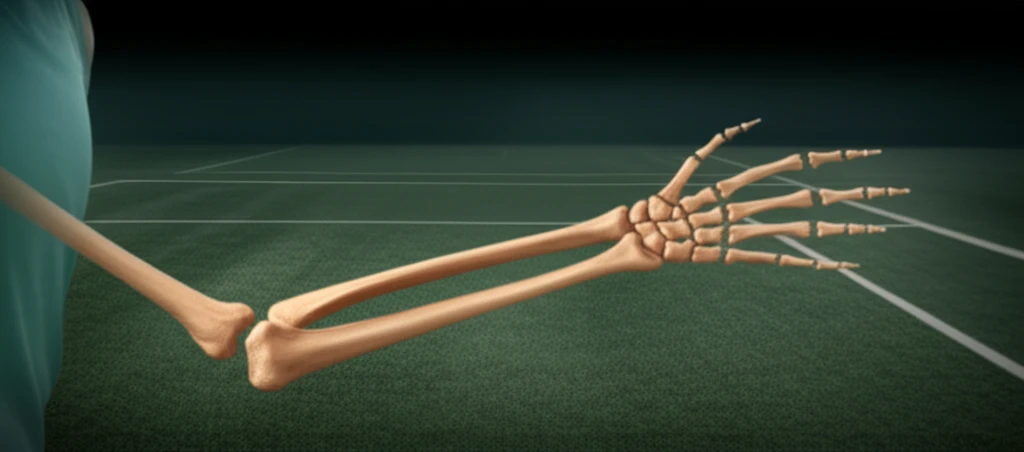
Tennis Elbow Myths Busted: The Truth About Arm Asymmetry & Bone Health

"Is your tennis swing setting you up for injury? Uncover the science behind arm strength, bone density, and how to balance your game for a lifetime of play."
Tennis, a sport celebrated for its blend of strategy, agility, and power, often demands more from one side of the body than the other. This inherent asymmetry, while crucial for generating forceful serves and precise volleys, can lead to imbalances that affect bone health and overall athletic longevity. Understanding how this uneven strain impacts the body is essential for players of all levels.
The repetitive nature of tennis strokes, where one arm consistently bears the brunt of the action, can cause significant differences in bone mineral content (BMC) between the dominant and non-dominant arms. This adaptation, governed by Wolff's Law, suggests that bone tissue responds to mechanical stress by increasing mass and density in the areas subjected to higher loads. While this adaptation can enhance performance, it also raises questions about potential long-term risks associated with such pronounced asymmetry.
Recent research has delved into the extent of these bone mineral content asymmetries in tennis players, examining factors like gender, age, and starting age to understand their influence on bone adaptation. By exploring the science behind these imbalances, athletes and coaches can make informed decisions about training regimens, injury prevention strategies, and overall health management.
Why Does Tennis Create Arm Imbalances?
The unilateral nature of tennis inherently favors one side of the body, leading to significant strength and bone density differences between the dominant and non-dominant arms. Each powerful serve and forehand swing places substantial stress on the dominant arm, prompting adaptive changes in bone structure and muscle mass. This process, known as lateralization, is a natural consequence of the sport’s demands.
- Increased Bone Density: The dominant arm experiences higher bone mineral content due to repetitive stress.
- Muscle Mass Adaptation: Muscles in the dominant arm adapt to generate more power and withstand greater forces.
- Risk of Imbalance: Significant asymmetry can lead to injury if not managed properly through balanced training.
What's Next for Tennis Players and Bone Health?
While this study highlights the impact of sex, chronological age and starting age on upper extremity asymmetry, one important variable remains: training volume. More studies are required to fully understand the effects of intensity and repetition of playing tennis, to better prepare athletes for tennis playing as they get older.