
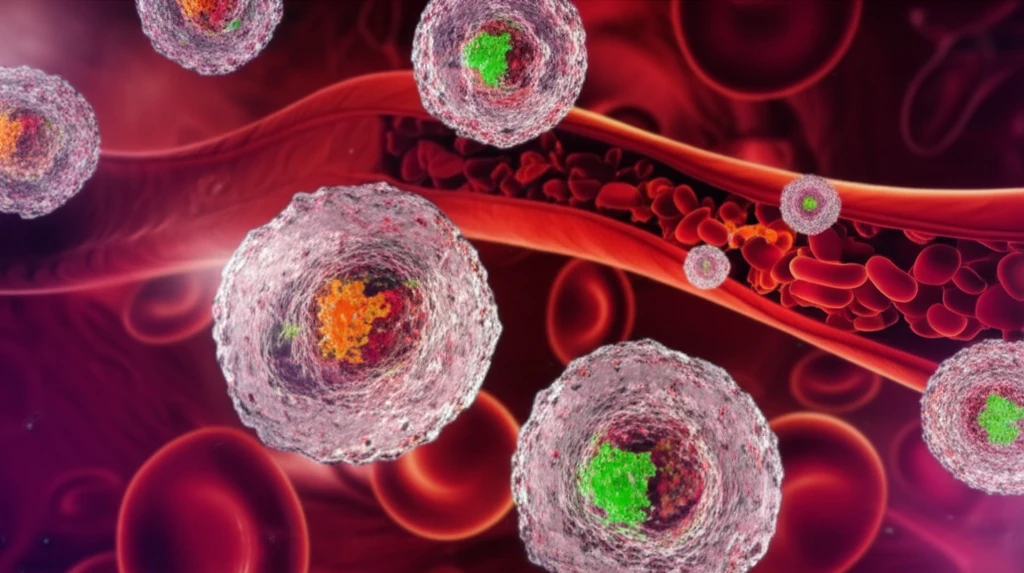
Microscopic view of extracellular vesicles amidst inflamed blood vessels

Sepsis-Induced Coagulopathy: How Extracellular Vesicles Turn Messengers into Mayhem

"Unlocking the role of extracellular vesicles (EVs) in the progression of sepsis-induced coagulopathy and its potential impact on therapeutic interventions."


Sepsis, a life-threatening condition arising from the body's overwhelming response to an infection, often leads to a dangerous complication known as sepsis-induced coagulopathy. This condition disrupts the normal blood clotting process, causing a cascade of events that can damage organs and increase the risk of death. For years, researchers have been working tirelessly to unravel the complexities of this process, seeking new ways to diagnose, prevent, and treat it effectively.

In recent years, a spotlight has been cast on tiny cellular structures called extracellular vesicles (EVs). These vesicles, once dismissed as mere cellular debris, are now recognized as key players in intercellular communication, acting as messengers that carry proteins, lipids, and genetic material between cells. The surge of research into EVs has captivated clinicians and researchers alike, offering new insights into the mechanisms driving coagulation disorders in sepsis.

This article aims to provide an updated overview of the latest knowledge on EVs and their involvement in sepsis-induced coagulopathy. We'll explore the structure and function of these vesicles, their pro-inflammatory and procoagulant properties, and their impact on the development of coagulation disorders and organ dysfunction. Furthermore, we'll discuss current challenges and future directions in this rapidly evolving field.

Extracellular Vesicles: Structure and Function

Microscopic view of extracellular vesicles amidst inflamed blood vessels

Extracellular vesicles (EVs) are a diverse group of membrane-enclosed vesicles secreted by cells. These vesicles are categorized based on their size and biogenesis, with key types including apoptotic bodies, exosomes, and microvesicles. Apoptotic bodies, the largest EVs (0.5-5 μm), are formed during cellular disassembly, while exosomes (0.03-0.15 μm) originate from endocytosis and exocytosis. Microvesicles (0.1-5 μm) bud directly from the plasma membrane.

Despite their different origins, EVs share a common structure: a lipid bilayer membrane enclosing various cellular components, including proteins, lipids, and nucleic acids. However, their characteristics vary depending on their surface structures and interior contents, reflecting the functions of their parent cells. Numerous studies have demonstrated elevated levels of circulating EVs in sepsis, exhibiting both pro-inflammatory and procoagulant properties.

Here’s a quick breakdown of different EVs:
  • Apoptotic Bodies: Large vesicles released during cell death.
  • Exosomes: Small vesicles involved in cell-to-cell communication.
  • Microvesicles: Shed from the plasma membrane.
The ability of EVs to transport proteins, lipids, and nucleotides between cells has garnered significant attention across various medical disciplines, including immunology, cancer research, and cardiovascular diseases. By transferring receptors, organelles, messenger RNA, and micro RNA, EVs can spread the characteristics of their parent cells to distant targets. In sepsis, procoagulant EVs play a crucial role in activating coagulation, contributing to the development of disseminated intravascular coagulation (DIC).

The Future of EVs in Sepsis Research

Recent studies have successfully illuminated the significant roles of EVs in the progression of coagulation disorders in sepsis. However, further harmonization in terminology, methodology, and evaluation methods is required for future studies. Standardized assays are crucial for accurate and comparable results. As we continue to unravel the complexities of EV function, we may discover new therapeutic targets to combat sepsis-induced coagulopathy and improve patient outcomes.

About this Article -

This article was crafted using a human-AI hybrid and collaborative approach. AI assisted our team with initial drafting, research insights, identifying key questions, and image generation. Our human editors guided topic selection, defined the angle, structured the content, ensured factual accuracy and relevance, refined the tone, and conducted thorough editing to deliver helpful, high-quality information.See our About page for more information.

This article is based on research published under:

DOI-LINK: 10.1186/s40560-018-0340-6, Alternate LINK

Title: Role Of Extracellular Vesicles In The Development Of Sepsis-Induced Coagulopathy

Subject: Critical Care and Intensive Care Medicine

Journal: Journal of Intensive Care

Publisher: Springer Science and Business Media LLC

Authors: Toshiaki Iba, Hiroshi Ogura

Published: 2018-10-19

Everything You Need To Know

1

What is sepsis-induced coagulopathy, and why is it a concern?

Sepsis-induced coagulopathy is a dangerous complication that arises from sepsis. Sepsis itself is a life-threatening condition triggered by the body's overwhelming response to an infection. Sepsis-induced coagulopathy disrupts the normal blood clotting process, leading to potential organ damage and an increased risk of death. This condition is significant because it highlights how a systemic infection can drastically affect the body's coagulation system, leading to severe consequences. The implications of this condition include the need for rapid diagnosis and interventions to manage the coagulation abnormalities and prevent further organ damage.

2

What are extracellular vesicles (EVs), and what role do they play in the body?

Extracellular vesicles (EVs) are membrane-enclosed vesicles secreted by cells and are categorized based on their size and biogenesis. The main types are apoptotic bodies, exosomes, and microvesicles. Apoptotic bodies are formed during cellular disassembly, exosomes originate from endocytosis and exocytosis, and microvesicles bud directly from the plasma membrane. EVs are significant because they act as messengers, carrying proteins, lipids, and genetic material between cells. The implications of EVs in sepsis-induced coagulopathy include their ability to activate coagulation and contribute to disseminated intravascular coagulation (DIC).

3

How do extracellular vesicles (EVs) facilitate communication between cells, and why is this important?

Extracellular vesicles (EVs) transport various cellular components, including proteins, lipids, and nucleotides, between cells. This transport mechanism allows EVs to spread the characteristics of their parent cells to distant targets by transferring receptors, organelles, messenger RNA, and micro RNA. This is significant because it enables intercellular communication and influences various biological processes. In the context of sepsis, procoagulant EVs play a crucial role in activating coagulation, contributing to the development of disseminated intravascular coagulation (DIC).

4

What are the key differences between apoptotic bodies, exosomes, and microvesicles?

Apoptotic bodies are the largest extracellular vesicles (EVs), ranging in size from 0.5 to 5 μm, and are formed during cellular disassembly, which occurs during cell death. Exosomes are smaller EVs, ranging from 0.03 to 0.15 μm, and originate from endocytosis and exocytosis, playing a role in cell-to-cell communication. Microvesicles range from 0.1 to 5 μm and bud directly from the plasma membrane. Understanding the characteristics of each EV type helps researchers to differentiate the roles and impact of each EV type in sepsis-induced coagulopathy.

5

What are the future research directions for extracellular vesicles (EVs) in the context of sepsis, and why is standardization important?

Future research on extracellular vesicles (EVs) in sepsis requires further harmonization in terminology, methodology, and evaluation methods. Standardized assays are crucial for accurate and comparable results. This is important because it ensures that findings across different studies are consistent and reliable, facilitating the development of effective therapeutic strategies. By unraveling the complexities of EV function, there is potential to discover new therapeutic targets to combat sepsis-induced coagulopathy and improve patient outcomes. Future research could focus on how to modulate EV activity to prevent or treat the coagulation disorders associated with sepsis.

Newsletter Subscribe

Subscribe to get the latest articles and insights directly in your inbox.