
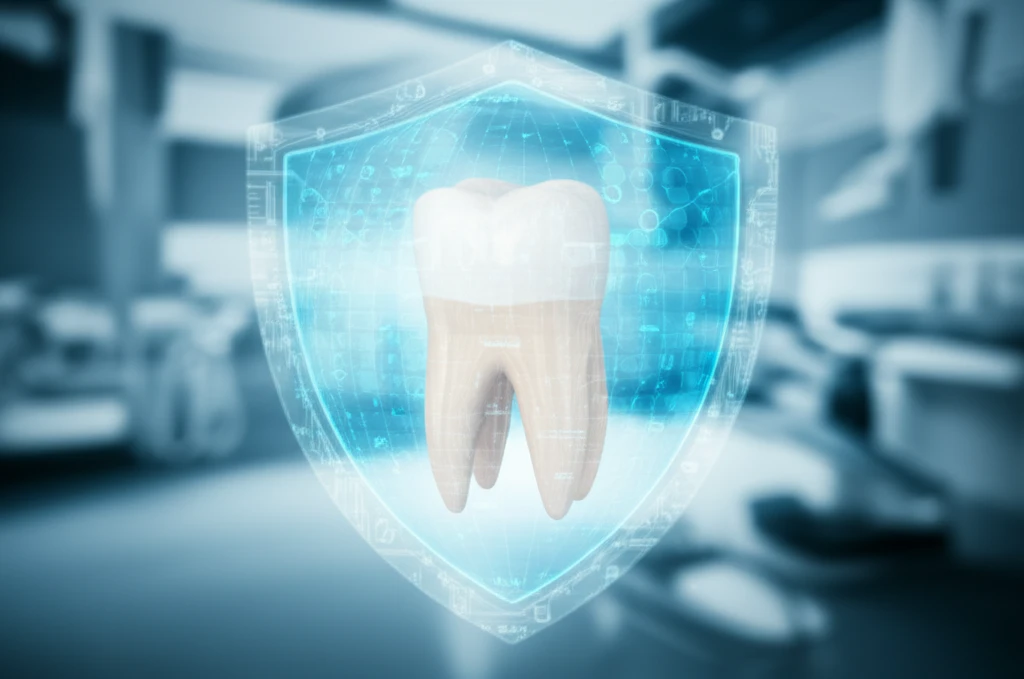
Illustration of alveolar ridge preservation with a protective shield.

Saving Smiles: The Ultimate Guide to Alveolar Ridge Preservation

"Learn how alveolar ridge preservation (ARP) can protect your jawbone after tooth extraction, ensuring a strong foundation for future dental implants and a confident smile."


Losing a tooth can feel like a minor setback, but it sets off a chain reaction that affects your jawbone. When a tooth is extracted, the surrounding bone, known as the alveolar ridge, starts to resorb or break down. This natural process can lead to bone loss, impacting your smile's appearance and making future dental implants more challenging.

That’s where alveolar ridge preservation (ARP) comes in. ARP involves techniques and materials used immediately after tooth extraction to maintain the bone volume and density of the alveolar ridge. Think of it as preparing the ground for planting a tree – ensuring a solid foundation for what comes next.

This guide explores the importance of ARP, how it works, and why it's essential for anyone considering dental implants or simply wanting to maintain their oral health. It is for people who need to take care of their mouth and smile.

Why Preserve Your Alveolar Ridge?

Illustration of alveolar ridge preservation with a protective shield.

The alveolar process, is a tooth-dependent tissue, and its architecture is oriented by the eruption axis, shape and eventual inclination of the teeth. When a tooth is removed, this bone no longer has a purpose, which can cause bone resorption which results in the potential for implant issues later. Here's why preserving the alveolar ridge is a smart move:

Maintaining bone volume and density after tooth extraction is key. ARP helps prevent the bone loss that naturally occurs, ensuring there's enough bone to support future dental implants. Without ARP, the alveolar ridge can shrink significantly, potentially requiring additional bone grafting procedures later on.

  • Ensuring proper implant placement: A strong alveolar ridge provides a stable base for dental implants, allowing for correct positioning and alignment. This is crucial for both the function and aesthetics of the implant.
  • Protecting soft tissues: The underlying bone structure supports the soft tissues, influencing the contour and appearance of your gums. ARP helps maintain natural gum contours for a more aesthetically pleasing result.
  • Reducing the need for additional procedures: By preserving the alveolar ridge, you can minimize the need for extensive bone grafting, saving time, money, and discomfort.
  • Supporting overall oral health: Preserving the alveolar ridge contributes to the long-term health and stability of your jawbone and surrounding tissues.
Implants placed in a site where the bone has been regenerated are acceptable and successful, and their success rates are comparable to those of implants placed in native bone. The decision to choose ARP comes down to your individual situation.

Making an Informed Decision

Alveolar ridge preservation is a proactive step towards safeguarding your oral health and ensuring a successful future with dental implants. Talk to your dentist or oral surgeon to determine if ARP is right for you. They can assess your individual needs and recommend the best course of action to protect your smile.

About this Article -

This article was crafted using a human-AI hybrid and collaborative approach. AI assisted our team with initial drafting, research insights, identifying key questions, and image generation. Our human editors guided topic selection, defined the angle, structured the content, ensured factual accuracy and relevance, refined the tone, and conducted thorough editing to deliver helpful, high-quality information.See our About page for more information.

Everything You Need To Know

1

What is alveolar ridge preservation (ARP), and why is it important after a tooth extraction?

Alveolar ridge preservation (ARP) refers to the techniques and materials used immediately following a tooth extraction to maintain the volume and density of the alveolar ridge. The alveolar ridge is the bone surrounding the tooth. It's important because when a tooth is removed, the alveolar ridge begins to resorb, or break down, potentially leading to bone loss, which can compromise the success of future dental implants and affect the aesthetics of your smile. ARP helps to prevent this bone loss, ensuring a solid foundation for any future dental work and preserving overall oral health.

2

How does alveolar ridge preservation (ARP) ensure proper implant placement?

A strong alveolar ridge, maintained through alveolar ridge preservation (ARP), provides a stable base for dental implants. This stability allows for correct positioning and alignment of the implant, which is crucial for both the function and the aesthetics of the implant. Without adequate bone volume, implant placement becomes more challenging, potentially requiring bone grafting procedures. ARP aims to avoid the need for more extensive procedures.

3

What are the benefits of undergoing alveolar ridge preservation (ARP) immediately after tooth extraction?

Undergoing alveolar ridge preservation (ARP) immediately after tooth extraction offers several key benefits. These include maintaining bone volume and density to support future dental implants, protecting the soft tissues surrounding the extraction site to preserve natural gum contours, reducing the need for additional and more extensive bone grafting procedures, and supporting overall long-term oral health and stability of the jawbone. This proactive approach helps to ensure a more predictable and successful outcome for any subsequent dental treatments.

4

Does alveolar ridge preservation (ARP) always guarantee a successful dental implant?

While alveolar ridge preservation (ARP) significantly improves the chances of a successful dental implant, it doesn't guarantee it. ARP creates a more favorable environment by maintaining bone volume and density, but other factors, such as the patient's overall health, oral hygiene practices, and the implant placement technique, also play crucial roles. Implants placed in regenerated bone after ARP have comparable success rates to those placed in native bone, but a consultation with a dentist or oral surgeon is necessary to assess individual needs and determine the best course of action. The bone created through ARP is acceptable and successful.

5

Why does the alveolar ridge resorb after a tooth extraction, and what are the long-term implications if alveolar ridge preservation (ARP) is not performed?

The alveolar ridge resorbs after tooth extraction because it is a tooth-dependent tissue, and its architecture is oriented by the presence of the tooth. When the tooth is removed, the bone no longer serves its original purpose, triggering bone resorption. If alveolar ridge preservation (ARP) is not performed, this bone loss can lead to a reduced bone volume, making future dental implant placement more challenging, potentially requiring additional bone grafting. It can also affect the aesthetics of the smile due to the collapse of the surrounding soft tissues, impacting overall oral health and function.

Newsletter Subscribe

Subscribe to get the latest articles and insights directly in your inbox.