
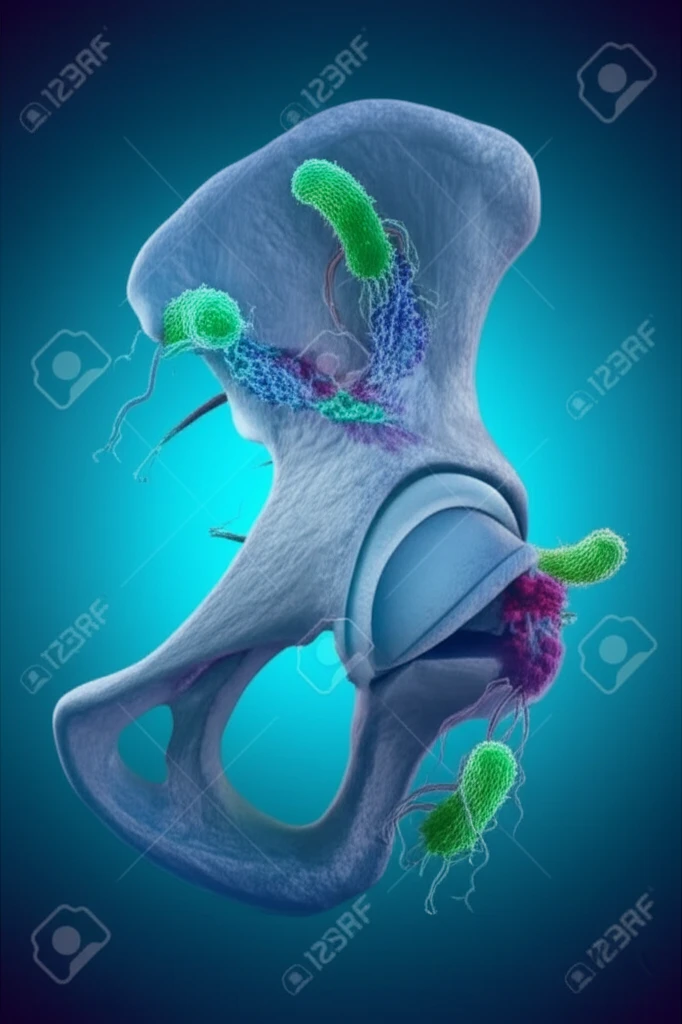
Sacroiliitis: When Back Pain Signals a Hidden Infection

"Unmasking the rare but serious link between common bacteria and joint inflammation."
Back pain is a common ailment, often dismissed as a result of poor posture, strenuous activity, or the everyday stresses of life. However, sometimes, persistent pain can signal a more serious underlying issue, such as infective sacroiliitis. This condition involves the inflammation of the sacroiliac joint—where your spine connects to your pelvis—due to an infection.
Infective sacroiliitis is a rare condition, affecting only a small percentage of individuals with septic arthritis. This diagnostic challenge mimics other musculoskeletal problems, delaying diagnosis and treatment. While gram-positive bacteria are frequently identified as the cause, this article sheds light on a less common culprit: Klebsiella pneumoniae.
This article aims to provide a comprehensive overview of infective sacroiliitis, detailing its causes, diagnosis, and treatment options. We will explore a unique case report that highlights Klebsiella pneumoniae as a rare cause of this condition, emphasizing the importance of considering infection as a potential factor in joint pain, particularly in individuals with diabetes.
A Rare, Easily Missed Infection
Infective sacroiliitis is described as rare, and its misleading clinical signs can delay diagnosis. A 2018 case report documented pyogenic sacroiliac joint septic arthritis caused by Klebsiella pneumoniae, which the authors said had not previously been reported in the literature. Separately, a 2025 analysis examined global burden and trends of K. pneumoniae infection from 1990 to 2021; its summary attributes a rise to factors including inappropriate antibiotic use, antimicrobial resistance, emerging virulent and multidrug-resistant strains, and an aging population.
Klebsiella pneumoniae: An Uncommon Culprit in Sacroiliac Joint Infection
While Staphylococcus aureus is often identified, Gram-negative organisms, such as Klebsiella pneumoniae, are less common causes. These cases are reported in individuals with compromised immune systems.
- Fever and general malaise
- Localized pain in the lower back, buttocks, or hip
- Pain aggravated by movement or weight-bearing
- Stiffness in the affected joint
Research on Klebsiella Infection
A 2021 case report describes a 49-year-old woman who presented with fever and progressive severe pain in her right hip area in a report about Klebsiella pneumoniae septic arthritis of the hip. A 2025 review characterizes K. pneumoniae as an opportunistic pathogen that causes varied infections, particularly in hospitals, and says growing antibiotic resistance has heightened its clinical significance and threatens patient outcomes. A review published in 2026 focuses on K. pneumoniae virulence factors, immune evasion strategies, and phenotypic plasticity, describing recent work on adaptations that help it thrive in different host tissues.
Evidence Is Limited to a First Case Report
The cited report describes infective sacroiliitis as rare and notes that misleading clinical signs often delay diagnosis. It presents pyogenic sacroiliac joint septic arthritis caused by Klebsiella pneumoniae as a first reported case, stating that this infection had not previously been reported in the literature. These sources therefore document a rare case rather than establishing how often K. pneumoniae causes sacroiliac joint infection.
Joint Infections Differ by Site and Evidence
The cited case report on sternoclavicular septic arthritis says infections of that joint account for less than 1% of all joint infections. A 2024 report describes infectious sacroiliitis as capable of causing severe morbidity if not promptly treated and identifies Staphylococcus aureus as a common pathogen. It discusses diagnostic and treatment challenges in an immunocompromised patient receiving chronic hydrocortisone therapy. A separate mouse study found that intravenous administration of 10(7) S. aureus LS-1 cells induced arthritis, osteitis, or both within three weeks in 80 to 90% of the mice.
The Path Ahead: Awareness, Early Detection, and Focused Treatment
In conclusion, sacroiliitis can be challenging to diagnose. Infection can be a possible cause, and should be considered in patients with coxofemoral pain, pubalgia, abdominal pain and psoitis. Increased awareness of the uncommon link between Klebsiella pneumoniae and sacroiliac joint infections is critical for enabling timely diagnosis and treatment.
Market Forecasts and Testing Trends
A market report projects the global Klebsiella pneumoniae infections market will rise from USD 1.26 billion in 2025 to USD 2.86 billion by 2033, at a stated CAGR of 7.8% for 2026–2033. A separate forecast projects the sacroiliitis market will grow from USD 0.88 billion in 2024 to USD 2.5 billion by 2035, at a CAGR of 9.93% during 2025–2035. The sacroiliitis treatment market source describes an evolution driven by medical technology advances and increasing awareness among healthcare professionals and patients. These are market projections and trend descriptions, not clinical outcome estimates.
Healthcare professionals should maintain a high index of suspicion for infective sacroiliitis, especially in patients presenting with risk factors such as diabetes, immunodeficiency, or a history of intravenous drug use. Early diagnostic measures, including blood cultures and imaging studies, can help identify the underlying cause and guide appropriate treatment strategies.
This research reinforces the need for vigilance in identifying Klebsiella pneumoniae as a potential cause of septic arthritis. Through increased awareness, prompt diagnosis, and targeted treatment, clinicians can improve outcomes for patients affected by this rare but serious condition.