
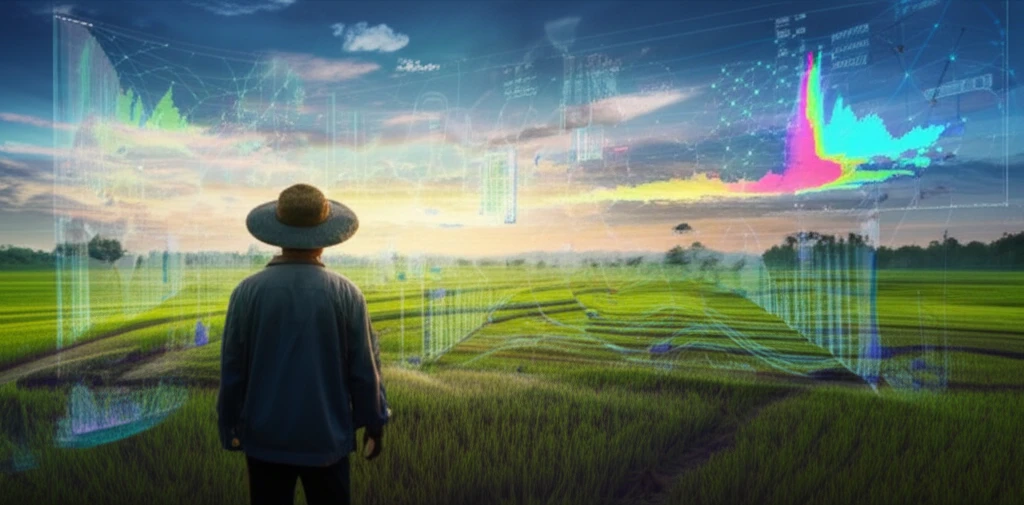
Rice Farming Revolution: How Tech & Climate Insights Boost Yields

"Discover how cutting-edge agrometeorological-spectral models are transforming rice production in Brazil, offering a glimpse into the future of sustainable agriculture."
Rice is a staple food for billions, and Brazil stands as a major producer. But unpredictable weather can wreak havoc on harvests. In the Rio Grande do Sul, which accounts for a significant portion of Brazil's rice production, farmers are constantly battling the elements to ensure a stable and productive yield.
Traditional methods of predicting rice yields often rely on time-consuming surveys and subjective data. However, a new approach is gaining traction: agrometeorological-spectral modeling. This innovative technique combines climate data with spectral analysis to provide more accurate and timely yield predictions.
The goal? To empower farmers with the knowledge they need to make informed decisions, optimize their practices, and secure a more sustainable future for rice production.
Decoding Agrometeorological-Spectral Modeling: A Farmer's Toolkit
Agrometeorological-spectral modeling might sound like something out of a science fiction novel, but the core concept is simple. It's all about using readily available data to understand how the environment affects rice growth. The study out of Brazil focused on the six key rice-growing regions of the State, leveraging a decade's worth of data from 2000 to 2010.
- Rice Yield and Area: Official data on rice yields and cultivated areas provided a baseline for the model.
- Weather Data: Daily minimum air temperatures from 17 weather stations offered insights into temperature's impact.
- NDVI Imagery: Satellite images of the Normalized Difference Vegetation Index (NDVI) from the MODIS sensor revealed the health and vigor of the rice crops. NDVI measures the greenness of vegetation, indicating biomass and photosynthetic activity.
A Future of Data-Driven Farming
This research offers a powerful glimpse into the future of rice farming. By harnessing the power of climate data and spectral analysis, farmers can gain a deeper understanding of their crops and make more informed decisions. This translates to more efficient resource use, higher yields, and a more sustainable food system. As climate change continues to impact agricultural practices, these innovative tools will become increasingly vital for ensuring food security and empowering farmers around the globe.