
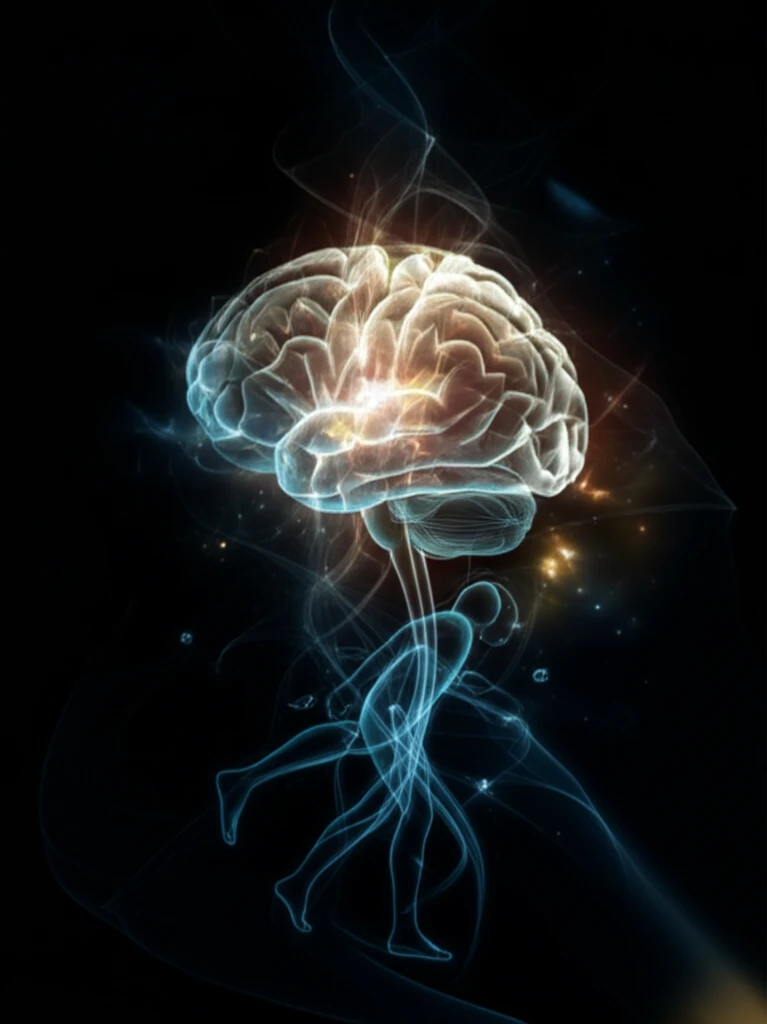
Brain with glowing cerebellum and radiant pathways to legs in motion, symbolizing improved balance and gait after stroke.

Reboot Your Brain: Can Cerebellar Stimulation Help Stroke Recovery?

"New research explores how non-invasive stimulation of the cerebellum can significantly improve gait and balance in stroke patients, paving the way for more effective rehabilitation strategies."


Stroke can leave lasting effects, and one of the most challenging is impaired gait and balance. This makes everyday tasks difficult, impacting quality of life and independence. Regaining these motor skills is a primary goal of stroke rehabilitation, but progress can be slow and frustrating.

But what if there was a way to 'reboot' the brain's motor networks, specifically targeting the cerebellum, which plays a crucial role in coordinating movement and balance? Researchers have been exploring just that, using non-invasive brain stimulation techniques to enhance rehabilitation outcomes.

A recent study published in JAMA Neurology investigated the potential of cerebellar intermittent 0-burst stimulation (CRB-iTBS) combined with physiotherapy to improve gait and balance in patients with hemiparetic stroke. The results offer exciting insights into the brain's capacity for recovery and the potential of targeted stimulation to enhance rehabilitation.

CRB-iTBS: A New Approach to Stroke Rehabilitation

Brain with glowing cerebellum and radiant pathways to legs in motion, symbolizing improved balance and gait after stroke.

The study was designed as a randomized, double-blind, sham-controlled trial, a gold standard in research. Thirty-six patients with chronic ischemic stroke, resulting in hemiparesis (weakness on one side of the body), were recruited. These participants underwent a three-week treatment period, receiving either CRB-iTBS or a sham (placebo) stimulation, immediately followed by a physiotherapy session. The real key? The cerebellar hemisphere ipsilateral (same side) to the affected body side was targeted.

The primary goal was to measure the change in balance using the Berg Balance Scale (BBS), a standard assessment tool. Secondary measures included assessments of motor function (Fugl-Meyer Assessment), independence (Barthel Index), gait analysis, and cortical activity measured using transcranial magnetic stimulation (TMS) combined with electroencephalogram (EEG).

  • Gait and Balance Improvement: Patients receiving CRB-iTBS showed significant improvements in gait and balance functions, as evidenced by a marked increase in the BBS score.
  • Reduced Step Width: Gait analysis revealed a reduction in step width among patients treated with CRB-iTBS, suggesting improved stability and balance during walking.
  • Increased Neural Activity: CRB-iTBS was associated with increased neural activity over the posterior parietal cortex (PPC), a brain region involved in motor planning and coordination.
  • No Significant Differences in Fugl-Meyer Assessment and Barthel Index: While gait and balance improved, overall motor function and independence, as measured by these indices, did not show significant differences between the groups.
The study's findings suggest that CRB-iTBS promotes gait and balance recovery by acting on cerebello-cortical plasticity – essentially, rewiring the brain's motor networks. By stimulating the cerebellum, researchers were able to influence activity in other brain regions involved in motor control, leading to improved functional outcomes.

Looking Ahead: Implications for Stroke Rehabilitation

This study offers a promising avenue for enhancing stroke rehabilitation. Cerebellar stimulation, particularly CRB-iTBS, has the potential to become a valuable tool in improving gait and balance, critical for independent living and reducing the risk of falls.

While the study showed significant improvements in gait and balance, the lack of substantial change in overall motor function (Fugl-Meyer Assessment) and independence (Barthel Index) suggests that CRB-iTBS may be most effective when combined with targeted therapies addressing other aspects of motor recovery. The research is a step in the right direction, but further investigation is needed to determine who it will help best and what will have the most impact.

As research continues, non-invasive brain stimulation techniques like CRB-iTBS may revolutionize stroke rehabilitation, offering new hope for patients seeking to regain mobility, confidence, and independence. The key will be to personalize these approaches, tailoring stimulation protocols to individual patient needs and combining them with comprehensive rehabilitation strategies.

About this Article -

This article was crafted using a human-AI hybrid and collaborative approach. AI assisted our team with initial drafting, research insights, identifying key questions, and image generation. Our human editors guided topic selection, defined the angle, structured the content, ensured factual accuracy and relevance, refined the tone, and conducted thorough editing to deliver helpful, high-quality information.See our About page for more information.

This article is based on research published under:

DOI-LINK: 10.1001/jamaneurol.2018.3639, Alternate LINK

Title: Effect Of Cerebellar Stimulation On Gait And Balance Recovery In Patients With Hemiparetic Stroke

Subject: Neurology (clinical)

Journal: JAMA Neurology

Publisher: American Medical Association (AMA)

Authors: Giacomo Koch, Sonia Bonnì, Elias Paolo Casula, Marco Iosa, Stefano Paolucci, Maria Concetta Pellicciari, Alex Martino Cinnera, Viviana Ponzo, Michele Maiella, Silvia Picazio, Fabrizio Sallustio, Carlo Caltagirone

Published: 2019-02-01

Everything You Need To Know

1

How exactly was cerebellar intermittent 0-burst stimulation (CRB-iTBS) used in the stroke rehabilitation study?

The study employed cerebellar intermittent 0-burst stimulation, or CRB-iTBS, alongside physiotherapy. This involved delivering targeted stimulation to the cerebellum in stroke patients with hemiparesis. The stimulation was applied to the cerebellar hemisphere on the same side of the body affected by the stroke (ipsilateral). A control group received a sham (placebo) stimulation. The effects of CRB-iTBS were evaluated using the Berg Balance Scale to measure improvements in balance, as well as gait analysis, motor function, and independence measures.

2

What are the key measurement tools, like the Berg Balance Scale, and how are they used to evaluate the effectiveness of CRB-iTBS?

The Berg Balance Scale (BBS) is a standard assessment tool used to measure balance. It's a primary metric for evaluating the effectiveness of interventions aimed at improving balance, such as CRB-iTBS. Secondary measures, like the Fugl-Meyer Assessment, Barthel Index, gait analysis, and combined TMS-EEG, provide additional insights into motor function, independence, and brain activity. These tools collectively offer a comprehensive view of a patient's recovery progress after interventions such as CRB-iTBS.

3

How does CRB-iTBS help stroke patients improve their gait and balance, and what is the role of cerebello-cortical plasticity?

CRB-iTBS appears to promote recovery by influencing cerebello-cortical plasticity, essentially rewiring the brain's motor networks. Stimulation of the cerebellum impacts activity in other brain regions involved in motor control, such as the posterior parietal cortex (PPC). The PPC is involved in motor planning and coordination. This targeted approach leads to improved gait and balance, key components of independent mobility.

4

What aspects of stroke recovery did CRB-iTBS not significantly improve, and what does this suggest about its limitations?

While CRB-iTBS showed significant improvements in gait and balance, measured by the Berg Balance Scale and gait analysis, there weren't significant differences observed in overall motor function (Fugl-Meyer Assessment) and independence (Barthel Index) between the CRB-iTBS and sham groups. This suggests that while CRB-iTBS is effective for specific motor skills like walking, it may not broadly impact all aspects of motor function and daily living activities.

5

Why is the increased neural activity in the posterior parietal cortex (PPC) important in the context of cerebellar stimulation and stroke recovery?

The increase in neural activity over the posterior parietal cortex (PPC) is significant because the PPC plays a key role in motor planning and coordination. This suggests that CRB-iTBS not only stimulates the cerebellum directly but also enhances the activity of related motor regions in the brain. This broader network activation could be crucial for translating cerebellar stimulation into functional improvements in gait and balance. Understanding these network-level effects is vital for optimizing rehabilitation strategies.

Newsletter Subscribe

Subscribe to get the latest articles and insights directly in your inbox.