
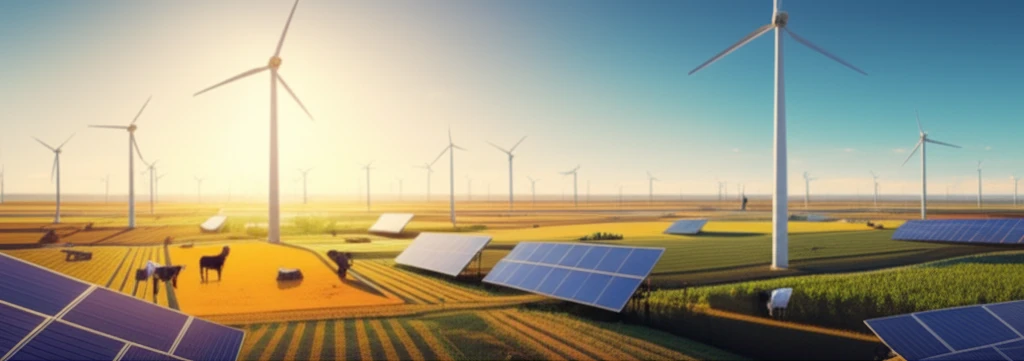
Powering the Future: Can Renewable Energy Goals Be Met on Converted Lands?

"A new study reveals the potential of using already-impacted areas for renewable energy, balancing climate action with conservation."
The global community is committed to tackling climate change, expanding energy access, and protecting biodiversity. The Paris Agreement and the UN Sustainable Development Goals (SDGs) demonstrate this commitment, setting ambitious targets for reducing emissions and increasing renewable energy adoption. However, achieving these goals requires careful planning, particularly regarding land use.
Renewable energy projects, while essential for decarbonization, often have a significant land footprint. This can lead to conflicts with the conservation of natural lands, which are vital for biodiversity and carbon storage. It's a delicate balance: expanding renewable energy sources while minimizing environmental impact.
A recent study investigated whether converted lands—areas already impacted by human activities like agriculture and settlements—can meet renewable energy targets derived from the Paris Agreement. This approach could potentially minimize the conflict between energy development and nature conservation, paving the way for more sustainable implementation of global climate goals.
Renewables as a Climate Response
Renewable energy resources are presented as an alternative to fossil resources in response to energy-supply challenges and the environmental impacts associated with climate change and global warming. A 2022 discussion brought together experts to consider progress in renewable energy and strategies for protecting the environment from hazards connected with fossil-fuel use. However, putting climate-mitigation strategies into practice can face systemic barriers, including high upfront transition costs and the risk of stranded fossil-fuel assets.
Unlocking Renewable Energy Potential on Converted Lands
The study converted emission reduction commitments submitted as part of the Paris Agreement into actionable energy targets. Researchers then assessed whether these targets could be met by developing wind, solar, and hydropower on converted lands and waters, which typically have lower biodiversity and carbon value than pristine natural areas.
- Wind Energy: Harnessing wind power on converted lands offers substantial potential for clean energy generation.
- Solar Power: Utilizing solar technologies on already developed sites can significantly contribute to renewable energy targets.
- Hydropower: Retrofitting or repurposing existing dams can boost hydropower generation without further disrupting natural river systems.
Planning Renewable Energy Around Land and Nature
A global framework applying country-level targets estimates that development planned without considering nature could affect nearly 1 million km² of high-priority conservation areas. A Germany case study reports that energy targets could be met using less than 1% of the country’s land area, without compromising protected areas or biodiversity objectives, if photovoltaic deployment is directed to optimal sites and paired with advanced technologies. Another study warns that wind-energy infrastructure can threaten biodiversity, underscoring the importance of spatial planning.
The Promise and Risks of the Energy Transition
The sources frame renewable energy as a major policy effort to curb greenhouse-gas emissions amid a human-induced climate crisis. One study argues that safeguarding the environment requires fundamentally changing how energy is generated and used, and examines renewable energy’s effectiveness in addressing climate change. These sources make the case for transition but do not provide specific evidence or figures about particular failures of renewable-energy projects.
Renewables and Fossil Fuels in Transition
The IPCC source listed here is a chapter on renewable energy and climate change mitigation. A 2026 comparison describes the debate over fossil fuels and renewable energy as an economic and infrastructure question: how quickly a cheaper, lower-emission energy system can replace one shaped by fossil fuels over 150 years. It also connects the pace of replacement with climate outcomes, investment, employment patterns, and geopolitics. The available source descriptions do not provide comparable figures or detailed performance measures.
A Sustainable Path Forward
Guiding renewable energy development to converted lands presents significant opportunities for sustainable development. However, it requires proactive planning and incentives to ensure expansion doesn't exacerbate other environmental challenges.
Climate Impacts on Renewable Energy
Renewable energy depends on environmental conditions, so climate impacts can affect both its supply and demand. The Columbia Climate School identifies high heat, drought, altered precipitation patterns, flooding, extreme weather, and wildfires as relevant impacts. These pressures make climate change a factor in the conditions under which renewable energy systems operate.
Local Considerations in Energy Transitions
A case study of Hawaiʻi’s Renewable Portfolio Standard examines geographical issues that may shape the state’s electricity future. It highlights sensitivity to climate change, population distribution, interisland rivalries, and the need for greater energy storage and complementary policies. Other case-study collections describe mitigation initiatives across sectors and regions, while the LSHTM Evidence Bank says its cases show emissions reductions and benefits for people and the planet.
Targeting subsidies to favor low-impact developments and implementing mitigation requirements for projects impacting natural lands are crucial steps. These measures can steer renewable energy development towards already-impacted areas, reducing the risk to biodiversity and carbon storage.
Failure to prioritize sustainable siting could undermine progress towards achieving the commitments of the Paris Agreement and the SDGs. By embracing careful planning and responsible land management, we can unlock the full potential of renewable energy while safeguarding our planet's precious natural resources.