
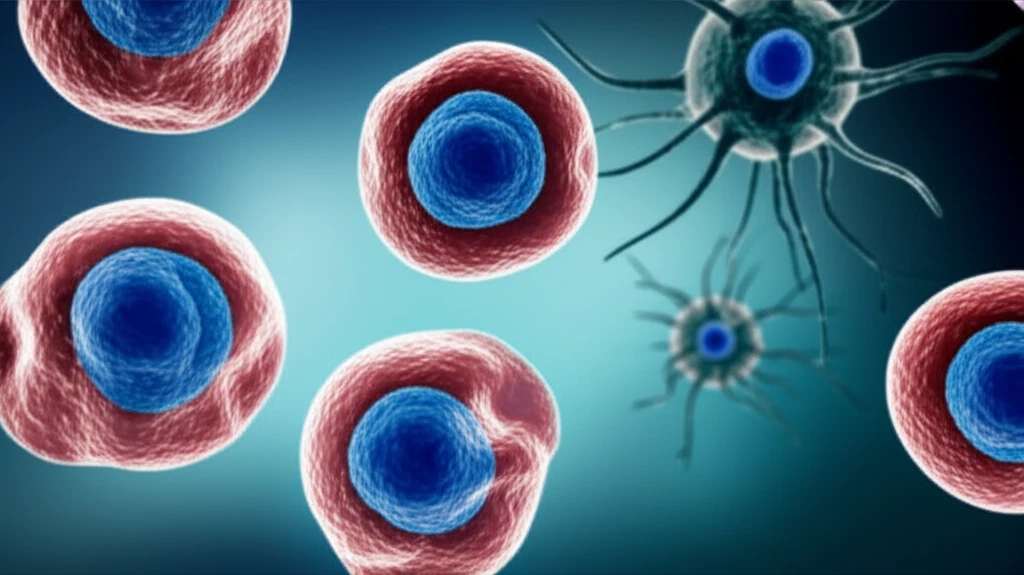
Illustration of immune cells weakened by cancer treatment, impacting cancer therapy.

Pazopanib's Impact: Can Cancer Treatment Affect Immunotherapy?

"Research reveals how a common cancer drug may alter immune cell function, potentially impacting the effectiveness of personalized cancer vaccines."


Personalized medicine is rapidly advancing, especially in cancer treatment. One promising avenue is the development of dendritic cell (DC)-based vaccines, tailored to an individual's cancer profile. These vaccines harness the power of the patient's own immune system to fight the disease.

Monocytes, a type of white blood cell, are often used to create these personalized DC vaccines. The process involves isolating monocytes from the patient's blood, transforming them into dendritic cells in the lab, and then "charging" these DCs with tumor-specific antigens. The goal is to create a potent vaccine that stimulates the patient's immune system to target and destroy cancer cells.

However, a new study raises concerns about whether certain cancer treatments might compromise the effectiveness of this approach. Specifically, the research investigates how pazopanib, a tyrosine kinase inhibitor (TKI) commonly used to treat various cancers, affects the immunostimulatory properties of monocytes and, consequently, the potential of DC-based vaccines.

How Pazopanib Impacts Immune Cell Function

Illustration of immune cells weakened by cancer treatment, impacting cancer therapy.

The study, presented at the Annals of Oncology, explored the impact of pazopanib on monocytes derived from patients with metastatic renal cancer. Researchers compared monocytes from pazopanib-treated patients to those from a control group, focusing on how these cells responded to stimulation.

The key findings revolve around the observation that pazopanib appears to alter the characteristics of monocytes, specifically reducing their ability to stimulate an immune response. This was evidenced by several factors:

  • Reduced Co-Stimulatory Molecule Expression: The monocytes from pazopanib-treated patients showed diminished expression of key molecules needed to activate other immune cells.
  • Impaired IL-12 Production: IL-12 is a crucial cytokine that promotes a strong anti-cancer immune response. Pazopanib-exposed monocytes produced less of it.
  • Diminished T-Lymphocyte Stimulation: The monocytes were less effective at activating T-lymphocytes, a critical component of the immune system's ability to kill cancer cells.
  • Increased Expression of CD64 and ILT3: Pazopanib-treated monocytes exhibited higher levels of CD64 and ILT3, molecules associated with immune suppression.
  • Downregulation of HLA-Dr: Researchers found that pazopanib-treated monocytes exhibited lower capacity to upregulate HLA-Dr upon LPS stimulation.
These changes suggest that pazopanib might be interfering with the normal function of monocytes, making them less capable of effectively initiating an anti-cancer immune response when used in DC-based vaccines.

Implications for Future Immunotherapy Strategies

This research highlights the importance of considering the potential impact of other cancer treatments on the effectiveness of immunotherapies. While pazopanib is a valuable tool in fighting cancer, its effects on immune cell function may need to be carefully considered when designing personalized DC-based vaccines.

Future research should focus on strategies to mitigate the negative effects of pazopanib on monocytes or to identify alternative approaches for creating effective DC vaccines in patients receiving this drug. It may also be beneficial to assess the timing of immunotherapy in relation to TKI treatment to optimize immune responses.

Ultimately, a deeper understanding of the interplay between targeted therapies and the immune system will be crucial for maximizing the potential of personalized cancer treatments.

About this Article -

This article was crafted using a human-AI hybrid and collaborative approach. AI assisted our team with initial drafting, research insights, identifying key questions, and image generation. Our human editors guided topic selection, defined the angle, structured the content, ensured factual accuracy and relevance, refined the tone, and conducted thorough editing to deliver helpful, high-quality information.See our About page for more information.

This article is based on research published under:

DOI-LINK: 10.1093/annonc/mdw525.18, Alternate LINK

Title: Tki Pazopanib Impaires Immunostimulatory Properties Of Monocytes: Implication For Monocyte-Derived Dc-Based Anti-Cancer Vaccine Preparation

Subject: Oncology

Journal: Annals of Oncology

Publisher: Elsevier BV

Authors: L. Zdrazilova Dubska, L. Fedorova, K. Pilatova, P. Mudry, E. Hlavackova, E. Matoulkova, L. Flajsarova, R. Demlova, D. Valik, J. Sterba

Published: 2016-11-01

Everything You Need To Know

1

What is Pazopanib and why is it important in this context?

Pazopanib is a tyrosine kinase inhibitor (TKI) used in cancer treatment. It works by targeting and inhibiting specific enzymes that promote cancer cell growth and survival. Its significance lies in its ability to alter the function of immune cells, specifically monocytes. The implications of pazopanib include a potential reduction in the effectiveness of DC-based anti-cancer vaccines, which rely on the immune-stimulating properties of monocytes.

2

What are monocytes and why are they significant in this study?

Monocytes are a type of white blood cell that plays a crucial role in the immune system. They can be transformed into dendritic cells (DCs) in the lab, which are then used in personalized DC-based vaccines. The study suggests that Pazopanib exposure can alter monocytes characteristics, reducing their ability to stimulate an immune response. The implications of altered monocyte function are that they may be less effective in activating T-lymphocytes, a critical component of the immune system's ability to kill cancer cells.

3

How do dendritic cell (DC)-based vaccines work, and what is their significance?

Dendritic cell (DC)-based vaccines are a form of immunotherapy designed to stimulate a patient's immune system to fight cancer. Monocytes are transformed into DCs in a lab, 'charged' with tumor-specific antigens, and administered to the patient. The key finding suggests that pazopanib may reduce the efficacy of these vaccines by impairing the immunostimulatory properties of monocytes. The implications mean these vaccines might not be as effective in patients undergoing Pazopanib treatment, potentially requiring adjustments to treatment strategies.

4

What specific changes did the study find in monocytes treated with Pazopanib?

The study found that pazopanib-treated monocytes showed several changes: reduced co-stimulatory molecule expression, impaired IL-12 production, diminished T-lymphocyte stimulation, and increased expression of CD64 and ILT3. Further research found pazopanib-treated monocytes exhibited lower capacity to upregulate HLA-Dr upon LPS stimulation. These alterations collectively suggest an impaired ability of monocytes to initiate an effective anti-cancer immune response. The implications of these changes are that the use of pazopanib could impact the efficacy of DC-based cancer vaccines.

5

What are the implications of these findings for future cancer treatment strategies?

The research suggests that when designing personalized DC-based vaccines, it is crucial to consider the impact of concurrent cancer treatments like pazopanib on immune cell function. The implications mean that healthcare providers may need to consider the timing or dosage of pazopanib in conjunction with DC-based vaccines. Additional strategies might be necessary to overcome the immunosuppressive effects of pazopanib to optimize the effectiveness of immunotherapy. Further research is required to understand and mitigate the impact of pazopanib on monocyte function.

Newsletter Subscribe

Subscribe to get the latest articles and insights directly in your inbox.