
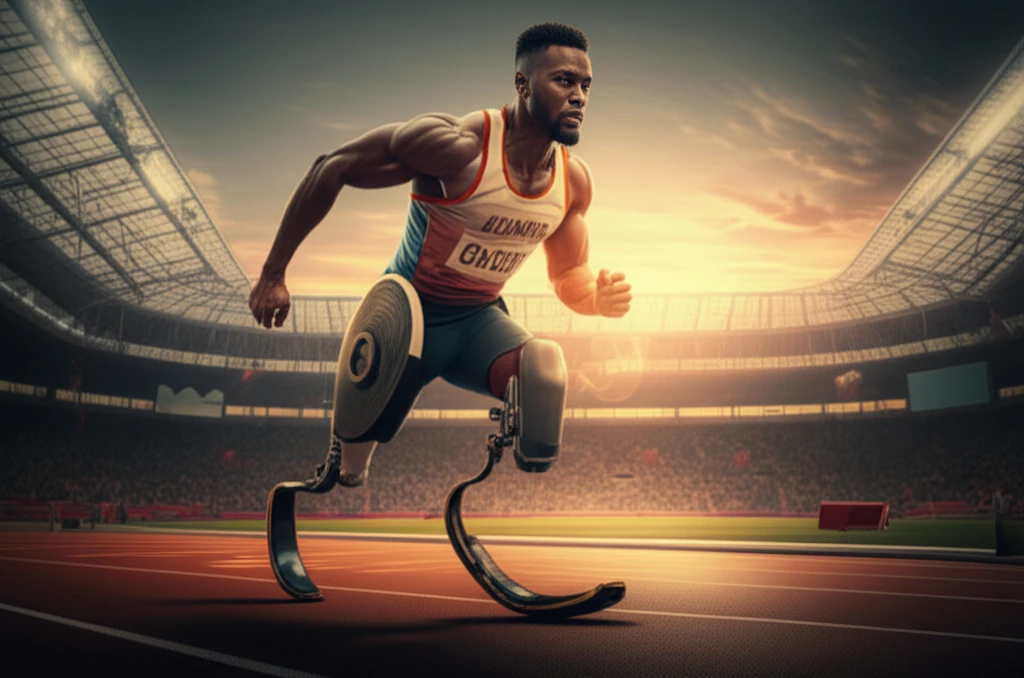
Illustration of an adaptive athlete competing in the Paralympic Games.

Paralympic Games & Stroke Recovery: How Sports Medicine and Community Rehab Are Changing Lives

"Discovering the Impact of Tailored Rehabilitation Programs and Adaptive Sports on Stroke Survivors and Athletes with Disabilities."


The roar of the crowd, the flash of cameras, and the unwavering determination of athletes. These are the hallmarks of the Paralympic Games, a celebration of human potential that transcends physical limitations. But beyond the medals and the glory lies a powerful story of rehabilitation, resilience, and community. This article explores the profound impact of sports medicine and community-based rehabilitation programs on stroke survivors and athletes with disabilities, highlighting how these initiatives are reshaping lives.

The convergence of sports and medicine offers unique opportunities for rehabilitation. The Paralympic Games, in particular, serve as a crucial platform for showcasing these advancements. By examining the medical experiences and outcomes within these games, we gain valuable insights into effective strategies for stroke recovery and the broader benefits of adaptive sports. Furthermore, the focus is on the people who dedicate their life to this mission. The impact is truly game-changing.

We'll delve into the details of how these programs work, the science behind their effectiveness, and the inspiring stories of those who have benefited. This article provides a comprehensive look at how sports medicine and community rehabilitation are providing new hope and opportunities for stroke survivors and individuals with disabilities, demonstrating the power of tailored care and the incredible human spirit.

The Power of Specialized Rehabilitation: Tailoring Programs for Stroke Recovery and Adaptive Sports

Illustration of an adaptive athlete competing in the Paralympic Games.

Stroke, a condition that affects millions globally, often leads to significant physical and cognitive impairments. Recovery requires a multifaceted approach, and specialized rehabilitation programs are at the forefront. These programs aren't one-size-fits-all; they are meticulously designed to address the specific needs and challenges of each individual, whether they're stroke survivors or athletes with disabilities. The core of these programs includes targeted exercises, assistive technologies, and a supportive environment.

For stroke survivors, these programs often focus on regaining motor skills, improving coordination, and enhancing cognitive function. Physical therapy, occupational therapy, and speech therapy are vital components, helping individuals relearn essential functions and rebuild their lives. Adaptive sports, on the other hand, offer a unique avenue for rehabilitation and social reintegration. They provide opportunities to participate in physical activities and sports tailored to specific disabilities, fostering not only physical recovery but also mental well-being and social connections.

  • Personalized Exercise Regimens: Tailored physical therapy exercises designed to restore motor functions and improve mobility.
  • Assistive Technologies: Use of prosthetics, orthotics, and other devices to aid in daily activities and sports participation.
  • Cognitive Training: Exercises and therapies aimed at improving memory, attention, and problem-solving skills.
  • Adaptive Equipment: Specialized equipment, such as adapted bikes, wheelchairs, and sports gear, enabling participation in sports.
  • Psychological Support: Counseling and support groups to address the emotional and psychological challenges of stroke recovery and disability.
  • Community Integration: Programs and initiatives to promote social interaction, participation, and inclusion within the broader community.
The effectiveness of these programs stems from their ability to address the unique needs of each individual, fostering recovery, enhancing quality of life, and opening doors to new possibilities. The impact goes beyond physical improvements, creating a supportive environment for holistic well-being and community integration.

Embracing the Future: The Ongoing Evolution of Rehabilitation and Adaptive Sports

The journey of rehabilitation and adaptive sports is one of continuous progress and innovation. As research continues to reveal new insights and technologies advance, the potential to transform lives will only grow. The commitment of healthcare professionals, researchers, athletes, and the broader community is fueling this evolution. By supporting these efforts, we can ensure that individuals with disabilities have access to the resources and opportunities they deserve, fostering a world where everyone can reach their full potential. The combined forces of medicine, technology, and the human spirit offer a powerful pathway toward a more inclusive and empowering future for all.

About this Article -

This article was crafted using a human-AI hybrid and collaborative approach. AI assisted our team with initial drafting, research insights, identifying key questions, and image generation. Our human editors guided topic selection, defined the angle, structured the content, ensured factual accuracy and relevance, refined the tone, and conducted thorough editing to deliver helpful, high-quality information.See our About page for more information.

Everything You Need To Know

1

How do specialized rehabilitation programs cater to individual stroke survivors and athletes with disabilities?

Specialized rehabilitation programs address the unique needs of stroke survivors and athletes with disabilities through meticulously designed plans. For stroke survivors, these programs concentrate on regaining motor skills, improving coordination via physical, occupational, and speech therapy to relearn essential functions. For athletes with disabilities, adaptive sports are utilized, which tailor physical activities to specific disabilities, promoting physical recovery, mental well-being, and social connections.

2

What role do assistive technologies play in specialized rehabilitation and adaptive sports?

Assistive technologies are integral to specialized rehabilitation and adaptive sports, aiding individuals in daily activities and sports participation. These technologies include prosthetics, orthotics, and specialized equipment like adapted bikes and wheelchairs. Their utilization enables greater independence, enhances motor functions, and expands opportunities for engagement in physical activities that would otherwise be inaccessible.

3

How do the Paralympic Games contribute to advancements in stroke recovery and sports medicine?

The Paralympic Games serve as a vital platform for showcasing advancements in sports medicine and stroke recovery. By examining medical experiences and outcomes within these games, valuable insights are gained into effective strategies for stroke rehabilitation and the broader benefits of adaptive sports. The focus on dedicated professionals highlights the importance of their work, underscoring the transformative impact of integrating sports and medicine in rehabilitation.

4

Besides physical improvements, what other elements are crucial for holistic well-being in specialized rehabilitation programs?

Beyond physical improvements, psychological support and community integration are crucial for holistic well-being in specialized rehabilitation programs. Counseling and support groups address the emotional and psychological challenges associated with stroke recovery and disability. Community integration initiatives promote social interaction, participation, and inclusion, fostering a supportive environment that enhances overall quality of life and facilitates a sense of belonging.

5

In what ways are personalized exercise regimens tailored within specialized rehabilitation programs, and what impact do they have?

Personalized exercise regimens within specialized rehabilitation programs are meticulously designed to restore motor functions and improve mobility, addressing the specific needs of each individual. These regimens are crucial for stroke survivors aiming to regain lost motor skills and athletes with disabilities seeking to enhance their physical capabilities. The impact of these tailored exercises extends beyond physical improvements, fostering recovery, enhancing quality of life, and opening doors to new possibilities for participation in sports and daily activities.

Newsletter Subscribe

Subscribe to get the latest articles and insights directly in your inbox.