
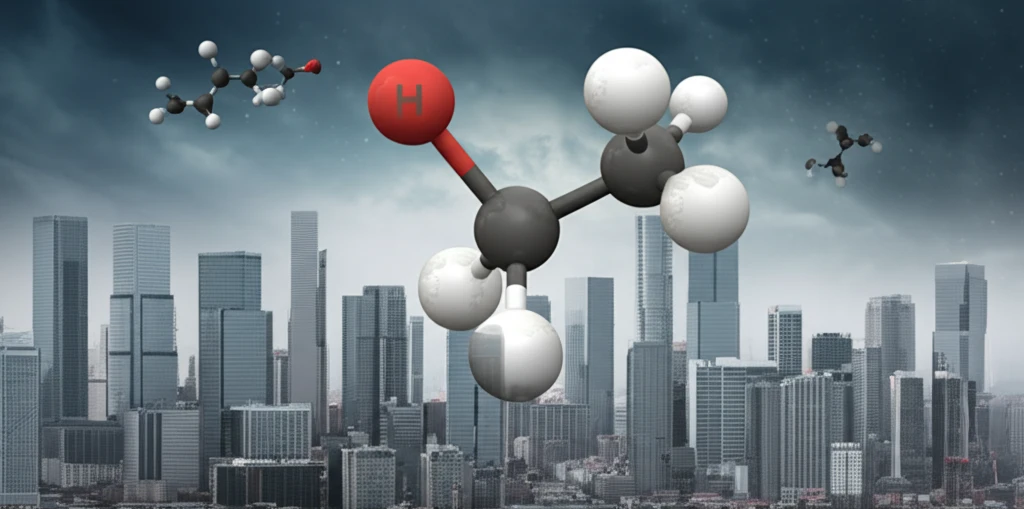
Nitric Oxide: Unlocking the Secrets of a Molecular Messenger

"From atmospheric pollutant to Nobel Prize-winning discovery, explore the fascinating journey of nitric oxide and its vital role in health."
In 1998, the Nobel Prize in Physiology or Medicine was awarded to Robert Furchgott, Louis Ignarro, and Ferid Murad for their revolutionary discoveries about nitric oxide (NO). Before this recognition, NO was primarily known as a toxic pollutant gas, a far cry from its now-established role as a crucial signaling molecule within the body.
The initial skepticism surrounding NO's biological role stemmed from its chemical properties. It's highly lipid-soluble, allowing it to freely cross cell membranes. As a free radical, it readily reacts with oxygen, other radicals, and various chemical species. Initially, these characteristics seemed to preclude its existence and function as a signaling molecule within the body.
However, groundbreaking research revealed that mammalian tissues produce NO, sparking an explosion of studies that unequivocally demonstrated the physiological significance of the NO-cyclic GMP pathway. This pathway is fundamental to numerous biological processes, and ironically, the very properties that once argued against NO's role have proven essential to its function.
The Accidental Discovery: How NO Research Began
The earliest experiments that directly explored nitric oxide's effects were led by Ferid Murad in 1977. Murad discovered that nitric oxide gas could activate the cytosolic isoform of guanylyl cyclase (GC). This enzyme then catalyzes the conversion of GTP to cyclic GMP, a crucial signaling molecule.
- The Role of Sodium Azide: Sodium azide, in the presence of catalase, was found to convert to NO. This accounted for the markedly higher GC activity and increased tissue levels of cyclic GMP.
- Launching a Field: These experiments with NaN3 and NO essentially launched the field of NO research.
The Future of NO Research: What's Next?
The journey of nitric oxide research is far from over. As we celebrate the 20th anniversary of the Nobel Prize, it's clear that there are still many exciting avenues to explore. From understanding its role in cancer therapy to harnessing its potential in treating heart failure, NO continues to be a molecule of immense therapeutic promise. The ongoing exploration of nitric oxide's properties and interactions promises to unlock even more innovative strategies for improving human health.