
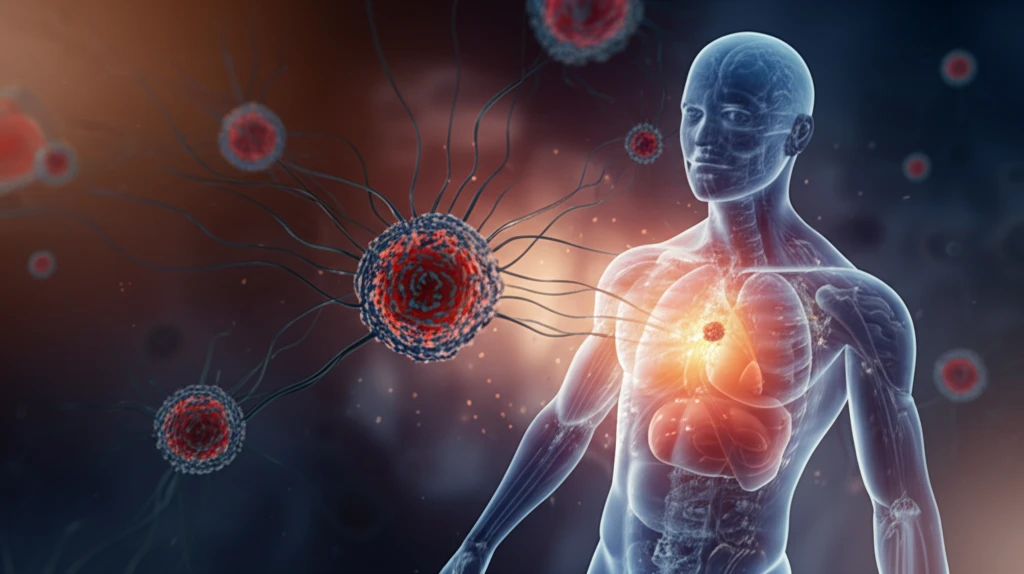
Nano Micelles: The Tiny Tech Revolutionizing Cancer Therapy

"Unlocking the potential of PEG-PLGA nano micelles for targeted cancer treatment: A comprehensive guide for patients and healthcare professionals."
Cancer remains one of the most formidable health challenges globally, spurring relentless innovation in treatment strategies. Traditional methods like chemotherapy and radiation often come with debilitating side effects, impacting patients' quality of life. This has fueled the search for more targeted and efficient therapies, leading to the rise of nanotechnology in medicine.
Nanotechnology offers the promise of delivering drugs directly to cancer cells, sparing healthy tissues from harm. Among the most promising tools in this field are nano micelles, tiny spheres capable of encapsulating and transporting therapeutic agents. Researchers are particularly excited about PEG-PLGA nano micelles, which combine the biocompatibility of PLGA with the enhanced stability and circulation time provided by PEG. This potent combination is now at the forefront of cancer therapy research.
Recent studies, such as the one published in the 'Journal of Drug Delivery Science and Technology,' highlight the optimization of PEG-PLGA nano micelles through quality-by-design (QbD) approaches. This article breaks down the science behind these advancements, exploring how they can lead to more effective and less toxic cancer treatments. Whether you’re a patient, caregiver, or healthcare professional, understanding this innovative approach is crucial for navigating the future of cancer therapy.
Targeted Therapy by the Numbers
Targeted therapy is now one of the principal treatment categories in cancer care, alongside chemotherapy, radiation therapy, and immunotherapy. The impact is visible in the data: by 2020, US statistics showed lung cancer death rates falling sharply as EGFR-targeted therapy became widespread, particularly in non-small cell adenocarcinomas, the form most strongly linked to EGFR mutations. The potency of such molecularly targeted agents is typically studied in vitro, where researchers can directly observe the effect of a novel monoclonal antibody on malignant tumour cell populations. Clinical practice has responded as well, with ASCO guidelines now incorporating targeted therapy alongside neoadjuvant chemotherapy and endocrine therapy for breast cancer.
Limits of the Conventional Arsenal
Conventional cancer treatment still leans on broadly acting therapies such as chemotherapy, and the central limitation remains getting drugs to the right place without harming healthy tissue. Researchers are pursuing delivery strategies built around nanoparticles and low-intensity ultrasound to concentrate treatment at the tumor and engage the tumor microenvironment. Precision medicine is also changing how patients are selected, with experts describing a shift from a mutation-centered strategy toward a context-dependent model in which treatment is guided by functional pathway dependency rather than genetic status alone. Many of these approaches remain early-stage: for example, a bacterium-derived therapy that eliminated tumors in mice still needs to be tested against additional solid tumors and optimized through approaches such as dose fractionation and direct tumor injection.
Milestones: From Chemotherapy to CAR-T
Cancer therapy has a long history of evolving approaches, from early chemotherapy to molecularly targeted treatments. A foundational milestone has been the identification of genetic mutations that drive specific cancers, which opened the door to targeted therapies matched to a patient's tumor. In the 2010s and beyond, CAR-T cell therapy emerged as a groundbreaking personalized approach, engineering chimeric antigen receptors onto T cells to target specific cancer antigens and generate potent anti-cancer responses. For individual patients, testing for such mutations and beginning targeted therapy has been life-changing, with patient stories describing dramatic turnarounds after treatment started.
The Science of PEG-PLGA Nano Micelles
At the heart of this innovative approach is the unique structure of PEG-PLGA nano micelles. PLGA (poly(lactic-co-glycolic acid)) is a biodegradable and biocompatible polymer approved by the FDA for various clinical uses. Its ability to break down safely within the body makes it an ideal material for drug delivery systems. However, on its own, PLGA can be quickly cleared from the bloodstream, limiting its effectiveness.
- Enhanced stability in the bloodstream
- Reduced opsonization and clearance
- Targeted drug delivery to cancer cells
- Biocompatibility and biodegradability
Nanocarriers and the Delivery Problem
One of the least-discussed obstacles in targeted cancer therapy is that many drugs must enter cells to reach their therapeutic targets. Researchers are tackling this with bio-derived nanocarriers inspired by exosomes, which are natural nanoscale delivery vehicles. Reviews of engineered exosome-inspired nanocarriers highlight their ability to improve tumor penetration and support multimodal treatment, combining chemo-, gene-, and immunotherapy within a single platform. These approaches are directly relevant to nano micelles, which likewise aim to ferry therapeutic payloads precisely to tumors while overcoming delivery obstacles.
Barriers, Brain Metastases, and Unfulfilled Promise
Targeted treatments are not a universal answer, and delivery across biological barriers remains a persistent challenge, including the difficult case of parenchymal brain metastases. Recent learnings, however, show promise for these lesions in non-small cell lung cancer, breast cancer, and melanoma, all of which have benefited from targeted treatments in recent years. Where single agents fall short, researchers are combining mechanisms: nanoplatforms that integrate photodynamic, photothermal, and chemodynamic therapy with tumor cell targeting and multimodal imaging guidance are being developed against aggressive cancers such as triple-negative breast cancer. Most such platforms remain experimental, a reminder that many promising targeted strategies have yet to prove themselves in the clinic.
What Clinical Comparisons Reveal
Comparative trials of chemotherapy regimens show that even among established treatments, how drugs are scheduled matters. In extensive-stage small cell lung cancer, alternating induction chemotherapy significantly increased complete response rates compared with standard induction chemotherapy, though its impact on long-term survival was small. A separate study comparing sequential versus alternate front-line administration of cisplatin-etoposide and topotecan evaluated the efficacy and tolerance of the two scheduling approaches. By contrast, unproven alternative devices such as Rife machines are promoted online as cancer cures without evidence, and experts caution that abandoning standard treatment for such remedies could harm health.
The Future of Cancer Treatment is Nano
PEG-PLGA nano micelles represent a significant leap forward in targeted cancer therapy. By optimizing these systems through careful design and rigorous testing, scientists are paving the way for treatments that are both more effective and less harmful. As research continues, we can expect to see even more refined and personalized approaches that harness the power of nanotechnology to conquer cancer.
Experts on the Combination Imperative
Expert commentary repeatedly reaches the same conclusion: targeted agents work best as part of combination strategies layered onto standard care. In gastric cancer, for instance, experts note that although radical surgery and rational chemotherapy remain the mainstays, targeting miRNAs in combination with conventional therapies may be a promising strategy to improve clinical outcome. Research into candidate targets such as Par-4 and into the signaling pathways that drive tumors continues to shape which molecular nodes merit therapeutic focus. Taken together, expert opinion points toward integrated, biology-driven regimens rather than single-agent magic bullets.
A Decade of Growth and Combination Design
Market projections signal a steep growth curve for targeted therapy: according to the Market Statsville Group, the global small molecule targeted cancer therapy market was valued at USD 83,410 million in 2023 and is expected to grow to USD 188,780 million by 2033. Scientifically, the outlook is combination-driven, with experts predicting that future antibody-based therapy will comprise combinations of different approaches devised according to knowledge of the tumor's immunobiology and its interaction with the tumor microenvironment. Overcoming immunotherapy resistance is another active frontier, with bispecific antibodies and the underlying mechanisms of resistance under investigation. Heavy investment in precision oncology pipelines reflects the high expectations for the field over the next decade.
The Delivery Dilemma and Tumor Complexity
Despite remarkable advances, clinical outcomes remain limited by drug resistance, metastasis, and off-target effects that stem from the complexity and heterogeneity of tumors. A core engineering challenge, as one Brigham researcher puts it, is finding how to specifically deliver high doses of chemotherapy to a tumor while minimizing systemic toxicity. One emerging strategy exploits a vulnerability of cancer cells to reactive oxygen species: targeted ROS-based therapies aim to enhance ROS production in cancer cells, causing cell death through oxidative injury to DNA, lipids, and proteins. The broader framework for treating metastatic cancer is also shifting from a strict division between curative local therapy and palliative systemic treatment toward a biology-driven continuum.
Patients First: ADCs, Mouse Models, and Immune Editing
At the level of individual patients, precision therapies are already changing outcomes. Antibody-drug conjugates, which combine antibodies that seek out specific cells with potent drug payloads, are beginning to transform cancer treatment, though manufacturers have struggled to produce them at scale with high consistency, a problem that a recent 'sugar swap' in production aims to simplify. In the laboratory, experimental agents such as IP1867B, a combination of aspirin, triacetin, and saccharin, have been shown to shrink high-grade glioma brain tumors in a mouse model while reducing the gastrointestinal problems of conventional aspirin. Researchers are also investigating targeted therapies that modify cancer cells so the body's immune system recognizes and eliminates them more efficiently, keeping patient well-being at the center of the innovation agenda.