
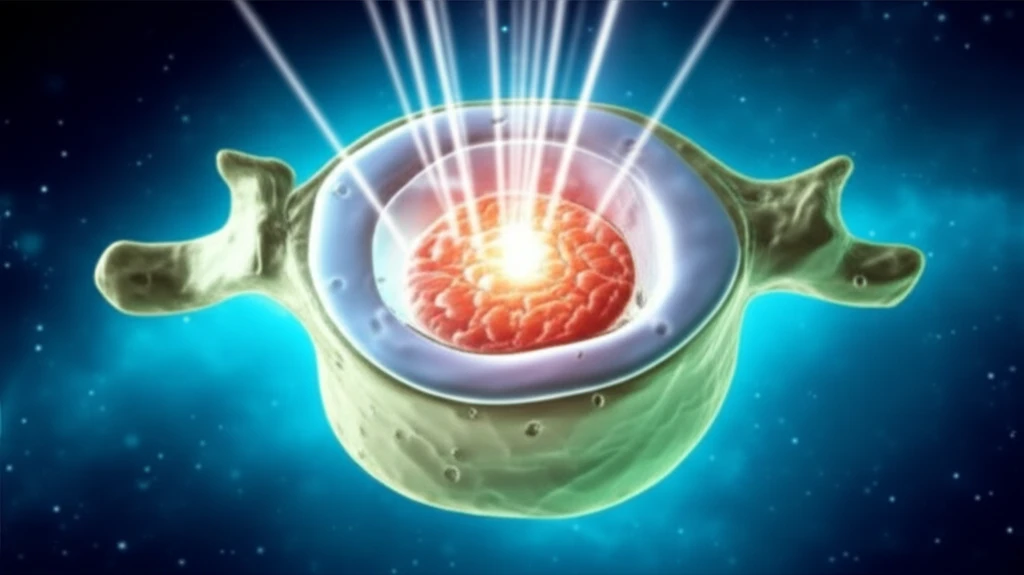
Microscopic view of a healthy spinal disc

Lumbar Disc Microsurgery: Is It Still a Relevant Option for Back Pain Relief?

"Exploring the enduring role of lumbar disc microsurgery in modern back pain management and rehabilitation."


In 1953, the introduction of the surgical microscope by Zeiss marked a turning point in surgical procedures. The enhanced magnification and illumination capabilities allowed surgeons to operate with greater precision and minimal invasiveness. This innovation shifted the focus toward reducing tissue disruption while achieving surgical goals, establishing a new standard in surgical care.

The advent of microsurgery enabled surgeons to refine their techniques, fostering a deeper understanding of tissue behavior under stress. By minimizing manipulation of sensitive tissues, surgeons observed improved patient outcomes and quicker recovery times. This shift highlighted the importance of preserving normal anatomy during surgery, ultimately enhancing the body's natural healing processes.

Moreover, microsurgery emphasized the critical link between surgical precision and rehabilitation. Surgeons recognized that the initial surgical intervention plays a crucial role in the overall rehabilitation process. This understanding transformed the approach to patient care, integrating surgery as the first step toward recovery rather than a separate, later stage intervention.

When Is Lumbar Disc Microsurgery the Right Choice?

Microscopic view of a healthy spinal disc

Lumbar microsurgery is primarily indicated for patients suffering from herniated lumbar discs and, in certain instances, spinal stenosis. The decision to proceed with microsurgery is typically based on the presence of specific symptoms associated with disc herniation, including:

The key technical consideration in lumbar microsurgery is ensuring adequate exposure to accurately identify and address the area of spinal nerve compression. Proper visualization and access are crucial for achieving successful outcomes and minimizing the risk of complications.

  • Severe and persistent leg pain
  • Numbness in the legs
  • Muscle weakness in the legs
  • Bowel or bladder dysfunction
Several studies have investigated the long-term effectiveness of lumbar microsurgery. Findlay et al. (1998) conducted a study reviewing patients who underwent lumbar microsurgery for herniated discs, assessing outcomes ten years post-operation. The initial success rate at six months was 91%, with results remaining favorable at 83% after ten years. Patient satisfaction remained high, indicating the procedure's lasting benefits.

Author's Insights: Optimizing Outcomes in Lumbar Disc Microsurgery

The success of lumbar microsurgery hinges on several factors, including the duration of spinal nerve compression and the underlying biology of the disc herniation. The available space for the spinal nerve and the extent of compression significantly influence outcomes. Surgery is most effective when performed within three months of nerve compression. The degree of herniation observed during surgery correlates with results more accurately than MRI scans. Large disc herniations often yield better outcomes than marginal protrusions, although exceptions exist. Even small protrusions can cause significant pressure in conjunction with spinal stenosis.

About this Article -

This article was crafted using a human-AI hybrid and collaborative approach. AI assisted our team with initial drafting, research insights, identifying key questions, and image generation. Our human editors guided topic selection, defined the angle, structured the content, ensured factual accuracy and relevance, refined the tone, and conducted thorough editing to deliver helpful, high-quality information.See our About page for more information.

This article is based on research published under:

DOI-LINK: 10.4172/2376-0281.1000e120, Alternate LINK

Title: Lumbar Disc Microsurgery Play Any Role Today?

Subject: General Medicine

Journal: International Journal of Neurorehabilitation

Publisher: OMICS Publishing Group

Authors: Inaki Arrotegui

Published: 2016-01-01

Everything You Need To Know

1

What specific conditions does Lumbar Disc Microsurgery address, and what symptoms might indicate the need for this procedure?

Lumbar Disc Microsurgery is primarily indicated for patients suffering from herniated lumbar discs and, in certain instances, spinal stenosis. The symptoms that may indicate the need for this procedure include severe and persistent leg pain, numbness in the legs, muscle weakness in the legs, and bowel or bladder dysfunction. These symptoms suggest compression of the spinal nerves, a key factor that Lumbar Disc Microsurgery aims to resolve.

2

How has the advent of surgical microscopes influenced the practice of Lumbar Disc Microsurgery and patient outcomes?

The introduction of the surgical microscope by Zeiss in 1953 revolutionized surgical procedures, including Lumbar Disc Microsurgery. The enhanced magnification and illumination capabilities allowed surgeons to operate with greater precision and minimal invasiveness. This led to reduced tissue disruption, improved patient outcomes, and quicker recovery times. It emphasized the importance of preserving normal anatomy during surgery and highlighted the critical link between surgical precision and rehabilitation.

3

What factors contribute to the success of Lumbar Disc Microsurgery, and how does the timing of the surgery impact the outcome?

The success of Lumbar Disc Microsurgery hinges on several factors, including the duration of spinal nerve compression and the underlying biology of the disc herniation. The available space for the spinal nerve and the extent of compression significantly influence outcomes. Surgery is most effective when performed within three months of nerve compression. The degree of herniation observed during surgery correlates with results more accurately than MRI scans, with large disc herniations often yielding better outcomes than marginal protrusions. Even small protrusions can cause significant pressure in conjunction with spinal stenosis.

4

What are the long-term effectiveness rates of Lumbar Disc Microsurgery for herniated discs, and what does patient satisfaction look like post-operation?

Several studies have shown that Lumbar Disc Microsurgery has a high success rate. For example, the study by Findlay et al. (1998) showed an initial success rate of 91% at six months, with favorable results remaining at 83% after ten years. Patient satisfaction remained high, indicating the procedure's lasting benefits and its effectiveness in providing sustained relief from symptoms associated with herniated discs.

5

How does the degree of disc herniation influence the outcomes of Lumbar Disc Microsurgery, and why is this relevant?

The degree of herniation observed during surgery correlates with the outcomes of Lumbar Disc Microsurgery. Large disc herniations often yield better outcomes than marginal protrusions, although exceptions exist. Even small protrusions can cause significant pressure in conjunction with spinal stenosis. This information is relevant because the extent of the herniation helps surgeons to determine the appropriate course of action and inform patients about expected outcomes, emphasizing that the specific characteristics of the herniation affect the prognosis.

Newsletter Subscribe

Subscribe to get the latest articles and insights directly in your inbox.