
Unlocking Stability: How Spinal Alignment Surgery Can Transform Your Life with Spondylolisthesis

"Discover how surgical solutions are restoring balance and improving lives for those suffering from lumbar spondylolisthesis."
Maintaining balance is crucial for the human body, especially in the spine. Proper alignment in both the sagittal and coronal planes minimizes the energy needed to stand upright. When the body's center of gravity aligns correctly, it reduces muscular effort and promotes overall stability. Understanding this balance is key to addressing spinal issues.
Sagittal balance, which involves the alignment of the spine when viewed from the side, is maintained through various compensatory mechanisms. The lumbar lordosis, or the inward curve of the lower back, and the sagittal rotation of the pelvis around the hip axis are vital components. These elements work together to keep the body balanced and functional. However, conditions like spondylolisthesis can disrupt this delicate balance.
Spondylolisthesis, a condition where one vertebra slips over another, interferes with the body's natural compensatory mechanisms. This misalignment can lead to pain, discomfort, and reduced mobility. Fortunately, surgical interventions aim to correct these deformities and restore spinal stability, offering hope for improved quality of life.
The Lumbar Spine
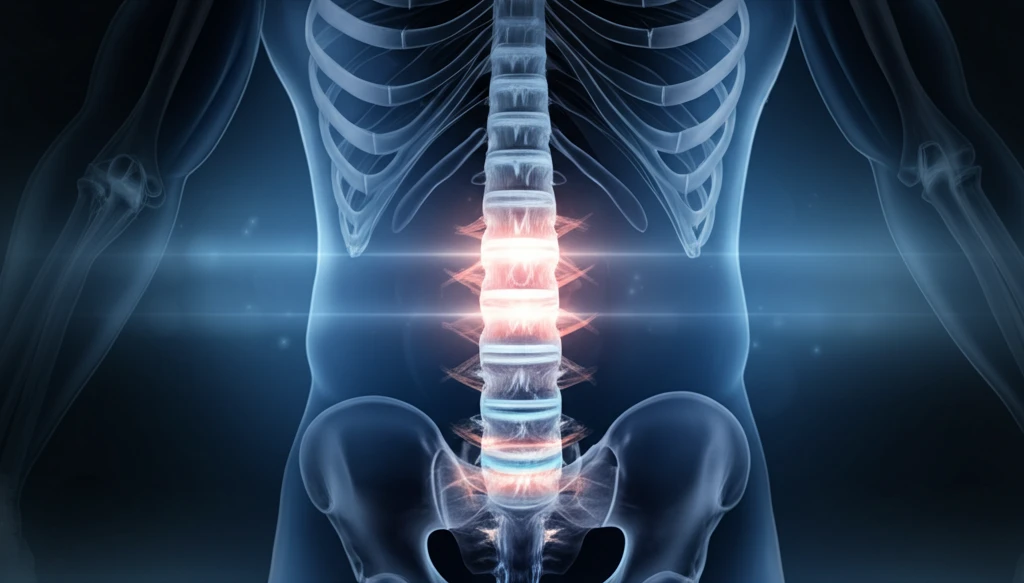
The lumbar spine is the lower region of the back and contains five vertebrae, designated L1 through L5. These are the largest vertebrae in the spine and lie below the 12 thoracic vertebrae and above the five fused bones of the sacrum. The lower back also includes intervertebral discs, nerves, muscles, ligaments, and blood vessels; the spinal cord ends at the top of the lumbar spine, while the cauda equina continues through the remaining spinal canal.
Anatomical Foundations
The lumbar spine supports the upper body, enables movement, and helps protect the spinal cord. Understanding its vertebral bodies, discs, nerves, and supporting muscles is important when identifying and addressing disorders of the lower back. The available source describes these anatomical and functional foundations but does not specify particular surgical methods or their limitations.
A Developing Field
The history of spinal alignment surgery has developed alongside broader advances in anatomical knowledge, imaging, and surgical technique. Specific milestones and foundational discoveries are not established by the supplied sources. Any historical account should therefore distinguish documented developments from retrospective interpretation.
Restoring Spinal Alignment: The Surgical Approach
Traditionally, spondylolisthesis was treated with arthrodesis in situ, often combined with autologous bone grafts. However, this approach had a significant failure rate, with about 20% of patients experiencing arthrodesis consolidation failure. Those with severe slippage (over 50%) were particularly prone to developing kyphotic deformity, necessitating more innovative surgical solutions. Modern surgical techniques focus on not only stabilizing the spine but also correcting the alignment to improve overall function.
- Posterior Approach: This involves accessing the spine from the back to reduce and fix the listhesis.
- Anterior Approach: Often used in conjunction with the posterior approach, this involves accessing the spine from the front to reconstruct the anterior spine.
- Intervertebral Cages: These are used to restore disc height and provide rigidity to the treated segment. Made from materials like titanium, they support fusion and proper alignment.
Evidence in Progress
Current research on spinal alignment surgery may continue to refine patient selection, operative techniques, and recovery strategies. The supplied materials do not identify particular studies, reviews, dates, or outcome figures. Conclusions about the latest evidence should therefore be treated cautiously until supported by named research.
Balancing Potential and Risk
Spinal alignment surgery can involve important decisions about expected benefits, risks, and recovery demands. The supplied sources do not provide specific failure rates, adverse outcomes, or opposing study findings. Patients and clinicians should therefore evaluate these issues using individualized medical advice and directly applicable evidence.
Comparing Treatment Paths
Treatment choices for spondylolisthesis may differ according to symptoms, spinal stability, functional limitations, and individual circumstances. No comparative studies or treatment-specific figures are provided in the supplied materials. Claims that one approach is broadly superior should therefore be avoided without condition-specific evidence.
A Path to Improved Quality of Life
Circumferential arthrodesis is a valuable resource for patients with lumbar spondylolisthesis. By modifying lumbar alignment and decreasing the lumbosacral lordosis angle, this procedure changes sagittal pelvic balance and reduces painful symptoms. Improving the balance of the lumbar spine alleviates pain by reducing stress on ligamentous and articular structures, enhancing mobility, and overall quality of life.
Putting Stability in Context
A careful discussion of spinal alignment surgery should connect anatomy, symptoms, stability, and the goals of treatment. The lumbar spine is a structurally important region, but anatomical importance alone does not determine whether surgery is appropriate. Expert interpretation requires assessment of the individual patient and evidence relevant to that patient’s condition.
The Road Ahead
Future progress may focus on making spinal care more precise, safer, and better matched to individual patients. The supplied materials do not identify specific emerging technologies, clinical trials, or projected outcomes. Any forecast about the next stage of spinal alignment surgery should therefore remain appropriately tentative.
Beyond the Operation
Spinal care is shaped not only by surgical technique but also by access to evaluation, specialist expertise, rehabilitation, and follow-up. The supplied materials do not provide data on disparities, costs, healthcare systems, or access barriers. These broader challenges require separate evidence before firm conclusions can be drawn.
Life With Greater Stability
For people living with spondylolisthesis, treatment decisions can affect mobility, comfort, independence, and daily routines. The supplied materials do not include patient-reported outcomes or individual recovery stories. Real-world impact should therefore be discussed with humility and grounded in each person’s symptoms, goals, and clinical circumstances.