
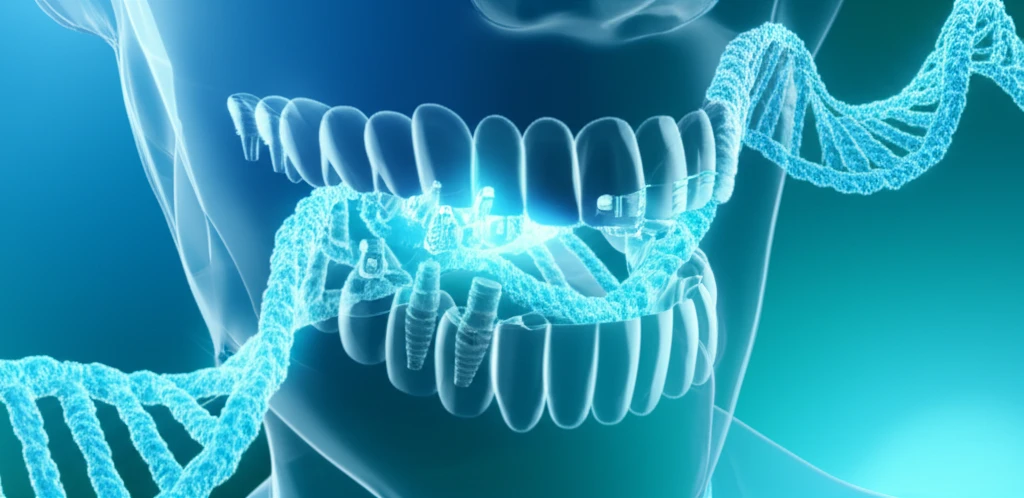
DNA strands intertwined with dental implants, symbolizing the connection between genetics and dental health.

Lactotransferrin Gene and Dental Implants: Uncovering the Genetic Factors Behind Implant Success

"A deeper look into how genetics, particularly the Lactotransferrin gene (LTF), influences the outcomes of dental implant procedures."


Dental implants have revolutionized restorative dentistry, offering a durable and functional solution for missing teeth. While the success rates of dental implants are generally high, a notable percentage of patients experience implant failure. This has prompted researchers to investigate various factors that could influence implant outcomes, including genetics.

One gene that has garnered particular attention in the field of dental implant research is the Lactotransferrin gene (LTF). Lactotransferrin, also known as lactoferrin, is an iron-binding glycoprotein with antimicrobial, anti-inflammatory, and immunomodulatory properties. It is found in various bodily fluids, including saliva, and plays a crucial role in maintaining oral health.

A 2015 study published in the journal 'Clinical Implant Dentistry and Related Research' explored the association between LTF gene polymorphisms and dental implant loss. The study, titled 'Lactotransferrin Gene (LTF) Polymorphisms and Dental Implant Loss: A Case-Control Association Study,' aimed to determine whether specific variations in the LTF gene could predict the success or failure of dental implants.

Decoding the Lactotransferrin Gene (LTF) and Its Impact on Dental Implants

DNA strands intertwined with dental implants, symbolizing the connection between genetics and dental health.

The Lactotransferrin gene (LTF) encodes for lactotransferrin, a protein vital for immune response and iron regulation, both crucial for healing and preventing infection. Variations in this gene, known as polymorphisms, can affect how well the protein functions, influencing an individual's susceptibility to inflammation and infection. In the context of dental implants, these genetic variations could potentially impact the osseointegration process—the direct structural and functional connection between living bone and the surface of a load-bearing implant.

The original study used a case-control design, comparing patients who had experienced dental implant loss with a control group who had successful implants. Researchers analyzed the LTF gene in both groups to identify any significant differences in the distribution of specific polymorphisms. Here’s a closer look at what the research entailed:

  • Study Design: Case-control study comparing patients with dental implant loss to those with successful implants.
  • Genetic Analysis: Examination of LTF gene polymorphisms in both groups.
  • Key Findings: Identification of specific LTF gene variations associated with increased risk of implant failure.
The study revealed that certain LTF gene polymorphisms were significantly more prevalent in patients who experienced dental implant loss. This suggests that these genetic variations may increase the risk of implant failure by affecting the body's ability to fight infection and promote bone healing. Individuals with these specific polymorphisms may have a compromised immune response in the oral cavity, making them more susceptible to peri-implantitis, an inflammatory condition that can lead to bone loss around the implant.

Future Implications and Personalized Dentistry

The discovery of a link between LTF gene polymorphisms and dental implant loss opens new avenues for personalized dentistry. By identifying individuals at higher risk of implant failure through genetic testing, dentists can tailor treatment plans to minimize potential complications. This might include more rigorous oral hygiene protocols, the use of antimicrobial agents, or alternative implant designs that promote better osseointegration.

About this Article -

This article was crafted using a human-AI hybrid and collaborative approach. AI assisted our team with initial drafting, research insights, identifying key questions, and image generation. Our human editors guided topic selection, defined the angle, structured the content, ensured factual accuracy and relevance, refined the tone, and conducted thorough editing to deliver helpful, high-quality information.See our About page for more information.

Everything You Need To Know

1

What is the Lactotransferrin gene (LTF) and why is it relevant to dental implants?

The Lactotransferrin gene (LTF) is a gene that provides instructions for making lactotransferrin, a protein with several important functions. Lactotransferrin is an iron-binding glycoprotein with antimicrobial, anti-inflammatory, and immunomodulatory properties. In the context of dental implants, LTF is relevant because variations in this gene (polymorphisms) can affect the body's ability to fight infection and promote bone healing, influencing the success of osseointegration, which is the direct connection between the implant and the bone. Therefore, the LTF gene plays a crucial role in determining the success or failure of dental implants.

2

How do polymorphisms in the Lactotransferrin gene (LTF) affect dental implant outcomes?

Polymorphisms, or variations, in the Lactotransferrin gene (LTF) can significantly impact dental implant outcomes. These variations can affect the function of the lactotransferrin protein, which is vital for the immune response and iron regulation. Specific LTF gene polymorphisms may increase susceptibility to inflammation and infection, potentially leading to peri-implantitis and bone loss. In essence, certain polymorphisms can compromise the body's ability to heal and integrate the implant, increasing the risk of implant failure. A study compared patients who had experienced dental implant loss with those with successful implants to identify differences in LTF gene polymorphisms and their correlation to implant outcomes.

3

What were the key findings of the study on the Lactotransferrin gene (LTF) and dental implant loss?

The study, titled 'Lactotransferrin Gene (LTF) Polymorphisms and Dental Implant Loss: A Case-Control Association Study,' revealed that certain LTF gene polymorphisms were significantly more prevalent in patients who experienced dental implant loss. This suggests that specific variations in the LTF gene may increase the risk of implant failure. This is due to the fact that these genetic variations could affect the body's ability to fight infection and promote bone healing. The study used a case-control design, comparing patients who had experienced dental implant loss with a control group who had successful implants and analyzed the LTF gene in both groups to identify significant differences.

4

In what ways can understanding the role of the Lactotransferrin gene (LTF) lead to improvements in dental implant procedures?

Understanding the role of the Lactotransferrin gene (LTF) opens new avenues for personalized dentistry. By identifying individuals at higher risk of implant failure through genetic testing, dentists can tailor treatment plans to minimize potential complications. This might include more rigorous oral hygiene protocols, the use of antimicrobial agents, or alternative implant designs that promote better osseointegration. This personalized approach can significantly improve the success rates of dental implants by addressing specific genetic predispositions that may affect healing and implant integration. In essence, it allows for proactive intervention based on an individual's genetic profile.

5

How does the Lactotransferrin protein contribute to oral health and dental implant success, and what happens when the Lactotransferrin gene (LTF) is altered?

The Lactotransferrin protein, encoded by the Lactotransferrin gene (LTF), is crucial for oral health due to its antimicrobial, anti-inflammatory, and immunomodulatory properties. It helps maintain a balanced oral environment by fighting off infections and supporting the immune response. When the LTF gene is altered through polymorphisms, the function of the lactotransferrin protein can be compromised. This may weaken the body's ability to combat infection and promote bone healing, which is essential for successful osseointegration of dental implants. The resulting imbalance may increase the risk of peri-implantitis, bone loss, and ultimately, implant failure. Thus, the LTF gene’s variations directly impact the effectiveness of the Lactotransferrin protein and influence the long-term success of dental implant procedures.

Newsletter Subscribe

Subscribe to get the latest articles and insights directly in your inbox.