
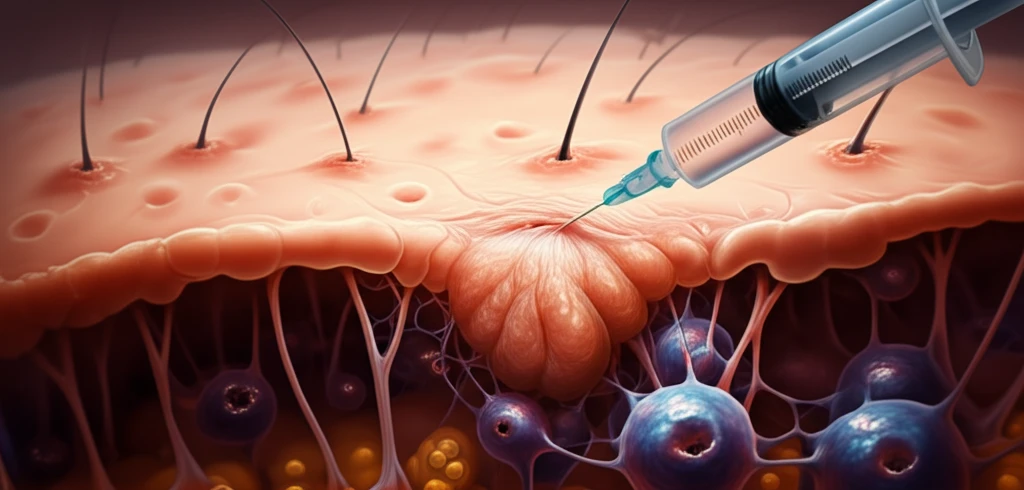
Keloid Scars: Can a Simple Injection Really Make a Difference?

"Exploring the effectiveness of triamcinolone injections in reducing keloid size and promoting cell death."
Keloids are more than just scars; they are a fibroproliferative disorder affecting a significant percentage of the population. Unlike normal scars that fade over time, keloids can grow beyond the original wound site, causing concern. Understanding what triggers and sustains keloid formation is crucial, and researchers have been exploring various treatments to manage and reduce these persistent skin growths.
One promising avenue of treatment involves triamcinolone, a corticosteroid known for its anti-inflammatory properties. Injecting triamcinolone directly into keloid scars has been a common practice for decades, aiming to reduce inflammation and potentially shrink the scar tissue. While the approach is widely used, questions remain about its effectiveness and the specific mechanisms through which it acts.
This article delves into a study assessing the impact of triamcinolone injections on keloid scars, focusing on changes in size and the induction of apoptosis, or programmed cell death, within the scar tissue. By understanding the results of this research, individuals grappling with keloids can make more informed decisions about their treatment options.
Triamcinolone Injections for Keloid Treatment: Do They Really Work?
A recent study investigated the effects of triamcinolone injections on keloid scars, examining changes in length, height, and thickness, as well as the number of cells undergoing apoptosis (cell death). The study involved fifteen patients with ear keloids, divided into two groups. One group underwent keloid excisions, while the other received three sessions of triamcinolone injections before excision.
- Study Design: Prospective, controlled, randomized, single-blinded clinical trial.
- Participants: Fifteen patients with ear keloids.
- Groups:
- Group 1: Keloid excision only (seven patients).
- Group 2: Keloid excision after three triamcinolone injections (eight patients).
- Triamcinolone Injection: 1 ml of triamcinolone hexacetonide (20mg/ml) injected into the central region of the keloid scar every three weeks.
- Measurements: Keloid length, height, and thickness measured before injections and before surgery.
- Apoptosis Analysis: Microscopic examination of surgical specimens to identify and quantify apoptotic cells.
What This Means for Keloid Treatment
The study suggests that while triamcinolone injections may lead to some reduction in keloid size, they do not significantly increase apoptosis within the scar tissue. Therefore, triamcinolone infiltration may not be the sole solution for keloid management. Further research is needed to explore the drug's mechanisms of action and determine its effectiveness in combination with other treatments, offering hope for more effective keloid management strategies in the future.