
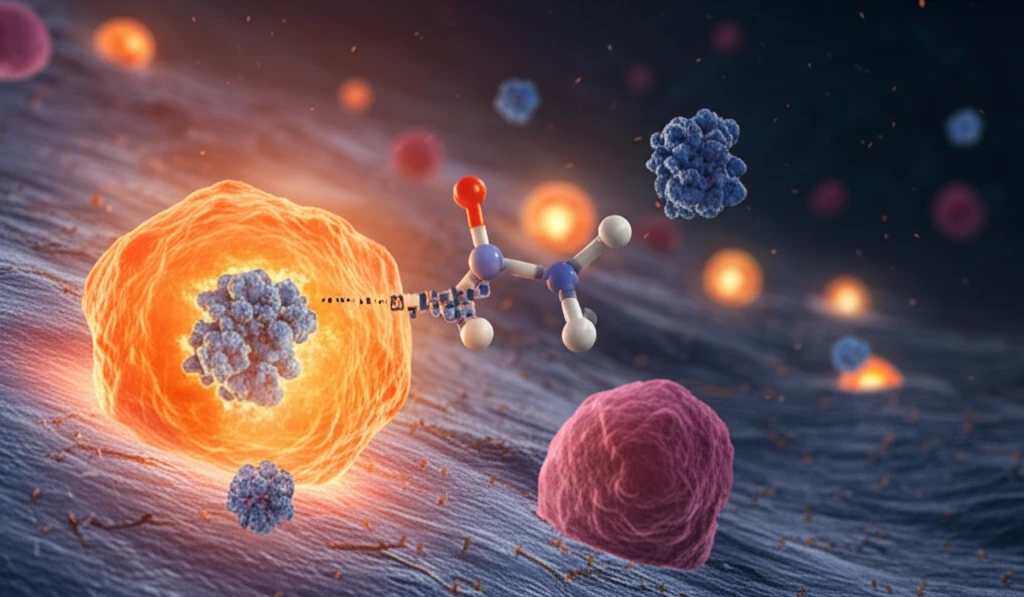
Unlocking Lung Cancer's Secrets: How Fluvastatin Could Be the Key

"Discover the groundbreaking research uncovering fluvastatin's potential in combating aggressive lung cancer, offering new hope for treatment."
Lung cancer remains a formidable health challenge, demanding innovative approaches to treatment. While conventional therapies have made strides, the need for more effective and less toxic solutions is urgent. Recent research sheds light on an unexpected ally in this fight: fluvastatin, a widely prescribed medication primarily used to lower cholesterol.
Fluvastatin belongs to a class of drugs known as statins, which have been recognized for their potential anti-cancer properties beyond their cholesterol-lowering effects. Scientists are now exploring how fluvastatin can disrupt the aggressive behavior of lung cancer cells, offering new pathways for therapeutic intervention. This article delves into the promising findings of a study that investigates fluvastatin's role in targeting SATB1, a protein implicated in the progression of lung cancer.
As we navigate through the complexities of this research, we'll uncover how fluvastatin could potentially revolutionize lung cancer treatment by addressing the aggressive phenotypes of non-small-cell lung cancer (NSCLC). This exploration promises to reveal not just the mechanisms behind fluvastatin's anti-cancer effects but also the broader implications for future cancer therapies.
The Lung Cancer Burden
Lung cancer remains one of the most prevalent and deadly forms of cancer worldwide. It accounts for a significant portion of cancer-related mortality, affecting both smokers and non-smokers alike. Early detection and treatment options have improved over time, yet survival rates remain a concern for patients and clinicians.
Conventional Lung Cancer Treatment
Standard lung cancer treatment typically involves a combination of surgery, chemotherapy, radiation, and targeted therapies. While these approaches have saved many lives, they often come with significant side effects and varying efficacy. Resistance to treatment remains a major challenge, leading researchers to explore alternative or complementary therapies.
Evolution of Lung Cancer Understanding
The understanding of lung cancer has evolved significantly since its initial identification. Milestones include the establishment of the link between smoking and lung cancer, and the development of targeted therapies that address specific genetic mutations. Foundational discoveries in tumor biology continue to guide modern research and therapeutic approaches.
What is SATB1 and Why Does it Matter in Lung Cancer?
SATB1, or Special AT-rich sequence-binding protein 1, is a genome organizer that plays a crucial role in cancer progression. Think of it as a master switch that reprograms the genetic instructions of cancer cells, encouraging them to grow and spread aggressively. In lung cancer, SATB1 is often overexpressed, contributing to the tumor's ability to invade and resist treatment.
- It promotes tumor growth and metastasis by altering gene expression.
- High levels of SATB1 are often found in aggressive forms of lung cancer.
- SATB1 influences multiple pathways that are critical for cancer cell survival.
Statins and Cancer: Emerging Research
Statins, commonly used to lower cholesterol, have attracted research interest for potential anticancer properties. Some laboratory and observational studies have explored whether statins might affect cancer cell growth or outcomes in patients with various cancer types. These studies represent early-stage research that warrants further investigation.
Challenges in Repurposing Drugs for Cancer
Drug repurposing strategies, including investigating statins for cancer treatment, face significant scientific and clinical hurdles. Early promising results in laboratory settings may not translate to clinical benefit, and definitive evidence from large-scale randomized controlled trials remains limited.
Evaluating Statin Research Across Cancer Types
Research on statins in oncology spans multiple cancer types, with varying results reported across different malignancies. The effectiveness of statins may differ based on cancer type, stage, and patient factors, requiring careful evaluation of the evidence for each specific context.
The Future of Fluvastatin in Lung Cancer Treatment
The data presented offers a promising avenue for personalized medicine. This is especially important for individuals with NSCLC, where specific genetic profiles can dictate treatment effectiveness. Identifying patients whose tumors exhibit high SATB1 expression could help determine who might benefit most from fluvastatin-based therapies. However, more research is needed, particularly through clinical trials, to fully validate these findings and understand the optimal use of fluvastatin in lung cancer treatment. As research progresses, the potential of fluvastatin to improve outcomes for lung cancer patients could become a reality.
Interpreting the Evidence on Statins and Lung Cancer
Expert commentary in the field emphasizes the need for rigorous clinical trials before drawing conclusions about statins in lung cancer treatment. While preclinical data provides rationale for investigation, clinical translation requires evidence from well-designed studies. The scientific community generally advocates for cautious optimism.
Next Steps in Lung Cancer Research
Future research directions include conducting large randomized controlled trials to definitively assess statins' potential in lung cancer care. Advances in precision medicine and biomarker identification may help identify patient populations who could benefit most from any potential statin-based approaches.
Healthcare System Considerations
Integrating new research findings into clinical practice involves navigating regulatory pathways and gaining acceptance from healthcare professionals. Access to clinical trials and emerging therapies varies across healthcare systems, presenting systemic challenges that need to be addressed.
Impact on Patients
Advances in lung cancer research offer hope to patients and families affected by the disease. Continued progress in understanding and treating lung cancer aims to improve survival rates and quality of life for those diagnosed with this challenging condition.