
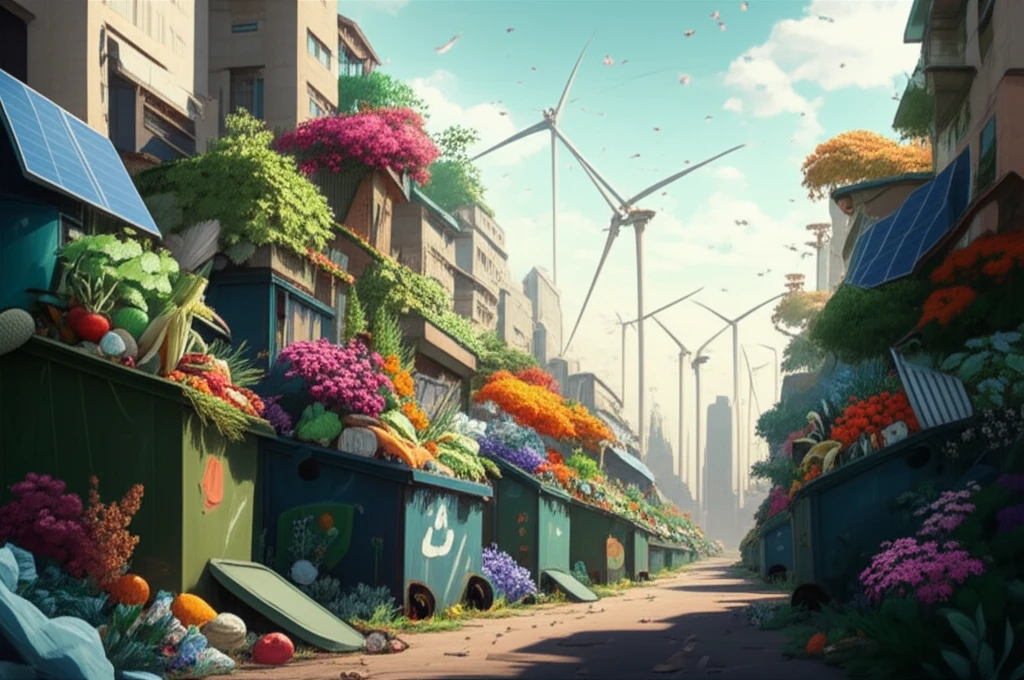
City transforming waste into a garden.

Is Your City's Trash a Hidden Goldmine? How Smart Waste Management Can Save the Planet (and Your Wallet)

"A Romanian Case Study Reveals the Untapped Potential of Sewage Sludge and Organic Waste"


We all know that dealing with waste is a necessary evil, but what if it could be more than just a burden? What if our trash held the key to a cleaner environment and a stronger economy? For many cities, including those in developing regions, outdated waste management practices are straining resources and harming the environment. But a new approach, focused on sustainability and resource recovery, is changing the game.

The European Union is leading the charge, pushing for innovative waste management strategies that prioritize prevention, reuse, and recycling. This isn't just about feel-good environmentalism; it's about creating a circular economy where waste becomes a valuable resource. And it's a vision that cities around the world can adopt.

This article dives into a fascinating case study from Sibiu County, Romania, where researchers are exploring ways to transform sewage sludge and organic waste into valuable resources. By examining Sibiu's challenges and proposed solutions, we can uncover valuable insights into how cities everywhere can turn their trash into treasure.

The Sibiu Challenge: Untapped Potential in Waste

City transforming waste into a garden.

Sibiu County, like many regions undergoing rapid industrialization and tourism growth, faces increasing pressure on its waste management systems. The absence of reliable sanitation and waste treatment, particularly for sewage sludge, poses a significant environmental challenge. Adding to the problem, organic waste is often dumped directly into landfills, contributing to pollution and global warming.

Researchers identified two key areas for improvement:

  • Organic Waste Management (OFMSW): Specifically, how to capture and process the organic fraction of municipal solid waste.
  • Sludge Management: Developing strategies to safely and effectively handle sewage sludge from wastewater treatment plants.
The goal? To find affordable, effective technologies that can treat both sludge and organic waste, while also recovering the energy needed to run the treatment plants. This approach not only reduces pollution but also creates a more sustainable and cost-effective system.

Turning Waste into Opportunity: A Blueprint for Sustainable Cities

The Sibiu case study offers a valuable blueprint for cities seeking to improve their waste management practices. By focusing on resource recovery and energy generation, cities can transform waste from a problem into an opportunity.

Key takeaways include:

<ul><li><b>Integrated Solutions:</b> Combining the treatment of sewage sludge and organic waste can create synergies and improve efficiency.</li><li><b>Affordable Technology:</b> Investing in cost-effective technologies is crucial for widespread adoption.</li><li><b>Financial Support:</b> Exploring funding opportunities, such as those offered by the European Union, can help cities implement sustainable waste management projects.</li></ul> The transition to sustainable waste management requires a comprehensive assessment of environmental impacts, financial feasibility, and technological solutions. By embracing innovation and collaboration, cities can pave the way for a cleaner, greener, and more prosperous future.

About this Article -

This article was crafted using a human-AI hybrid and collaborative approach. AI assisted our team with initial drafting, research insights, identifying key questions, and image generation. Our human editors guided topic selection, defined the angle, structured the content, ensured factual accuracy and relevance, refined the tone, and conducted thorough editing to deliver helpful, high-quality information.See our About page for more information.

This article is based on research published under:

DOI-LINK: 10.1051/matecconf/201712110006, Alternate LINK

Title: Environmental Assessment Of The Sibiu County, Romania: Proposal For Sewage Sludge And Ofmsw Management

Subject: General Medicine

Journal: MATEC Web of Conferences

Publisher: EDP Sciences

Authors: Gloria Trombin, Marco Ragazzi, Claudiu Isarie, Rodica Ciudin, Vincenzo Torretta

Published: 2017-01-01

Everything You Need To Know

1

What are the primary waste management challenges highlighted in the Sibiu case study?

The central challenge revolves around the effective management of two key waste streams: Organic Waste Management (OFMSW), focusing on capturing and processing the organic fraction of municipal solid waste, and Sludge Management, which involves developing strategies to safely and effectively handle sewage sludge from wastewater treatment plants. Successfully addressing these areas can lead to significant environmental and economic benefits.

2

What is the main objective of the waste management initiatives being explored in Sibiu, Romania?

The primary goal is to identify and implement affordable and effective technologies for treating both sewage sludge and Organic Waste Management (OFMSW). An important aspect is recovering the energy during the treatment processes, which can then be used to power the treatment plants themselves. This approach aims to reduce pollution and create a more sustainable and cost-effective waste management system.

3

How can focusing on Organic Waste Management (OFMSW) and Sludge Management turn trash into a valuable resource?

The case study highlights the potential for transforming waste management from a costly problem into a source of valuable resources and energy. By implementing strategies for Organic Waste Management (OFMSW) and Sludge Management, Sibiu and other cities can reduce pollution, recover valuable resources, and even generate energy, contributing to a circular economy and a more sustainable future. This can also reduce the reliance on landfills and create new economic opportunities.

4

What factors are contributing to the increased pressure on waste management systems in Sibiu County?

Rapid industrialization and tourism growth in Sibiu County have led to increased pressure on its waste management systems. The lack of adequate sanitation and waste treatment, especially for sewage sludge, presents a major environmental challenge. In addition, the common practice of dumping organic waste directly into landfills exacerbates pollution and contributes to global warming. Efficient Organic Waste Management (OFMSW) and Sludge Management are crucial to mitigate these issues.

5

How does the EU's focus on waste management relate to innovative approaches for Organic Waste Management (OFMSW) and sewage sludge treatment?

The EU's emphasis on waste management involves strategies that prioritize prevention, reuse, and recycling, alongside resource and energy recovery from waste. For example, the efficient capture and processing of Organic Waste Management (OFMSW) to produce compost or biogas aligns with these objectives. Similarly, employing advanced technologies to treat sewage sludge not only reduces pollution but also recovers valuable resources like phosphorus. These concepts promote a circular economy where waste is seen as a valuable resource, driving innovation and sustainability.

Newsletter Subscribe

Subscribe to get the latest articles and insights directly in your inbox.