
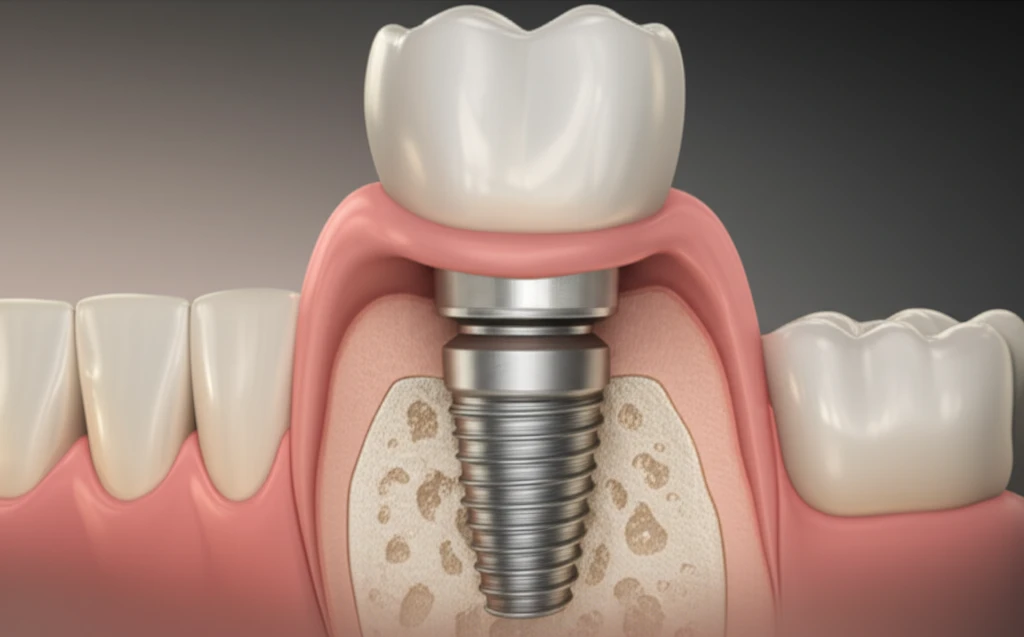
Immediate Implants: Are You Setting the Stage for Success?

"Discover how bone and tissue thickness can significantly impact the long-term stability of your dental implants."
Dental implants have revolutionized tooth replacement, offering a stable and aesthetic solution. Traditionally, implants were placed in healed ridges after a period of healing. However, the field has evolved, with immediate placement and loading becoming increasingly popular.
Immediate loading, where implants are placed and restored soon after extraction, offers convenience and faster results. But are these immediate solutions as reliable in the long run? The key lies in understanding the factors that contribute to their success, particularly the quality and quantity of bone and soft tissue.
This article delves into a fascinating study that explores the influence of initial hard and soft tissue dimensions on the initial crestal bone loss of immediately loaded dental implants. We'll break down the research findings, offering insights into how bone volume and soft tissue thickness impact implant stability and longevity.
Bone Volume & Soft Tissue: The Unsung Heroes of Implant Success
A study published in the International Journal of Periodontics & Restorative Dentistry investigated the impact of soft tissue thickness (thin [<3mm] vs. thick [≥3mm]) and bone volume (abundant vs. limited) on crestal bone remodeling around immediately loaded implants.
- Implants placed immediately after extraction showed less initial crestal bone loss compared to those placed in healed ridges.
- Implants in healed ridges with thin soft tissues experienced significantly more crestal bone loss.
- When implants were placed in healed ridges, there was a correlation between soft tissue thickness and bone volume. This correlation was not observed in implants placed immediately after extraction.
What Does This Mean for Your Implant Journey?
The study's findings reinforce several key principles in implant dentistry: prioritizing primary stability, achieving ideal three-dimensional positioning, and carefully assessing the bone and soft tissue environment before implant placement.
While immediate loading offers advantages, it's not a one-size-fits-all approach. Patients with thin soft tissues or limited bone volume, especially in healed ridges, may require additional considerations, such as soft tissue grafting or bone augmentation, to optimize implant outcomes.
Ultimately, successful implant treatment hinges on a comprehensive understanding of the patient's unique anatomy and meticulous surgical execution. By paying close attention to bone volume and soft tissue thickness, clinicians can set the stage for long-term implant success and patient satisfaction.