
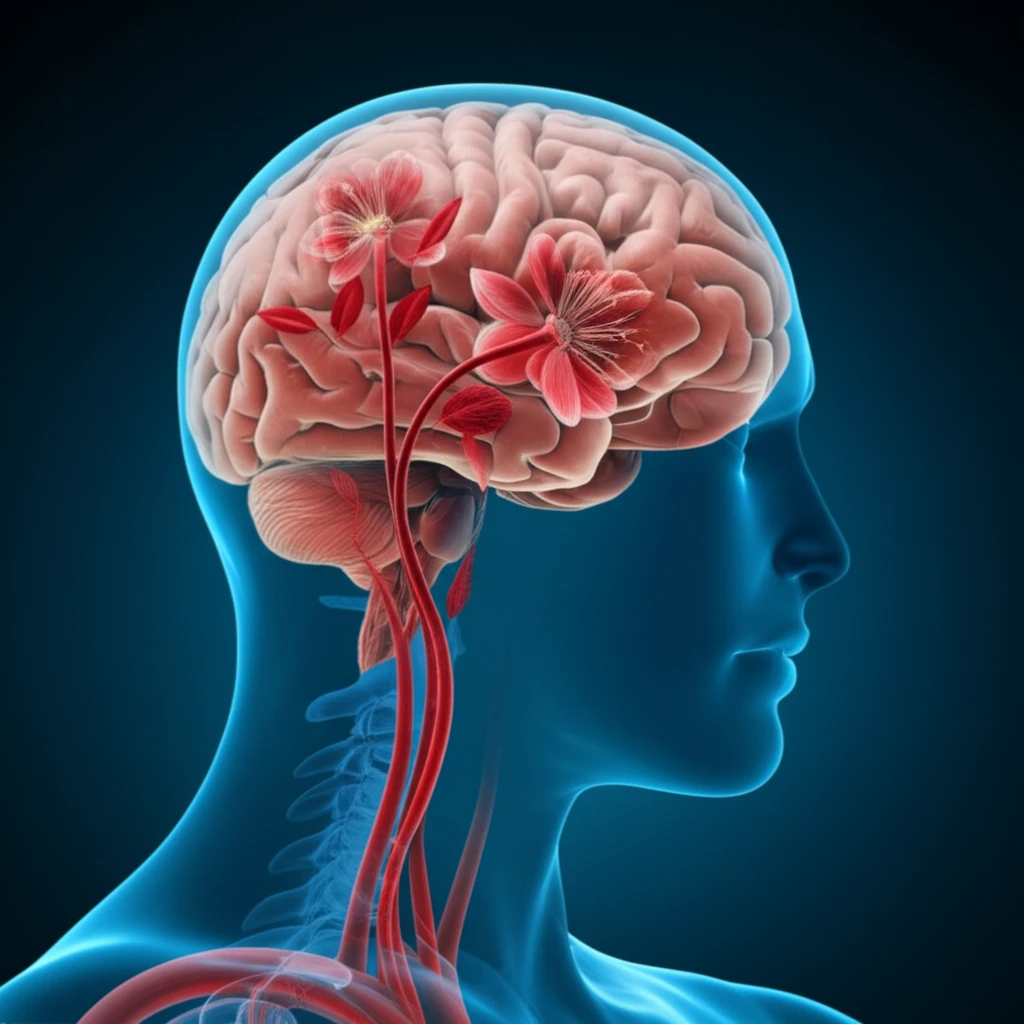
Hypertension and Brain Health: Can Controlling Blood Pressure Prevent Aneurysm Bleeds?

"New research explores the critical link between managing hypertension and reducing the risk of life-threatening aneurysmal subarachnoid hemorrhages (SAH)."
Hypertension, commonly known as high blood pressure, is a widespread health issue, particularly among individuals who experience aneurysmal subarachnoid hemorrhage (SAH), a type of bleeding in the brain. While the connection between hypertension and SAH has been recognized, it hasn't been clear whether managing hypertension before such a bleed can actually reduce the risk of severe outcomes.
A new study published in Acta Neurochirurgica sheds light on this critical question. The research investigates how controlling hypertension with medication affects the outcomes of patients who experience aneurysmal SAH. This study aims to provide insights into whether proactive management of blood pressure can lead to better health results following a brain bleed.
This article breaks down the study's findings, explaining what they mean for individuals at risk of aneurysms and highlighting practical steps you can take to safeguard your brain health. Whether you have a history of hypertension or are simply interested in preventative health strategies, this information could be life-saving.
Blood Pressure and Brain Health
High blood pressure is widely recognized as an important modifiable risk factor for cardiovascular and cerebrovascular health. Its effects on the brain may include vascular injury and impaired cognitive function, although the specific relationship between blood-pressure control and aneurysm bleeding requires careful interpretation. Overall, the topic remains clinically important because hypertension can affect both vascular integrity and brain health.
Current Management Approach
Standard hypertension management generally emphasizes sustained blood-pressure control through lifestyle measures and, when needed, medication. These approaches are intended to reduce vascular complications, but they do not eliminate every source of brain or blood-vessel risk. The extent to which routine blood-pressure control specifically prevents aneurysm bleeds remains an important clinical question.
From Blood Pressure to Brain Health
Understanding of hypertension has developed from viewing it primarily as a cardiovascular problem to recognizing its broader effects on the brain and cerebral circulation. Research has increasingly examined how long-term pressure-related vascular changes may contribute to neurological disease. This history provides the foundation for current efforts to connect blood-pressure control with prevention of brain injury.
Why Controlling Hypertension Matters for Brain Health
The study, conducted by researchers at the First Affiliated Hospital of Chongqing Medical University, retrospectively reviewed the cases of 348 patients admitted between February 2012 and December 2017. All patients had experienced a ruptured intracranial aneurysm. The researchers divided the patients into two groups: those who had been treated for hypertension before their SAH (the antihypertensive group) and those who had untreated or poorly controlled hypertension (the uncontrolled group).
- Clinical Grade: Patients with uncontrolled hypertension tended to have a worse initial clinical grade upon admission.
- Severity of Bleeding: The uncontrolled hypertension group experienced more severe aneurysmal SAH and a higher incidence of intracerebral hematoma (bleeding within the brain tissue itself).
- Type of Medication: Among patients in the antihypertensive group, those treated with ACE inhibitors (ACEI) or angiotensin receptor blockers (ARB) experienced less bleeding compared to those on other types of blood pressure medications.
- Complications: The group with controlled hypertension had a lower incidence of rebleeding, hydrocephalus (fluid buildup in the brain), and cerebral vasospasm (narrowing of blood vessels).
- Outcomes: This group also experienced lower rates of disability and mortality.
New Views of Hypertension and the Brain
Recent reviews examine hypertension through both neural and vascular mechanisms, including central sympathoexcitation and cerebrovascular outcomes. A December 2025 systematic review assessed functional MRI studies of brain-function and cognitive changes in people with hypertension, identifying eight relevant studies, most using resting-state fMRI. A March 2026 systematic review and quantitative synthesis likewise evaluated resting-state fMRI findings in hypertensive individuals compared with normotensive people. Reviews published in 2025 also place hypertension alongside obesity as a modifiable cardiovascular risk affecting brain-health trajectories.
Why Blood Pressure Control Is Not the Whole Story
Reviews of hypertension-induced cognitive impairment emphasize that hypertension and ageing can damage the cerebral microcirculation and contribute to cognitive dysfunction. The evidence also points to broader pathways: hypertension can directly affect brain structure and microvasculature while increasing the risk of conditions such as chronic kidney disease and heart failure that are associated with dementia. One 2024 review reports that improved blood-pressure control can reduce risks of stroke and cognitive decline, but these benefits do not mean that every mechanism of brain injury is fully prevented. The sources therefore support blood-pressure management while also highlighting the complexity of cerebrovascular and neurodegenerative disease.
Comparing Prevention Strategies
Comparing blood-pressure strategies requires distinguishing broad brain-health benefits from protection against a specific event such as an aneurysm bleed. In general, sustained risk-factor management is likely to be more useful than relying on a single measurement or intervention, but the available material does not establish one universally superior approach. The evidence should therefore be interpreted cautiously, especially when applying general hypertension findings to individual aneurysm risk.
Take Control of Your Brain Health Today
The findings of this study underscore the importance of proactively managing hypertension. If you have high blood pressure, work closely with your healthcare provider to develop a treatment plan that effectively controls your blood pressure. This may include lifestyle modifications such as diet and exercise, as well as medication. By taking control of your hypertension, you can significantly reduce your risk of severe brain bleeds and improve your overall brain health.
What the Evidence Suggests
Taken together, hypertension is relevant to brain health because it can affect cerebral vessels, brain function, and cognitive outcomes. Controlling blood pressure is a rational component of vascular prevention, but the supplied evidence does not prove that it independently prevents every aneurysm bleed. Clinical decisions should therefore account for overall vascular risk and the limits of current evidence.
Earlier and More Precise Prevention
Future hypertension care is moving toward earlier treatment, digital tools, and more individualized management. The Target BP material reports that newer evidence supports lower blood pressure to reduce cognitive decline and dementia risk, and its 2025 guideline recommends starting therapy earlier for stage 1 hypertension when lifestyle changes have not worked within 3 to 6 months, including in some lower-risk adults. Digital hypertension research is also being reviewed for its technological and clinical advances, although broader adoption still faces challenges. These developments aim to protect both cardiovascular and brain health.
Complex Mechanisms of Brain Injury
Hypertension is identified as a major risk factor for stroke and cognitive impairment, but the mechanisms connecting high blood pressure to brain disease remain incompletely understood. Research describes disruption of blood-brain barrier integrity, neuroinflammation, microvascular rarefaction, neurovascular dysfunction, and neurovascular uncoupling. These findings come from reviews that also note important mechanistic insights from animal models and the need for further translational work. Neuroimaging biomarkers may eventually help identify hypertensive brain injury before substantial cognitive impairment develops.
From Population Risk to Individual Lives
Observational evidence links hypertension and other modifiable cardiovascular risks with cognitive decline and dementia; one cited estimate reported that hypertension affected about 1.4 billion people worldwide in 2010. More recent mouse research used single-cell RNA sequencing to map neocortical transcriptomic changes three days and 42 days after induction of angiotensin II hypertension, before and after neurovascular and cognitive deficits. That study also underscores that how hypertension affects brain cells remains unclear. For patients, the practical message is that blood-pressure management may support long-term brain health, while research continues to define the biological pathways and individual risks.