
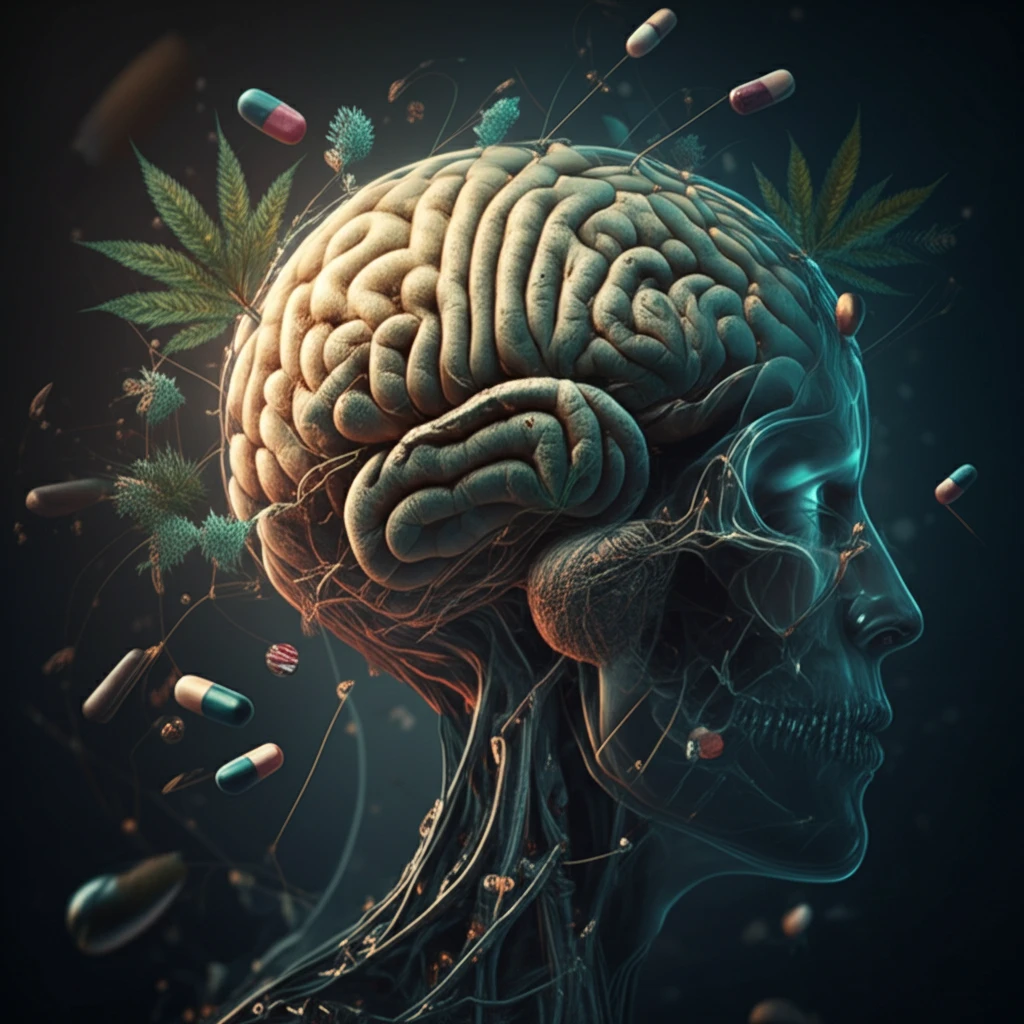
Unlocking Memory: How Cannabinoid Receptors Influence Morphine and Cognitive States

"Exploring the critical role of CB1 receptors in the brain and their impact on state-dependent memory and drug interactions."
The brain's medial prefrontal cortex (mPFC) is central to cognitive functions, especially memory. The mPFC ensures that our memories are accurately formed and recalled. Researchers are increasingly focused on how the endocannabinoid system, a key player in brain signaling, influences these memory processes through CB1 receptors.
The endocannabinoid system, which operates through CB1 receptors, modulates how memories are created and stored. The complex interactions within this system offer potential targets for therapeutic interventions aimed at enhancing or protecting memory functions.
Recent studies have explored the connections between opioid use and cognitive impairment, particularly how substances like morphine affect memory. These studies suggest that drug interactions can create unique 'state-dependent' memory effects, where recall is tied to specific physiological conditions present during memory formation.
The Opioid Epidemic and Cannabinoid Solutions
Much of the opioid epidemic arose from abuse of prescription opioid drugs. Research has explored whether combining cannabinoids with opioids could produce additive or synergistic effects on pain, potentially allowing reduction in opioid doses. The ability of a cannabinoid to produce synergistic analgesia when combined with morphine varies with the pain assay and may be mediated by CB1 or CB2 receptors. These preliminary findings suggest cannabinoids hold promise for reducing opioid doses in certain pain conditions.
Addressing Morphine Tolerance Through Cannabinoid Mechanisms
Morphine tolerance can be alleviated by improving the pathophysiological changes that lead to its development. Previous studies have demonstrated that cannabinoid type 2 (CB2) receptor agonists could attenuate morphine tolerance in various animal models. Research has shown clear interaction between the cannabinoid and opioid systems, providing new directions for studying morphine-related complications. This introduces potential mechanisms for reducing morphine tolerance and offering benefits for affected patients.
From Ancient Plants to Modern Receptor Discovery
Morphine, an alkaloid derived from the poppy, is one of the best known examples of plant-derived medicine with thousands of years of medicinal use. Research into cannabinoid pharmacology began in the 1940s, several decades after cannabinoids were first detected in cannabis. This pharmacological research led to discovery of cannabinoid CB1 and CB2 receptors and endogenous ligands for these receptors. CB1 receptors, encoded by the CNR1 gene, were discovered through characterization in 1988 and cloned in 1990.
Cannabinoid Receptors and Memory: What the Study Reveals
A recent study investigated the role of CB1 receptors in the mPFC, focusing on how these receptors affect memory when morphine and dextromethorphan (DXM) are combined. The research used male Wistar rats to examine how these substances interact to influence memory and associated brain signals.
- Morphine impairs memory, reducing BDNF and cFOS protein levels.
- Dextromethorphan (DXM) can reverse morphine-induced memory loss.
- CB1 receptors in the mPFC play a critical role in these drug interactions.
- ACPA inhibits cross-SDM morphine & DXM.
Emerging Evidence on Cannabinoid-Opioid Interactions
Recent research from 2025 suggests potential interaction between cannabinoid and opioid receptors, though further investigation is needed to clarify underlying mechanisms. Studies have shown that opioid and cannabinoid systems share many neuromodulating and pharmacological effects through activation of their respective receptors. Inflammation is increasingly implicated in many diseases, with mu-opioid receptor and CB2 cannabinoid receptor both linked to neuroinflammation. Emerging research focuses on epigenetic modifications of these receptors and the therapeutic potential of non-psychoactive cannabinoids like CBD in pain management.
Challenges and Limitations in Current Research
Despite promising findings, research into cannabinoid-opioid interactions faces several challenges. The ability of cannabinoids to produce synergistic effects with morphine varies depending on the specific pain assay used, complicating generalizations. Individual responses to cannabinoid-opioid combinations may differ based on genetic and physiological factors. More standardized research approaches are needed to establish consistent clinical recommendations.
Comparing Cannabinoid and Opioid Mechanisms
Cannabinoid and opioid systems both modulate pain but through distinct receptor pathways and mechanisms. While opioids primarily act through mu-opioid receptors, cannabinoids exert effects through CB1 and CB2 receptors distributed throughout the nervous system. Research suggests combining these systems may offer advantages over single-agent approaches for certain pain conditions. However, the relative effectiveness of different cannabinoid-opioid combinations requires further systematic comparison.
Implications and Future Directions
This research highlights the intricate role of CB1 receptors in modulating drug-related memory effects and opens new avenues for understanding substance use and cognitive impairment. Further studies are needed to explore the therapeutic potential of targeting these receptors to mitigate the cognitive side effects of medications and to develop strategies for managing drug dependencies. By understanding the complex interplay between different brain systems, we can develop more effective treatments for memory-related disorders.
Integrating Current Knowledge and Expert Perspectives
Current evidence suggests meaningful interaction between cannabinoid and opioid systems in pain modulation. Researchers emphasize the need for further mechanistic studies to fully understand how these systems interact at molecular and cellular levels. The therapeutic potential of cannabinoid-opioid combinations appears promising but requires careful evaluation through rigorous clinical trials. Expert consensus supports continued investigation while acknowledging the complexity of these neurobiological interactions.
Advances in Cannabinoid Pharmacology and Drug Development
Research into cannabinoid receptors pharmacology continues to advance, with ongoing progress in cannabinoid-derived drugs opening new therapeutic avenues. Allosteric modulators represent a promising future direction in cannabinoid drug development. More than 30 years after discovery of CB1 and CB2 receptors, research activity remains robust with new insights emerging regularly. These advances pave the way for future research into the full medicinal potential of cannabinoid-based therapies.
Systemic Interactions and Clinical Implications
Cannabinoids and opioids are distinct drug classes historically used separately or in combination to treat different pain states. Research has characterized signal transduction pathways mediated by cannabinoid CB2 and mu-opioid receptors in both resting and activated immune cells. The interactions between cannabinoid and opioid systems occur at multiple physiological levels, suggesting complex regulatory mechanisms. Understanding these broader systemic interactions is essential for developing safer and more effective pain management strategies.
Translating Research to Patient Care
The ultimate goal of cannabinoid-opioid research is improving outcomes for patients with chronic pain. While laboratory findings are promising, translating these discoveries into clinical practice requires addressing practical challenges in dosing, delivery methods, and individual patient variability. Patient safety remains paramount, particularly given the complexities of managing opioid medications. Continued research aims to bridge the gap between experimental findings and real-world therapeutic applications.