
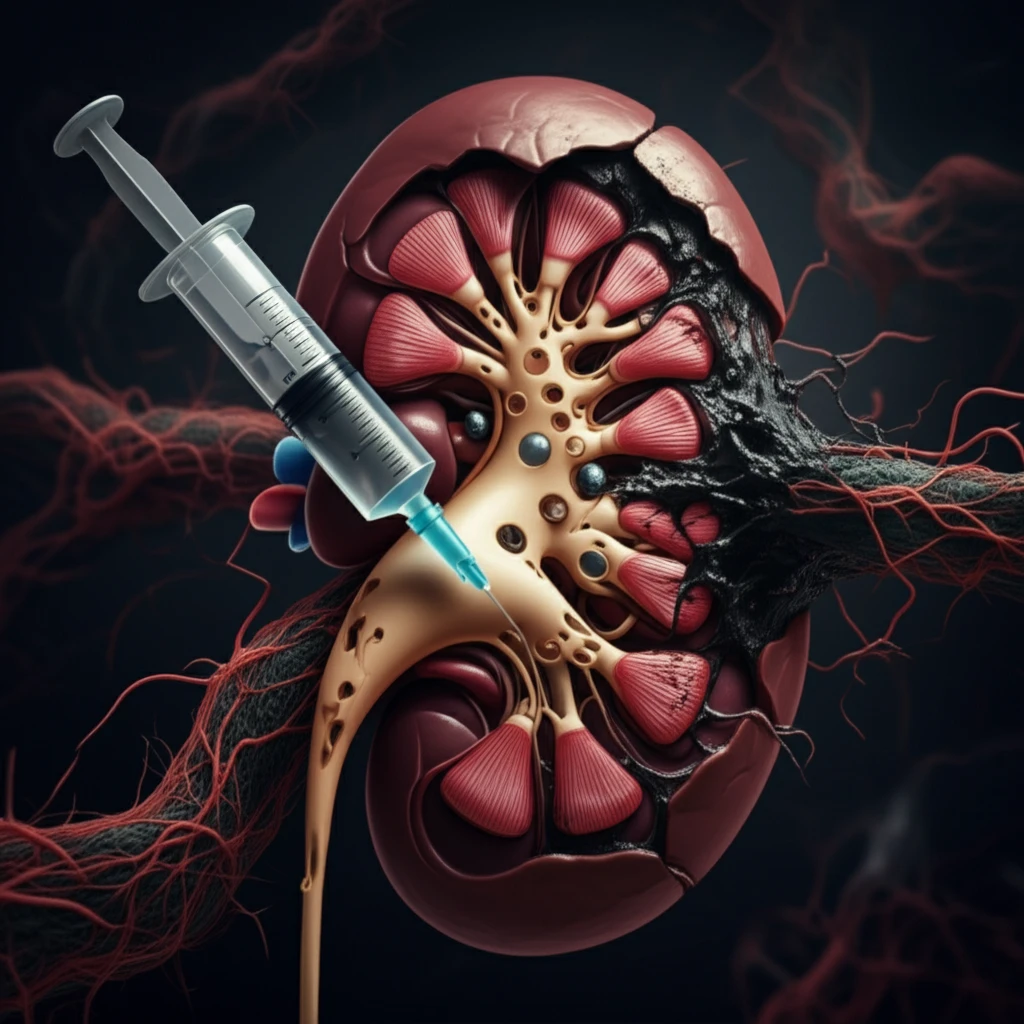
Heroin and Health: Unmasking AA Amyloidosis in the Opioid Crisis

"A look into the rise of secondary amyloidosis among heroin users and its implications for public health."
The opioid crisis in the United States has cast a long shadow, with overdoses, psychiatric disorders, and infectious diseases grabbing headlines. But beneath the surface lies another, less publicized threat: secondary amyloidosis (AA), a condition where the body's organs begin to fail due to a buildup of abnormal protein deposits. While traditionally associated with chronic inflammatory diseases, AA amyloidosis is increasingly linked to heroin use, creating a new challenge for public health officials and healthcare providers.
Heroin use has surged in recent years, affecting diverse populations across the country. According to the research, rates have increased significantly, especially among women and non-Hispanic whites. This surge is accompanied by a rise in injection-related complications, making it crucial to understand the less obvious health consequences associated with this dangerous drug.
This article highlights the insidious connection between heroin use and AA amyloidosis, spotlighting a case study that underscores the need for increased awareness and proactive intervention.
Heroin's Hidden Toll on Kidney Health
A UW Medicine study examining 38 patients diagnosed with AA-type kidney amyloidosis between 2005 and 2015 found that 35 had a previous history of heroin use, revealing a striking association between intravenous heroin and this incurable kidney disease. AA amyloidosis, characterized by the abnormal deposition of insoluble protein fibers in kidney tissue, presents primarily with nephrotic-range proteinuria and renal dysfunction. Given the ongoing opioid epidemic and rising heroin use, clinicians are increasingly likely to encounter cases of secondary amyloidosis in their practice, making awareness of this connection critical for early detection and management.
Challenges in Diagnosis and Treatment
AA-type kidney amyloidosis has historically been associated with chronic autoimmune or inflammatory disorders, but urban centers now report high prevalence of injection drug use among affected patients—a connection that often predated widespread recognition of the opioid epidemic. A UW Medicine study published in the Clinical Journal of the American Society of Nephrology strongly associates intravenous heroin use, particularly the black tar variety common in the Pacific Northwest, with this untreatable kidney disease that frequently leads to dialysis and death. Most previous reports lacked control groups to quantify the association and predate the current opioid epidemic, limiting the clinical frameworks available for managing these complex patients.
Understanding AA Amyloidosis
AA amyloidosis is a form of amyloidosis characterized by the abnormal deposition of insoluble protein fibers in the extracellular space of various tissues and organs, most commonly affecting the kidneys. Recent research has identified DNAJB9-positive AA amyloidosis as a distinct subtype that is Ig-negative and CR-positive, observed specifically in patients with a history of heroin use and chronic bacterial infections. This discovery represents a milestone in understanding how substance use intersects with the pathophysiology of amyloidosis, moving beyond the traditional association with chronic autoimmune conditions.
What is AA Amyloidosis and How Does Heroin Use Increase the Risk?
AA amyloidosis occurs when serum amyloid A (SAA) protein, produced in response to inflammation, accumulates in organs like the kidneys. While chronic conditions such as rheumatoid arthritis and inflammatory bowel disease are well-known causes, heroin use introduces a different pathway. Injection drug use, particularly of black tar heroin, often leads to recurrent skin and soft tissue infections. These infections trigger a sustained inflammatory response, driving up SAA production and increasing the risk of amyloid deposits.
- Recurrent Infections: Injection sites can become breeding grounds for bacteria, leading to chronic infections.
- Impurities in Heroin: Black tar heroin contains impurities that exacerbate inflammation and venous sclerosis.
- Injection Techniques: "Skin popping" and "muscling," where drugs are injected into the skin or muscle, heighten the risk of local infections.
- Lack of Sterile Practices: Sharing needles and using unsanitary injection techniques further amplify the risk of infection.
Emerging Evidence and Risk Quantification
A 2025 study from UCLA Health reports on acute renal failure due to amyloidosis associated with intravenous heroin use, classifying AA amyloidosis as a systemic condition arising from chronic inflammation and persistent inflammatory states including chronic intravenous drug use. A landmark study found that heroin use was associated with an approximately 170-fold increased risk of developing AA amyloidosis compared to individuals without a history of heroin use, with the condition more commonly observed in White individuals using 'black tar heroin.' A multicenter retrospective analysis conducted in San Francisco further examines outcomes for patients with renal AA amyloidosis associated with injection heroin use, where skin popping is a common practice among heroin users in the western United States.
Limitations in Classification and Evidence
The classification of amyloidosis is based on the identity of the precursor protein, with AA amyloidosis recognized as a systemic condition arising from chronic inflammation that is less common than other forms. While this framework provides a basis for understanding the disease, it does not fully account for the mechanisms by which intravenous drug use triggers amyloid deposition in certain patients. The evidence linking heroin to AA amyloidosis, though growing, remains primarily observational, and further research is needed to understand the specific pathways involved and to develop targeted therapeutic approaches.
AA Amyloidosis in Context
AA amyloidosis represents a subset of amyloidosis that, while less common than AL amyloidosis, carries significant morbidity and mortality. The condition's association with injection drug use distinguishes it from other forms that are primarily linked to chronic autoimmune or inflammatory conditions. As the opioid crisis continues, understanding how this particular form of amyloidosis manifests in substance-using populations compared to traditional patient groups becomes increasingly important for clinical practice and public health interventions.
The Path Forward: Prevention and Treatment Strategies
The rise of AA amyloidosis among heroin users presents a complex challenge that requires a multi-faceted approach. Public health initiatives promoting safe prescribing practices, harm reduction strategies, and increased access to treatment are crucial. Medication-assisted treatment (MAT) can help individuals break free from the cycle of addiction, reducing the risk of injection-related infections. Law enforcement efforts to curb the illicit drug supply also play a role in minimizing the availability of dangerous substances. For individuals already affected by AA amyloidosis, early diagnosis and treatment of underlying infections are vital to slow the progression of the disease. Supportive care, including diuretics and ACE inhibitors, can help manage symptoms and protect kidney function. In refractory cases, innovative therapies targeting amyloid formation are being explored. By addressing both the addiction and its complications, we can mitigate the devastating impact of the opioid crisis and protect the health of our communities.
The Role of Skin Popping in Disease Progression
Drug users who inject via the subcutaneous route, a practice known as 'skin popping,' have a significantly higher chance of developing secondary amyloidosis compared to those who inject intravenously. Renal biopsy findings in heroin addicts have consistently demonstrated AA renal amyloidosis associated with chronic suppurative skin infection secondary to skin popping, suggesting a direct link between injection practices and amyloid deposition. The kidneys, liver, and spleen are the main target organs of AA amyloid deposits, with more than 90% of patients with renal amyloidosis presenting with proteinuria, nephrotic syndrome, or renal dysfunction.
Emerging Challenges and Opportunities
The intersection of the opioid epidemic and AA amyloidosis presents both urgent challenges and opportunities for research and clinical practice. As injection drug use patterns evolve and new substances emerge, understanding the mechanisms of amyloid deposition becomes critical for prevention and early intervention strategies. Future research must address the development of targeted therapies, improve diagnostic tools for early detection, and establish evidence-based guidelines for managing AA amyloidosis in substance-using populations.
The Intersection of Addiction and Chronic Disease
Reports consistently describe AA amyloidosis associated with intravenous and/or subcutaneous injection of street drugs such as heroin and cocaine, with most patients presenting with substance use disorder, renal amyloidosis, and concurrent viral infections including hepatitis and/or HIV. The condition represents a particularly devastating intersection of addiction and chronic disease, where substance use triggers a cascade of inflammatory processes leading to irreversible organ damage. The opioid crisis has created a growing population of patients at risk, yet healthcare systems remain largely unprepared to address this specific complication of injection drug use.
Beyond Statistics: The Patient Experience
The human toll of AA amyloidosis in the context of heroin use extends far beyond clinical statistics, representing a profound burden on individuals, families, and communities already affected by addiction. Patients face a dual diagnosis of substance use disorder and a progressive, often untreatable kidney disease that frequently leads to dialysis and premature death. The condition disproportionately affects vulnerable populations, including those experiencing homelessness and chronic infections, creating complex care needs that challenge existing healthcare delivery models.