
Herbal Power Couple: How Nanotechnology Could Revolutionize Cancer Treatment

"New research explores how combining traditional Chinese medicine with advanced drug delivery systems can boost the effectiveness of cancer drugs while reducing side effects."
Cancer remains a leading cause of mortality worldwide, pushing researchers to explore innovative treatment strategies. Combination therapy, which uses multiple drugs to attack cancer cells through different mechanisms, has emerged as a promising approach. Traditional Chinese medicine (TCM) offers a rich source of potential drug combinations, often with fewer side effects than conventional treatments.
One such TCM combination involves Evodiamine (EVO) and Berberine (BBR), derived from the Euodiae Fructus and Coptidis Rhizoma plants, respectively. This herbal pair has demonstrated synergistic antitumor effects against various cancer types. However, the poor solubility and potential toxicity of EVO and BBR have limited their clinical application. Now, scientists are using nanotechnology to overcome these challenges.
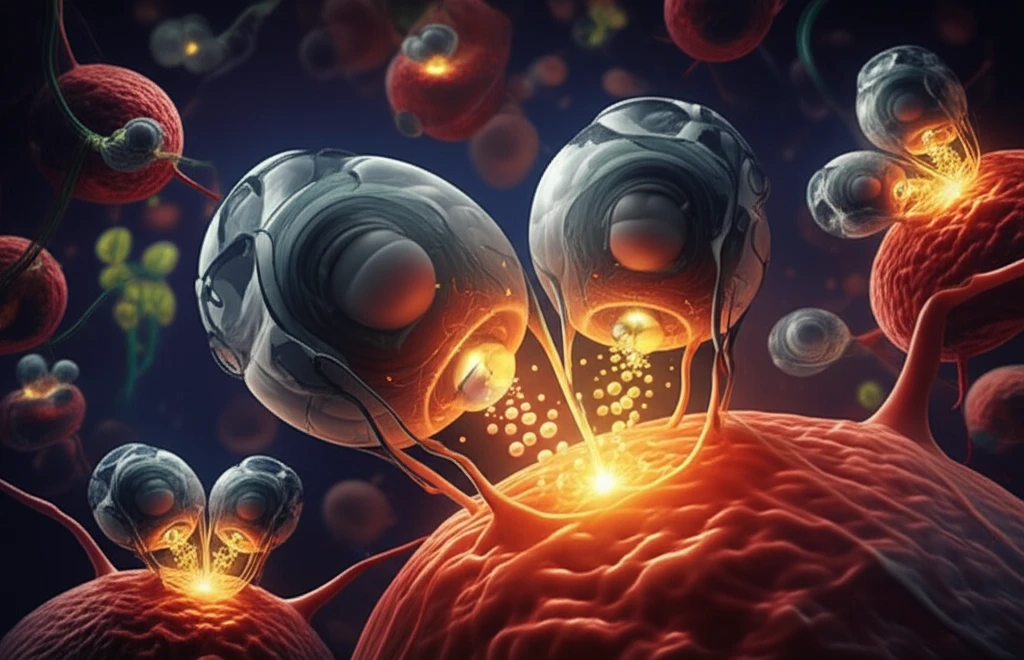
A recent study published in Molecular Pharmaceutics investigates a novel drug delivery system that encapsulates EVO and BBR within lipid-coated mesoporous silica nanoparticles (MSNs). This system is designed to release the drugs in response to the specific conditions within a tumor, potentially maximizing their effectiveness while minimizing harm to healthy tissues.
The Science Behind the System: Targeted Drug Delivery
Mesoporous silica nanoparticles (MSNs) are tiny, porous particles with several advantages for drug delivery. They have a large surface area for loading drugs, exhibit good biocompatibility, and can be easily modified to target specific cells or tissues. In this study, researchers enhanced MSNs with two key features:
- BBR is loaded directly into the pores of the MSNs.
- EVO is embedded within a lipid bilayer that surrounds the MSNs. This bilayer is modified with DSPE-PEG-2000, a compound that improves biocompatibility and prolongs circulation in the bloodstream.
A Promising Step Forward in Cancer Therapy
The results of this study are encouraging, demonstrating that the dual drug-loaded MSNs exhibit significant synergistic therapy effects in vitro (in cell cultures) and in vivo (in mice). The nanoparticles effectively inhibited tumor growth, cell migration, invasion, and angiogenesis (formation of new blood vessels that feed tumors).
Importantly, the study also found that the nanoparticles showed lower systemic toxicity compared to either drug alone, the free drug combination, or Taxol, a common chemotherapy drug. This suggests that the targeted delivery system can reduce the harmful side effects often associated with cancer treatment.
While further research is needed, this innovative approach holds great promise for improving the treatment of cancer by combining the benefits of traditional medicine with the precision of nanotechnology. The temperature- and pH-sensitive lipid-coated MSNs offer a novel platform for delivering both hydrophobic and hydrophilic drugs directly to tumor cells, potentially leading to more effective and less toxic cancer therapies.