
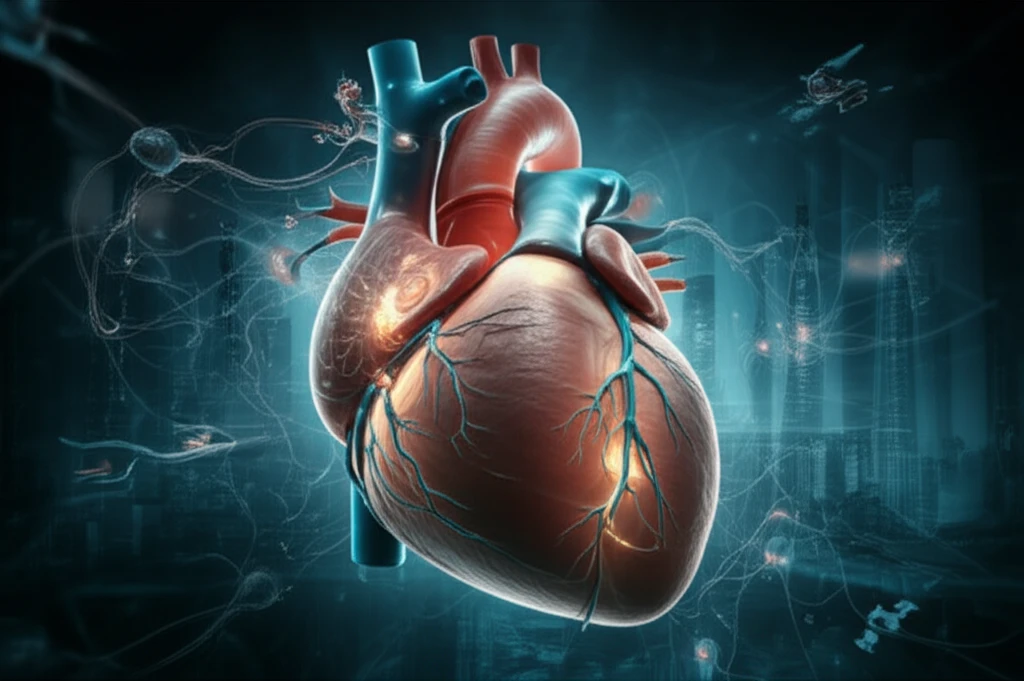
Futuristic illustration of heart regeneration through stem cell therapy

Heart Repair Revolution: The Future of Cardiac Cell Therapy

"A New Device Promises Better Delivery and Retention of Cells for Heart Regeneration"


Heart failure, often stemming from myocardial infarction or dilated cardiomyopathy, is a leading cause of death and disability worldwide. While heart transplantation remains the gold standard treatment for severe cases, the procedure is hampered by the need for long-term immunosuppression and a persistent shortage of donor organs. This critical gap has spurred the search for innovative treatments, and stem cell transplantation has emerged as a promising avenue.

Over the past decade, scientists have explored stem cell transplantation as a strategy to mend damaged heart tissue resulting from acute myocardial infarction, chronic ischemic heart disease, and non-ischemic cardiomyopathy. Various cell types have been tested in preclinical and clinical trials, with some showing promise, but overall functional improvements have been inconsistent. A key challenge has been achieving sufficient cell engraftment and promoting the differentiation of these cells into functional cardiomyocytes – the heart's contractile cells.

Induced pluripotent stem cells (iPSCs) have revolutionized the field of regenerative medicine. These cells, derived from adult tissues, can be reprogrammed to become any cell type in the body, including cardiomyocytes. This offers a potentially limitless source of cells for heart repair. However, effectively delivering and retaining iPSC-derived cardiomyocytes (hiPSC-CMs) within the heart remains a significant hurdle. A new study published in the Journal of Heart and Lung Transplantation unveils a novel transplant injection device designed to overcome these challenges, paving the way for more effective cardiac cell therapy.

The Quest for Optimal Cell Delivery: Introducing the Innovative Injection Device

Futuristic illustration of heart regeneration through stem cell therapy

Researchers have engineered a groundbreaking transplant injection device designed to optimize the delivery and retention of human iPSC-derived cardiomyocytes (hiPSC-CMs) within the heart. This innovative device addresses a critical challenge in cardiac cell therapy: ensuring that transplanted cells not only reach the damaged tissue but also remain there long enough to promote regeneration. The device was developed in collaboration with Suzuki Precision Co., Ltd., leveraging expertise in precision engineering to create a system that surpasses the limitations of traditional needle injections.

Here’s what sets this device apart:

  • Precise 3D Distribution: The device is designed to distribute hiPSC-CM spheroids evenly throughout the myocardial layer, ensuring comprehensive coverage of the damaged area.
  • Fixed Injection Angle: A fixed 45° injection angle provides stability during the procedure and prevents excessively deep penetration, enhancing safety.
  • Multi-Needle Design: Six needles, each with six elliptical holes facing different directions, create a multi-directional dispersion pattern for optimal cell distribution.
  • Domed Needle Tips: The needles feature domed tips to minimize trauma to the myocardium and coronary vessels during injection.
  • Optimized Flow Path: The device incorporates an optimized flow path for the cell solution, ensuring consistent and controlled delivery.
  • Minimal Dead Space: A narrow disk-like space minimizes dead space within the device, reducing cell wastage.
To further enhance cell retention, the researchers combined the injection device with gelatin hydrogel (GH), a biodegradable polymer known to promote cell engraftment. By mixing hiPSC-CM spheroids with GH, they created a viscous solution that adheres more effectively to the heart tissue, preventing the transplanted cells from being washed away.

A Promising Step Towards Future Therapies

This study marks a significant advancement in the field of cardiac regenerative medicine. By developing a novel injection device that optimizes cell delivery and retention, researchers have brought us closer to realizing the full potential of iPSC-based therapies for heart failure. While further research is needed to refine this technology and assess its long-term efficacy and safety, this innovation offers renewed hope for patients seeking alternative treatments for this debilitating condition.

About this Article -

This article was crafted using a human-AI hybrid and collaborative approach. AI assisted our team with initial drafting, research insights, identifying key questions, and image generation. Our human editors guided topic selection, defined the angle, structured the content, ensured factual accuracy and relevance, refined the tone, and conducted thorough editing to deliver helpful, high-quality information.See our About page for more information.

This article is based on research published under:

DOI-LINK: 10.1016/j.healun.2018.11.002, Alternate LINK

Title: Development Of A Transplant Injection Device For Optimal Distribution And Retention Of Human Induced Pluripotent Stem Cell‒Derived Cardiomyocytes

Subject: Transplantation

Journal: The Journal of Heart and Lung Transplantation

Publisher: Elsevier BV

Authors: Ryota Tabei, Shinji Kawaguchi, Hideaki Kanazawa, Shugo Tohyama, Akinori Hirano, Noriko Handa, Shuji Hishikawa, Takumi Teratani, Satoshi Kunita, Junichi Fukuda, Yoshihiro Mugishima, Tsuneyoshi Suzuki, Kazuaki Nakajima, Tomohisa Seki, Yoshikazu Kishino, Marina Okada, Masataka Yamazaki, Kazuma Okamoto, Hideyuki Shimizu, Eiji Kobayashi, Yasuhiko Tabata, Jun Fujita, Keiichi Fukuda

Published: 2019-02-01

Everything You Need To Know

1

What are the current limitations of heart transplantation as a treatment for heart failure, and why is there a need for alternative approaches like stem cell therapy?

Heart transplantation, while considered the gold standard for severe heart failure, faces significant hurdles. The procedure requires long-term immunosuppression to prevent organ rejection, which can lead to various complications. Furthermore, a persistent shortage of donor organs limits the availability of this life-saving treatment to only a fraction of patients in need. These limitations have driven the search for alternative therapies, such as stem cell transplantation, to regenerate damaged heart tissue and restore cardiac function. Stem cell therapy, particularly using induced pluripotent stem cells (iPSCs), offers a potentially limitless source of cells for heart repair, bypassing the donor organ shortage and reducing the reliance on immunosuppression. However, effective delivery and retention of these cells within the heart remain a challenge, which is addressed by the innovative transplant injection device.

2

How do induced pluripotent stem cells (iPSCs) contribute to the advancement of regenerative medicine for treating heart conditions?

Induced pluripotent stem cells (iPSCs) have revolutionized regenerative medicine by providing a versatile cell source for repairing damaged tissues, including the heart. Derived from adult tissues, iPSCs can be reprogrammed to differentiate into any cell type in the body, including cardiomyocytes, the heart's contractile cells. This capability offers a potentially limitless supply of cells for heart repair, overcoming the limitations of donor organ availability. The use of iPSC-derived cardiomyocytes (hiPSC-CMs) holds great promise for treating heart failure by regenerating damaged myocardium and restoring cardiac function. Overcoming the challenges in delivering and retaining hiPSC-CMs within the heart, as addressed by the new transplant injection device, is crucial for realizing the full potential of iPSC-based therapies.

3

What is the purpose of the newly developed transplant injection device, and how does it improve upon traditional methods of cell delivery in cardiac cell therapy?

The newly developed transplant injection device aims to optimize the delivery and retention of human iPSC-derived cardiomyocytes (hiPSC-CMs) within the heart, addressing a critical challenge in cardiac cell therapy. Traditional needle injections often result in poor cell engraftment and loss of transplanted cells due to the heart's dynamic environment. The innovative device improves upon these methods through several key features. It ensures precise 3D distribution of hiPSC-CM spheroids throughout the myocardial layer, uses a fixed 45° injection angle for stability and safety, employs a multi-needle design for optimal cell dispersion, features domed needle tips to minimize trauma, incorporates an optimized flow path for consistent delivery, and minimizes dead space to reduce cell wastage. By enhancing cell delivery and retention, this device paves the way for more effective cardiac cell therapy and improved outcomes for patients with heart failure.

4

What specific design features of the new transplant injection device contribute to better cell distribution and reduced trauma during injection?

Several design features of the new transplant injection device contribute to improved cell distribution and reduced trauma. The device's multi-needle design, with six needles each containing six elliptical holes facing different directions, creates a multi-directional dispersion pattern for optimal cell distribution throughout the myocardial layer. The fixed 45° injection angle provides stability during the procedure and prevents excessively deep penetration, reducing the risk of damage to the myocardium and coronary vessels. Furthermore, the needles feature domed tips to minimize trauma to the heart tissue during injection. These features, combined with the device's optimized flow path and minimal dead space, ensure consistent, controlled, and atraumatic delivery of human iPSC-derived cardiomyocytes (hiPSC-CMs), promoting better cell engraftment and regeneration.

5

How does the combination of the injection device with gelatin hydrogel (GH) further enhance the effectiveness of cardiac cell therapy, and what are the implications for future treatments?

Combining the injection device with gelatin hydrogel (GH) enhances the effectiveness of cardiac cell therapy by improving cell retention within the heart tissue. Gelatin hydrogel is a biodegradable polymer known to promote cell engraftment. By mixing human iPSC-derived cardiomyocytes (hiPSC-CMs) with GH, researchers create a viscous solution that adheres more effectively to the heart tissue, preventing transplanted cells from being washed away. This synergistic approach maximizes cell engraftment and survival, leading to improved regeneration of damaged myocardium. The implications for future treatments are significant, as this combination therapy could enhance the efficacy of iPSC-based therapies for heart failure, offering a more promising alternative to traditional treatments like heart transplantation. Further research is needed to assess the long-term efficacy and safety of this approach, but it represents a promising step forward in cardiac regenerative medicine.

Newsletter Subscribe

Subscribe to get the latest articles and insights directly in your inbox.