
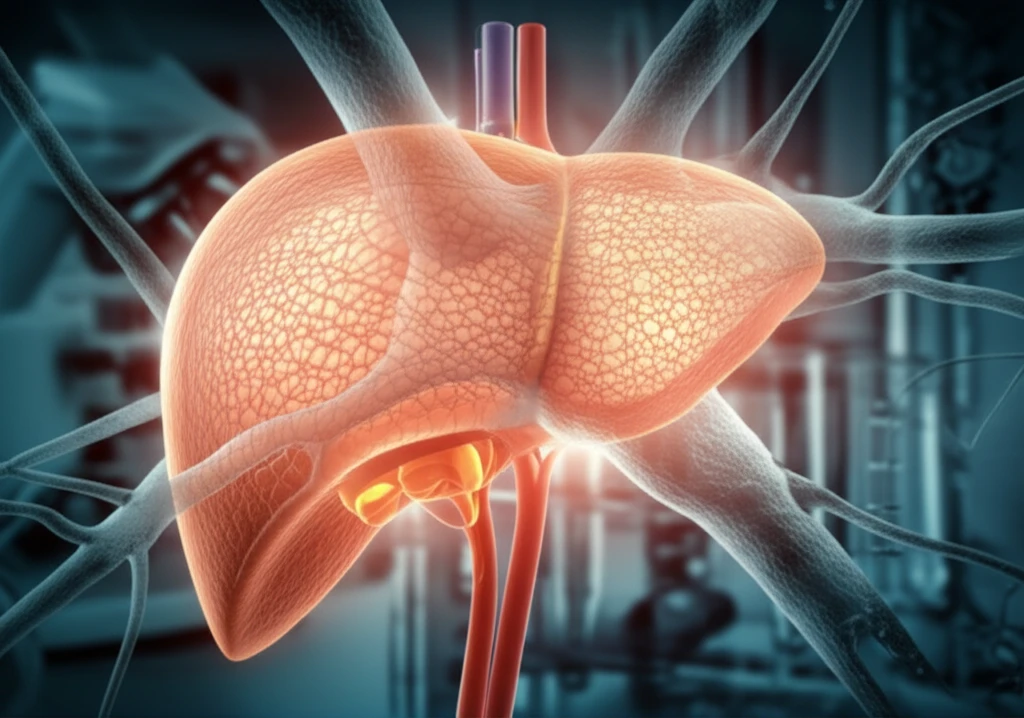
Can Stem Cells Really Fix Your Liver? The Future of Liver Disease Treatment

"Explore how stem cell therapy offers hope for liver disease patients, overcoming the limitations of traditional treatments."
Liver disease is a global health crisis, affecting hundreds of millions worldwide. From viral hepatitis to hepatocellular carcinoma (HCC), the burden is immense, with cirrhosis alone claiming tens of thousands of American lives each year. Traditional treatments, like liver transplantation, offer a lifeline, but they're plagued by donor shortages and the complications of rejection and immunosuppression.
Enter stem cell research – a beacon of hope in regenerative medicine. The promise? To revolutionize how we treat damaged and diseased organs. Stem cells, with their unique ability to regenerate and repair, could potentially alleviate the symptoms of liver disease or even correct genetic errors through gene therapy.
For those facing acute liver failure, stem cell therapies might provide crucial support, allowing the liver the time it needs to recover. It's a new frontier in medicine, but what does it really mean for you, and how close are we to seeing these therapies become a reality?
Liver Disease Burden
Liver diseases affect hundreds of millions of people worldwide and account for significant mortality, with over 33,500 deaths annually in the United States alone. The most common causes include chronic hepatitis B and C, alcoholism, nonalcoholic fatty liver disease, autoimmune conditions, and drug-induced hepatic disorders. Without effective intervention, these conditions can progress to liver fibrosis, cirrhosis, and eventual liver failure.
Current Treatment Limitations
Liver transplantation remains the only curative option for end-stage liver disease, but it is constrained by severe donor organ shortages, high costs, and limited accessibility. Many patients face long waiting lists and are ineligible due to comorbidities or advanced disease stage. These limitations have driven the search for alternative regenerative approaches.
Evolution of Stem Cell Therapy for Liver Disease
The potential of stem cell therapy to address donor organ shortage has motivated decades of research into liver regeneration. Early work established that liver pathologies affect hundreds of millions globally and identified mesenchymal stem cells (MSCs) as the most extensively investigated cell type for liver applications. Human pluripotent stem cell-derived cells, chemically induced liver progenitors, and liver organoids have since emerged as promising platforms for developing new cell therapies for both acute and chronic liver diseases.
Stem Cells 101: Understanding the Basics
Stem cells are the body's raw materials—cells that can develop into many different cell types. This unique ability makes them invaluable for repairing damaged tissues and organs. There are several types of stem cells, each with different capabilities:
- Pluripotent stem cells: Exist in the undifferentiated inner cell mass of the blastocyst and can form any of the over 200 different cell types found in the body.
- Multipotent stem cells: Derived from fetal tissue, cord blood, and adult stem cells, they have a more limited ability to differentiate but have shown success in cell-based therapies.
Recent Advances in Stem Cell Therapy for Liver Disease
Recent reviews highlight stem cell therapy as a promising alternative for liver regeneration and repair, particularly for fibrosis and cirrhosis. Clinical trials and laboratory studies have advanced understanding of mesenchymal stem cells (MSCs), induced pluripotent stem cells (iPSCs), and organoid-based platforms as advanced therapy medicinal products (ATMPs). The field continues to evolve rapidly with new clinical research emerging on MSC-based approaches for decompensated liver cirrhosis and liver failure.
Limitations and Uncertainties
Despite promising preclinical data, the clinical efficacy of stem cell therapy for liver disease remains uncertain. Systematic reviews have found very low-certainty evidence regarding the efficacy of stem cell therapies for liver cirrhosis and acute-on-chronic liver failure. Whether stem cell therapy outperforms conventional treatment remains questionable, and further high-quality research is necessary to clarify the role of stem cells and ensure safety and efficacy.
Meta-Analyses and Comparative Effectiveness
Meta-analyses of randomized controlled trials assessing mesenchymal stem cell therapy for acute-on-chronic liver failure and chronic liver disease have yielded mixed results. Some analyses report that combining stem cell therapy with standard medical treatment or plasma exchange significantly enhances patient survival and reduces MELD scores, with allogeneic stem cells showing superior efficacy compared to autologous cells. However, other comprehensive evaluations using GRADE methodology conclude there is very low-certainty evidence overall, highlighting the need for more rigorous comparative studies.
Looking Ahead: The Future of Stem Cell Therapy for Liver Disease
Stem cell therapy stands at the forefront of medical innovation, offering new hope for treating liver disease. As research progresses and technology advances, stem cell-based treatments have the potential to transform patient care and improve outcomes. While challenges remain, including ethical considerations and the need for further clinical trials, the future looks promising. By continuing to explore and refine these therapies, we can unlock new possibilities for regenerative medicine and improve the lives of millions affected by liver disease.
Expert Assessment of Current Evidence
Large-scale meta-analyses indicate stem cell therapy is emerging as a therapeutic option for chronic liver disease, though its superiority over conventional treatment remains debated. Evidence suggests combination approaches with standard care or plasma exchange may enhance survival and improve MELD scores. Allogeneic stem cell sources appear to offer better survival outcomes than autologous sources, but the overall certainty of evidence remains low, underscoring the need for higher-quality trials.
Emerging Directions in Liver Regeneration
Future research aims to refine cell-based platforms including advanced therapy medicinal products based on MSCs, iPSCs, and liver organoids. Key frontiers include optimizing cell delivery methods, establishing standardized protocols for cell preparation and dosing, and determining optimal patient selection criteria. High-quality randomized controlled trials with longer follow-up are needed to establish definitive efficacy and safety profiles.
Systemic Barriers to Implementation
Translation of stem cell therapies into clinical practice faces systemic challenges including regulatory complexity, manufacturing scalability, cost-effectiveness concerns, and the need for specialized infrastructure. Equitable access remains a concern given the high costs and limited availability of advanced cell therapies. Standardization of cell products and treatment protocols across centers is essential for reproducible outcomes.
Patient Experiences and Clinical Cases
Clinical case reports illustrate both the potential and uncertainty of stem cell therapy for advanced liver disease. Mesenchymal stem cell transplantation has been explored as an alternative to liver transplantation in end-stage patients, with some individual cases showing improvement in decompensated cirrhosis. However, efficacy remains uncertain across the broader patient population, and MSCs continue to be the most commonly used cell source in clinical research with over 60 publications in controlled trials.