
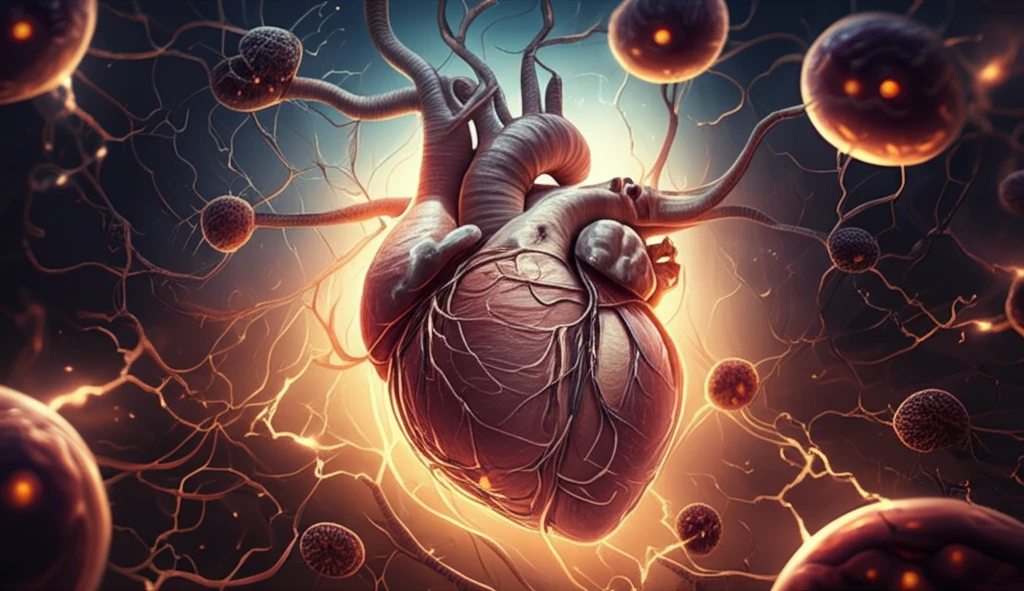
Heart Regeneration: Can Stem Cell Therapy Mend a Broken Heart?

"Exploring the Promise and Pitfalls of Stem Cell-Derived Cardiovascular Cells in Cardiac Repair"
The human heart, while resilient, possesses a limited capacity to repair itself after significant damage, such as a myocardial infarction. The body's natural response often involves remodeling, where the remaining heart muscle thickens (hypertrophy) and scar tissue forms (fibrosis). Although these processes provide short-term stability, they can disrupt the heart’s electrical system, leading to dangerous arrhythmias.
For years, scientists considered the adult heart a static organ, unable to regenerate. However, recent studies have revealed that the heart is far more dynamic, with cells, including cardiomyocytes (heart muscle cells), constantly renewing throughout life. This discovery ignited interest in regenerative medicine, aiming to harness the heart's natural healing abilities to treat heart disease.
The concept of delivering new, healthy cells to the heart to repair damaged tissue and restore function has been aggressively investigated. Although promising, introducing new cells into the complex environment of the heart can be a double-edged sword. While the goal is to replace damaged tissue with healthy, functional myocardium and reduce arrhythmia risk, the delivered cells can also introduce conditions that could trigger arrhythmias.
The Burden of Heart Disease and the Promise of Stem Cells
Heart failure remains a devastating diagnosis, with approximately a 50% death rate within five years post-diagnosis according to published research. Cardiovascular disease continues to drive significant morbidity and mortality globally. Stem cell therapy has emerged as a potential intervention, with clinical trials reporting varied outcomes—a meta-analysis of 12 rigorous studies found mesenchymal stem cell therapy produced small, non-significant improvements, while other research suggests cardiovascular death can be reduced by 80% among patients with high inflammation and less damaged hearts.
Current Treatment Paradigms and Their Shortcomings
Standard heart failure treatments focus primarily on symptom management and slowing disease progression rather than cardiac regeneration. Cell-based cardiac repair faces multiple hurdles including challenges in stem cell collection, ex-vivo expansion, intracardiac delivery methods, and determining optimal cell dosage. The most critical limitation is the poor survival and engraftment rate of transplanted cells, which severely constrains therapeutic efficacy. Advanced stem cell protocols aim to address these gaps by targeting tissue repair rather than just disease management.
A Century of Progress in Stem Cell Research
Stem cell research spans over a century, with the field gaining significant momentum in recent decades. The International Society for Stem Cell Research celebrated 20 years of advancing the science in 2022. In cardiovascular medicine, engineered heart tissue technology emerged in the early 2000s through work by Zimmermann and Eschenhagen, marking a pivotal milestone. Despite decades of transplanting various adult cell types to improve post-infarction heart function, results have remained modest, driving ongoing innovation in the field.
What Cell Source is Best for Cardiac Repair?
Researchers have explored various cell sources to mend damaged hearts. These cells fall into two main categories: autologous (from the patient's own body) and allogeneic (from a donor). Autologous cells offer the advantage of being less likely to be rejected by the immune system, reducing the need for powerful immunosuppressant drugs. However, obtaining and preparing these cells can be costly and time-consuming.
- Skeletal Myoblasts: Were among the first cell types investigated. While they can form viable grafts and improve heart function, they differentiate into skeletal muscle instead of cardiac muscle, disrupting the heart’s electrical signals.
- Fetal Cardiomyocytes: Can integrate into the heart and form connections with existing heart cells. However, they are difficult to obtain in sufficient quantities and vulnerable to ischemia (lack of blood supply). Ethical concerns also limit their use.
- Mesenchymal Stem Cells (MSCs): Secrete factors that can promote blood vessel formation and reduce inflammation, protecting existing heart tissue and blunting adverse remodeling.
- Induced Pluripotent Stem Cells (iPSCs): Generated by reprogramming adult cells to an embryonic-like state. This technology allows for patient-specific cells that can differentiate into various heart cell types. However, concerns remain about their long-term stability and potential for tumor formation.
Emerging Evidence and Therapeutic Potential
Recent comprehensive reviews highlight stem cell therapies as an emerging breakthrough in cardiac medicine, promoting tissue repair through self-renewal and multilineage differentiation capabilities. Clinical investigators report that stem cell therapy may reduce the likelihood of heart failure following a heart attack by supporting myocardial recovery. Multiple promising therapies are being evaluated, with researchers emphasizing the innovative role stem cells can play in treating cardiac pathologies. These developments represent a shift from purely pharmacological approaches toward regenerative strategies.
Challenges and Disappointing Trial Results
Despite initial enthusiasm, stem cell therapy for cardiac repair faces significant skepticism following several high-profile clinical trial failures. Key limitations include low cell retention rates, risks of tumor growth, off-target migration, and short cell viability during storage. Some researchers have questioned whether cardiac cell therapy is fundamentally flawed, pointing to embarrassing trial outcomes that have not matched preclinical promise. While stem cell therapy has demonstrated beneficial effects on cardiovascular conditions in some contexts, the gap between laboratory findings and clinical success remains a major concern.
Evaluating Stem Cells Against Conventional Therapies
Stem cell therapy for heart disease remains an evolving approach without a definitive comparison to all conventional treatments. While traditional interventions focus on symptom management and disease stabilization, regenerative strategies aim to restore damaged cardiac tissue. The field continues to evaluate which patient populations and disease stages may benefit most from cell-based approaches. Ongoing research seeks to establish clearer benchmarks for efficacy and safety relative to standard of care.
What's Next in Cardiac Cell Therapy?
Cardiac cell therapy stands at the cusp of a new era in cardiovascular medicine. The data reviewed reveals a complex interaction between the mode of cell delivery, the type of donor cells, and the nature of the underlying cardiac disease. There are a host of advantages that could impact cardiac outcomes including a range of paracrine and mechanical impacts, and rarely generation of new cardiomyocytes. However, determining if a cell therapy is proarrhythmic or antiarrhythmic will rely on further experimentation.
Reflections on the Evolution of Cardiac Repair
Leading researchers have observed that the field of cell-based cardiac repair has evolved significantly since its inception. Expert commentary suggests that while clinical research has advanced considerably, fundamental questions about mechanisms and optimal approaches persist. The scientific community continues to debate the most effective strategies for translating laboratory discoveries into meaningful patient outcomes. These reflections underscore the need for rigorous, well-designed studies to determine the true potential of regenerative cardiac therapies.
Market Growth and Investment Trajectory
The global stem cell therapy market for cardiovascular and metabolic disorders is projected to reach $3.3 billion by 2030, driven by the rising incidence of heart disease worldwide. Industry analysts report the broader stem cell therapies market was valued at $20.1 billion in 2026 and is growing at a compound annual growth rate of 8.4%, expected to reach $45.2 billion by 2036. These projections reflect increasing investment and confidence in regenerative medicine's potential to address unmet cardiac care needs.
Technical Barriers to Clinical Translation
One of the most significant challenges in cardiac stem cell therapy is ensuring transplanted cells survive and integrate with existing heart tissue. The cardiac environment—particularly following injury—presents hostile conditions for cell engraftment. Research indicates the exact mechanisms through which stem cells affect cardiac repair remain incompletely understood, though two primary pathways are hypothesized. These systemic barriers continue to limit the translation of promising preclinical findings into reliable clinical therapies.
Patient Outcomes and Quality of Life
Clinical evidence demonstrates that stem cell therapy can improve both survival rates and quality of life for patients with advanced heart failure. A major meta-analysis encompassing 1,218 participants found stem cell treatment was safe and effective for acute myocardial infarction recovery. These findings represent tangible benefits for patients who have exhausted conventional treatment options, offering hope for improved daily functioning and longevity.