
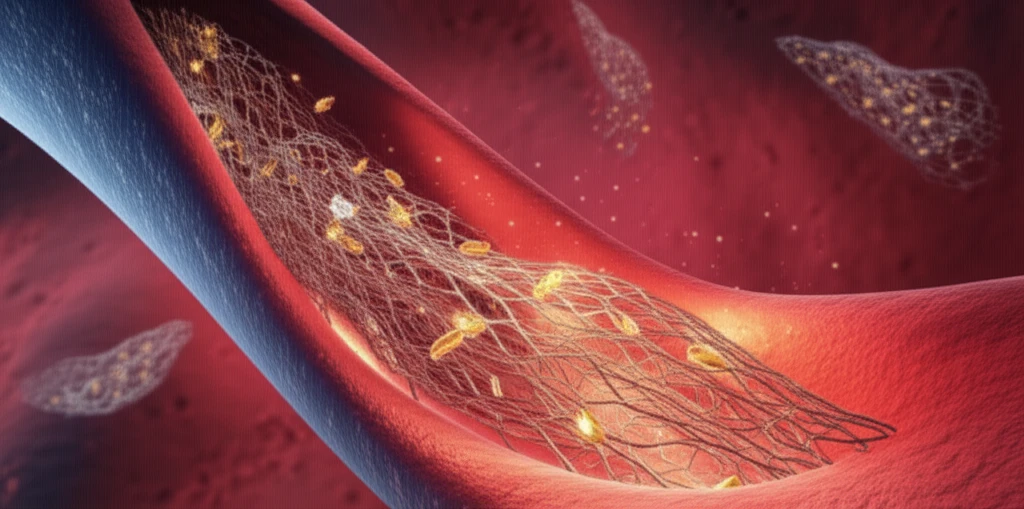
Electrospun Nanofibers: Revolutionizing Drug Delivery Systems?

"Explore how these innovative drug carriers are enhancing treatment effectiveness and patient compliance."
In the ever-evolving landscape of medical treatments, the quest for more effective and patient-friendly drug delivery methods is constant. Traditional methods often present challenges such as poor drug solubility, rapid metabolism, and the need for frequent dosages, leading to decreased patient compliance and suboptimal therapeutic outcomes. Enter electrospun nanofibers—a promising technology poised to revolutionize how we administer medication.
Electrospun nanofibers, created using a process called electrospinning, offer a unique approach to drug delivery. These ultra-fine fibers, with diameters ranging from micro to nanometers, boast a high surface area to volume ratio, making them ideal for enhancing drug solubility, controlling release rates, and improving overall bioavailability. This means that drugs can be delivered more efficiently and effectively, directly addressing many of the limitations of conventional methods.
This article delves into the exciting world of electrospun nanofibers, exploring their potential to transform drug delivery systems. We'll examine how these fibers are constructed, the types of drugs they can carry, and the diverse applications they are finding in modern medicine. Join us as we uncover the science and potential of this cutting-edge technology to improve patient care and treatment outcomes.
What Makes Electrospun Nanofibers a Game Changer in Drug Delivery?
Electrospun nanofibers represent a significant leap forward in drug delivery technology, offering several key advantages over traditional methods. Their unique structure and method of creation allow for enhanced control and efficacy in drug administration. Here’s a closer look at what makes them so revolutionary:
- Enhanced Solubility: One of the primary benefits of using electrospun nanofibers is their ability to improve the solubility of poorly water-soluble drugs. By encapsulating these drugs within the fibers, their surface area is significantly increased, leading to faster dissolution rates and improved absorption in the body.
- Controlled Release: Electrospinning allows for precise control over the rate at which a drug is released. This can be achieved by manipulating the composition and structure of the fibers, enabling sustained or pulsatile drug release profiles tailored to specific therapeutic needs.
- Improved Bioavailability: The enhanced solubility and controlled release properties of electrospun nanofibers contribute to improved bioavailability—the extent to which a drug becomes available in the systemic circulation. This means that a higher proportion of the administered dose reaches its target site, maximizing therapeutic effects.
- Versatile Applications: Electrospun nanofibers can be used for a variety of drug delivery routes, including oral, transdermal, and implantable applications. Their adaptability makes them suitable for treating a wide range of conditions, from localized infections to chronic diseases.
The Future of Electrospun Nanofibers: Overcoming Challenges and Exploring New Horizons
While electrospun nanofibers hold tremendous potential for revolutionizing drug delivery, several challenges must be addressed to fully realize their capabilities. One significant hurdle is ensuring consistent drug dosage in mass production. The precision required to load specific concentrations of drugs into nanofibers can be difficult to achieve at scale, potentially affecting the reliability of therapeutic outcomes. Overcoming this issue is crucial for widespread clinical application. Additionally, many drugs have an unpleasant taste, which can be a barrier to patient compliance, especially with fast-dissolving systems intended for buccal administration. Although some research has explored the use of sweeteners in core-shell nanofibers, more investigation is needed to optimize this process.