
Unlock the Power of Oral Medications: How New Delivery Systems Are Revolutionizing Treatment

"Discover how cutting-edge research in drug delivery is making medications more effective, convenient, and accessible for patients worldwide."
Oral medications are the most common and convenient way to treat a wide range of health conditions. However, many drugs struggle to be effectively absorbed by the body when taken orally, leading to lower effectiveness and unpredictable results. This is particularly true for lipophilic (fat-soluble) drugs, which often have difficulty dissolving in the watery environment of the digestive system.
Imagine a scenario where medications could be designed to maximize their absorption, ensuring that patients receive the full benefit of their prescribed treatment. Fortunately, scientists are actively exploring innovative drug delivery systems to overcome these challenges and unlock the full potential of oral medications. One promising approach is the use of self-emulsifying drug delivery systems (SEDDS).
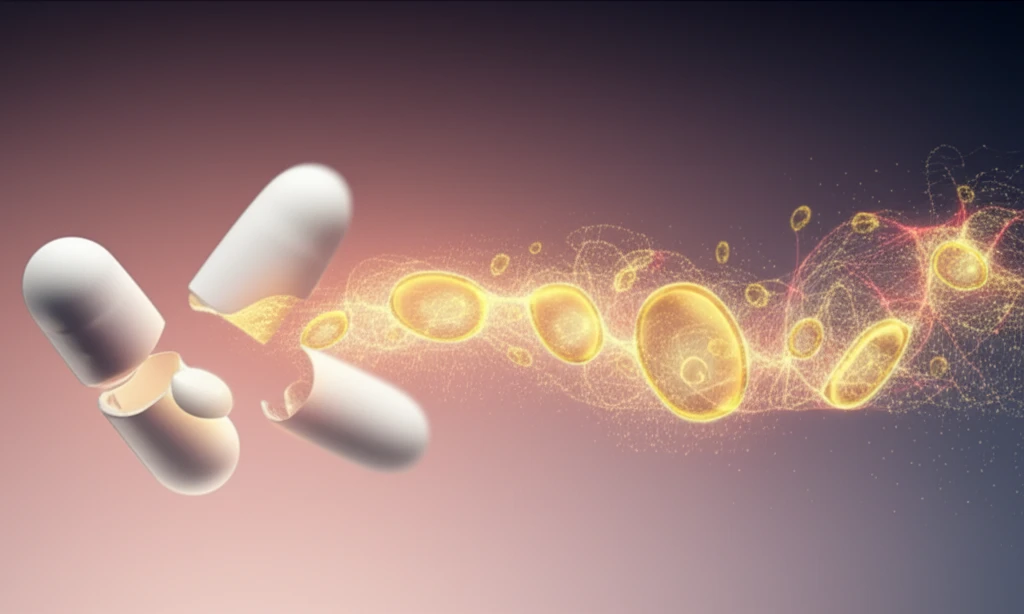
SEDDS are designed to improve the absorption of lipophilic drugs by pre-dissolving them in a mixture of oils, surfactants, and co-surfactants. Once ingested, these systems spontaneously form fine emulsions in the digestive tract, increasing the drug's solubility and allowing it to be more easily absorbed into the bloodstream. The ultimate goal is to create more effective, predictable, and patient-friendly oral medications.
Why Oral Delivery Matters
Oral medications remain an important part of treatment because they can offer a practical and familiar way to administer therapy. Their effects, however, may vary with drug properties, gastrointestinal conditions, absorption, and metabolism. New delivery systems aim to address these limitations, but their benefits should be evaluated medicine by medicine rather than assumed broadly.
The Conventional Oral Route
Conventional oral formulations deliver medication through the gastrointestinal tract before it reaches its intended site of action. This approach can be convenient, but drug performance may be affected by solubility, degradation, absorption, and biological variability. Advanced systems are being developed to improve delivery where standard formulations do not provide consistent results.
From Controlled Release to Modern Delivery
The history of drug delivery systems includes decades of work on controlled release using polymeric carriers, with release governed by diffusion, chemical processes, solvents, or responsive mechanisms. A notable milestone came in 1989 with the introduction of Lupron Depot®, which helped establish long-acting injectables and implantables that could extend delivery from days to months and sometimes years. These technologies also enabled long-term delivery of peptide and protein drugs, although the approaches described were limited to parenteral administration. Understanding how drugs interact with receptors at their sites of action has remained foundational to the development of delivery systems.
How Do Self-Emulsifying Delivery Systems (SEDDS) Work?
The magic of SEDDS lies in their unique ability to self-emulsify. This means that when the formulation comes into contact with the fluids in your stomach and intestines, it spontaneously forms a fine, stable emulsion. Think of it like a salad dressing that mixes itself! This emulsion increases the surface area of the drug, allowing it to dissolve more readily and be absorbed more efficiently into your bloodstream.
- Oils: These act as the primary solvent for the lipophilic drug.
- Surfactants: These molecules help to reduce the surface tension between the oil and water, promoting the formation of a stable emulsion.
- Co-surfactants: These can further enhance the emulsification process and improve the stability of the formulation.
A Fast-Moving Research Field
Recent research in oral drug delivery is exploring ways to improve how medicines are protected, released, absorbed, and directed in the body. Reviews commonly examine formulation strategies alongside the biological and physicochemical barriers that affect performance. Because many approaches remain under development, their clinical value depends on evidence from formulation studies, pharmacokinetic evaluation, and patient-relevant outcomes.
Persistent Barriers
Oral delivery remains attractive, but its performance is constrained by biological, pharmaceutical, and physicochemical barriers. The gastrointestinal tract presents a harsh physiological and physicochemical environment that can limit bioavailability and targeted delivery. Reviews describe advanced systems as attempts to address these inherent limitations, not as guarantees that every oral formulation will succeed. The most suitable design depends on the drug, the delivery vehicle, and the specific barriers involved.
Convenience Versus Complexity
Oral drug delivery is widely used because it is generally convenient, affordable, and associated with strong patient acceptability. Compared with other routes, however, oral absorption is more complex because a drug may need to dissolve in gastric fluid and then be absorbed in the stomach, small intestine, or colon. Reported drawbacks include first-pass hepatic metabolism, poor solubility, and enzymatic degradation. These trade-offs explain why oral delivery can be practical while still requiring sophisticated formulation design.
The Future of Oral Medications is Bright
Self-emulsifying drug delivery systems represent a significant step forward in oral medication technology. By improving drug solubility and absorption, SEDDS have the potential to transform the way we treat a wide range of conditions. As research continues and these systems are further refined, expect to see even more effective, convenient, and patient-friendly oral medications in the years to come.
Evidence Across Delivery Science
Expert commentary on drug delivery connects emerging delivery approaches with pharmacokinetic, toxicological, metabolic, and drug-interaction questions. The field's specialist literature also provides a forum for evaluating current and emerging research strategies rather than treating innovation as separate from drug safety and disposition. Recent commentary has highlighted microneedle technology as a development that could expand transdermal delivery for immunization and chronic disease treatment. Such perspectives reinforce the need to assess delivery systems through both technological performance and clinical consequences.
Toward Smarter Oral Medicines
Future development of oral medications is expected to be shaped by innovations in delivery technologies, regulatory reforms, and the integration of digital health tools. These changes could affect how oral medicines are formulated, manufactured, and monitored. Broader drug-delivery advances have also supported novel treatments, including siRNA and anticancer therapies. The next frontier is therefore likely to combine formulation science with manufacturing, regulation, and digital monitoring rather than rely on a single technology.
Targeting Efficacy More Precisely
Advanced drug delivery systems are being designed to move medicines toward specific target sites, with the goal of maximizing therapeutic efficacy and minimizing off-target accumulation. This targeting function gives delivery technologies an important role in disease management and treatment. For oral systems, the harsh gastrointestinal environment remains a major constraint on bioavailability and targeted design. Progress therefore depends on balancing precise delivery goals with the physiological realities of the route.
Personalized Delivery and Patient Use
Biomarker-guided drug delivery is emerging as a precision-medicine approach in which treatment is selected according to biological markers to improve dosing, targeting, and timing. Novel oral systems are also being organized around anatomical sites such as the esophagus, stomach, small intestine, and colon, alongside consideration of oral pharmacokinetics and products that have reached the market. Research efforts are addressing practical limitations by modulating release, improving the bioavailability of poorly soluble compounds, and protecting labile drugs from gastrointestinal degradation. These developments connect delivery-system design with the goal of producing more effective and usable treatments.