
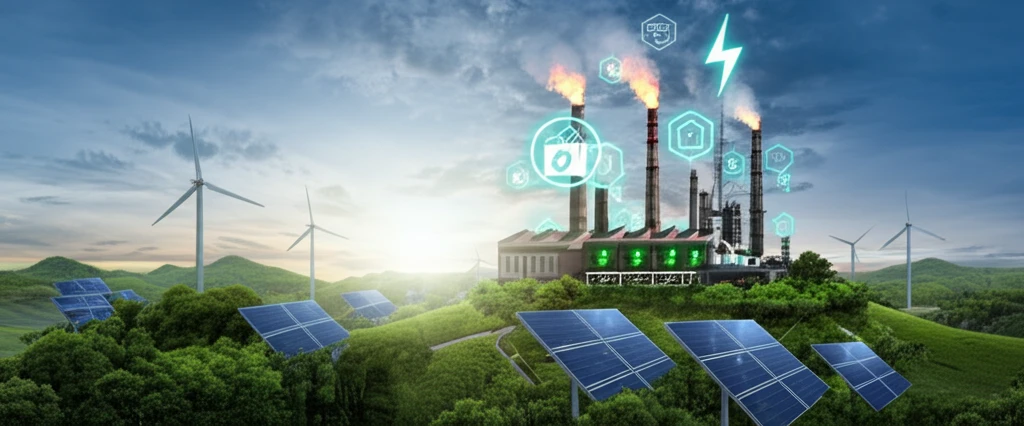
Surreal illustration of a sustainable factory integrated into a green environment.

Eco-Innovation: How to Solve Environmental Contradictions in Process Engineering

"Uncover the inventive principles and methods that drive eco-friendly solutions, minimizing environmental impact while maximizing efficiency."


In an era defined by both rapid industrial growth and escalating environmental concerns, the drive for eco-friendly technologies has never been more critical. Industries are under increasing pressure to adopt sustainable practices, yet the integration of new technologies often brings unforeseen challenges. This is especially true in process engineering, where advancements frequently grapple with environmental impact, energy consumption, and material usage.

The core issue lies in what are known as 'eco-engineering contradictions'—situations where improving one aspect of a process leads to the degradation of another. Businesses face tough decisions, often choosing between the immediate economic gains of traditional methods and the long-term sustainability of eco-innovative solutions. The reality is that true progress demands solutions that not only address environmental concerns but also enhance economic and technical performance.

This article explores the strategies and methodologies for navigating these complex challenges. We delve into the inventive principles, problem-solving techniques, and real-world applications that are shaping the future of eco-innovation. By understanding these approaches, engineers and decision-makers can unlock new possibilities for creating sustainable and efficient processes.

What are Eco-Engineering Contradictions?

Surreal illustration of a sustainable factory integrated into a green environment.

Eco-engineering contradictions arise when efforts to improve one aspect of a process inadvertently worsen another. These contradictions can be primary, where a technological innovation directly leads to environmental problems, or secondary, where an eco-friendly solution introduces new environmental drawbacks.

Consider the following examples:

  • Primary Eco-Contradiction: A method to enhance the handling properties of pigmentary powder titanium dioxides (TiO2) increases bulk density but generates ammonia gas, posing safety and environmental risks.
  • Secondary Eco-Contradiction: A method for preparing ceramic powders reduces carbon waste but generates dust, requiring additional measures to prevent air pollution.
These examples illustrate the delicate balance required in eco-innovation. Engineers need tools and strategies to identify and resolve these contradictions effectively.

Towards a Sustainable Future

Eco-innovation in process engineering is not merely a trend but a necessity for a sustainable future. By embracing structured problem-solving methodologies like TRIZ and process intensification, industries can overcome environmental contradictions, reduce their ecological footprint, and drive economic growth. The journey towards sustainability requires a commitment to innovation, collaboration, and a willingness to challenge conventional approaches. Together, we can forge a path towards a cleaner, more efficient, and environmentally responsible world.

About this Article -

This article was crafted using a human-AI hybrid and collaborative approach. AI assisted our team with initial drafting, research insights, identifying key questions, and image generation. Our human editors guided topic selection, defined the angle, structured the content, ensured factual accuracy and relevance, refined the tone, and conducted thorough editing to deliver helpful, high-quality information.See our About page for more information.

Everything You Need To Know

1

What are Eco-Engineering Contradictions, and how do they impact process engineering?

Eco-Engineering Contradictions occur when efforts to improve one aspect of a process worsen another. These contradictions can be categorized as primary, where an innovation directly causes environmental issues, or secondary, where a solution intended to be eco-friendly introduces new environmental problems. For example, enhancing the handling of pigmentary powder titanium dioxides (TiO2) increases bulk density but releases ammonia gas, which poses environmental and safety risks. Understanding and addressing these contradictions is crucial for sustainable process engineering.

2

How does eco-innovation aim to balance economic and environmental concerns within process engineering?

Eco-innovation strives to balance ecological responsibility with economic advantages to create sustainable and efficient processes. This approach requires solutions that not only address environmental concerns but also enhance economic and technical performance. By integrating eco-friendly technologies and practices, process engineers can minimize environmental impact while maximizing efficiency and driving economic growth. This holistic perspective is essential for long-term sustainability.

3

Can you provide specific examples of Primary and Secondary Eco-Contradictions in process engineering?

Yes, a primary Eco-Contradiction is when an innovation directly leads to environmental problems. An example is a method to enhance the handling properties of pigmentary powder titanium dioxides (TiO2) which increases bulk density but generates ammonia gas, posing safety and environmental risks. A secondary Eco-Contradiction occurs when an eco-friendly solution introduces new environmental drawbacks. For instance, a method for preparing ceramic powders reduces carbon waste but generates dust, requiring additional measures to prevent air pollution.

4

What are some strategies for overcoming Eco-Engineering Contradictions in process engineering?

To overcome Eco-Engineering Contradictions, process engineers can utilize structured problem-solving methodologies such as TRIZ and process intensification. TRIZ helps identify and resolve contradictions by providing a systematic framework for innovation. Process intensification focuses on making processes smaller, cleaner, and more energy-efficient. Implementing these approaches allows industries to reduce their ecological footprint, enhance efficiency, and drive economic growth, thus fostering a more sustainable future.

5

Why is eco-innovation considered a necessity for a sustainable future, and what is the role of collaboration in achieving this goal?

Eco-innovation is crucial for a sustainable future because it addresses the increasing pressure on industries to adopt sustainable practices while balancing environmental concerns with economic benefits. The integration of eco-friendly technologies and practices is essential to reduce environmental impact and drive economic growth. Achieving this requires a commitment to innovation, collaboration, and a willingness to challenge conventional approaches. Collaboration among engineers, decision-makers, and various stakeholders is vital for sharing knowledge, developing effective solutions, and fostering a cleaner, more efficient, and environmentally responsible world.

Newsletter Subscribe

Subscribe to get the latest articles and insights directly in your inbox.