
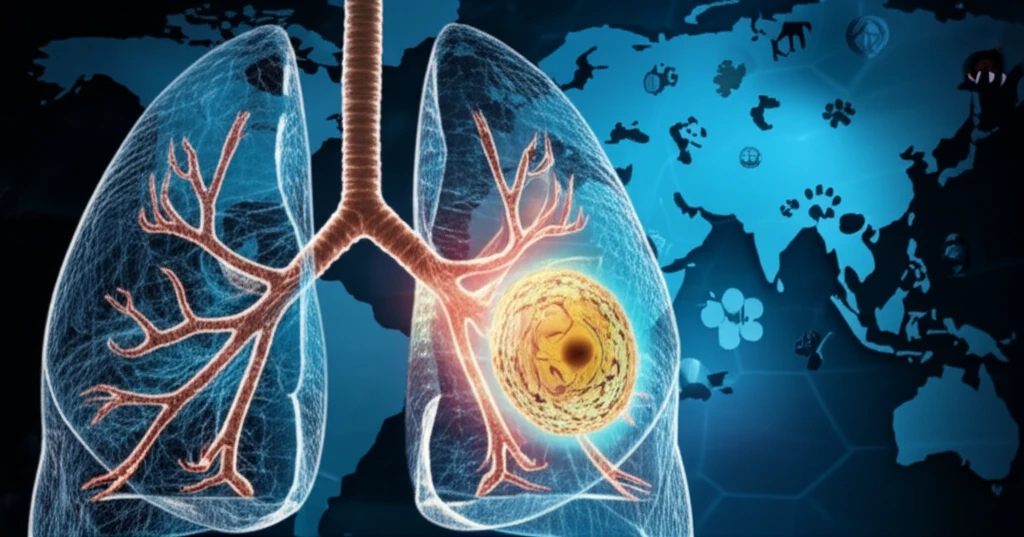
Echinococcal Cyst of the Lung: A Rare Case and What It Means for You

"Unveiling a medical mystery: How a young woman's back pain led to the discovery of a rare parasitic cyst, and what this case teaches us about global health and hidden dangers."
Echinococcosis, also known as Hydatid disease, is a parasitic infection caused by the larval stage of the tapeworm Echinococcus. While prevalent globally, it's more common in underdeveloped regions, including parts of Asia, the Mediterranean, South America, and Africa. This infection can lead to cysts forming in various organs, most often the liver and lungs.
What makes pulmonary (lung) echinococcosis particularly noteworthy is its tendency to affect children and young adults. These cysts can grow quite large, and while many individuals remain asymptomatic, the expanding cyst can eventually cause symptoms by putting pressure on surrounding tissues and organs or, in severe cases, by rupturing.
This article delves into a unique case of pulmonary echinococcosis in a 26-year-old woman. Her journey, from initial back pain to a surprising diagnosis and successful treatment, highlights the importance of considering rare diseases, especially in individuals with specific risk factors. Join us as we explore the complexities of this case and what it means for broader awareness and understanding.
From Back Pain to Parasitic Discovery: A Case Study
Our patient, a 26-year-old woman, sought medical attention for recurring episodes of severe back pain. Initial investigations, including a chest X-ray, revealed a mass in the right middle lobe of her lung. Further imaging confirmed a lobulated mass, leading to a referral for a needle biopsy.
- Initial symptom: Severe back pain.
- Discovery: Mass found in the right middle lobe of the lung via X-ray.
- Biopsy: Attempted needle aspiration leads to patient complications.
- Diagnosis: Ultimately identified as an Echinococcal cyst.
What This Case Means for You: Awareness and Prevention
This case underscores the importance of considering echinococcosis in the differential diagnosis of lung lesions, especially in individuals with a history of travel or residence in endemic regions, or those with close contact with animals. While rare, it's a condition that can have serious consequences if left untreated.
Prevention strategies include practicing good hygiene, especially after contact with dogs, and ensuring that dogs in endemic areas are regularly treated for tapeworm infections. Awareness among healthcare professionals is also crucial for prompt diagnosis and appropriate management.
If you experience unexplained respiratory symptoms, especially if you have risk factors for echinococcosis, it's essential to discuss your concerns with your doctor. Early diagnosis and treatment can significantly improve outcomes and prevent complications.