
Early Cancer Detection: How Gold Nanorods Could Be the Key

"A groundbreaking method uses targeted gold nanorods and diffusion reflection to detect cancer earlier and more accurately, offering new hope for treatment."
For years, scientists have been searching for ways to detect cancer earlier, when treatment is more likely to be successful. Traditional methods often catch the disease after it has already progressed, reducing the chances of a full recovery. But what if there was a way to identify cancerous cells at their earliest stages, using a simple and non-invasive technique?
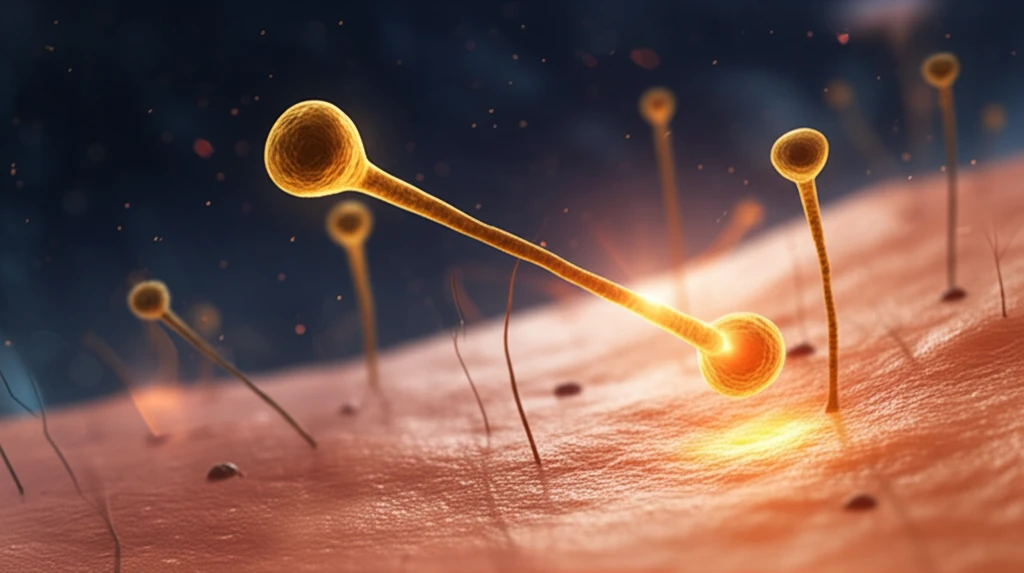
A promising new approach is emerging, one that uses the unique properties of gold nanorods (GNRs) to highlight cancerous tissues. These tiny rods, when targeted to specific cancer cells, can dramatically change how light interacts with those cells, making them easy to spot. This method, known as diffusion reflection measurement, could revolutionize cancer detection, offering a more sensitive, specific, and patient-friendly way to diagnose the disease.
Imagine a world where cancer is detected so early that treatment is almost always effective. This vision may be closer than we think, thanks to the innovative use of nanotechnology in medical diagnostics. This article will explore how gold nanorods are changing the landscape of cancer detection, offering new hope for earlier and more accurate diagnoses.
The Persistent Challenge of Late-Stage Cancer Diagnosis
In the United States, 13.6% of breast cancers are diagnosed at a distant stage, highlighting a significant gap in early detection capabilities. Cancer detection research utilizes various modalities including biomarkers and imaging, leveraging biological characteristics of cancer cells known as hallmarks of cancer. These hallmarks include the ability to proliferate continuously and evade programmed cell death, which researchers aim to target for earlier identification. Despite advances in MRI technology and its diagnostic power for early-stage identification, a substantial portion of cancers continue to be detected after they have spread.
Multi-Cancer Early Detection Tests and AI Integration
Multi-cancer early detection (MCED) tests like Galleri and Cancerguard represent the current frontier in early detection, though experts caution they should neither be dismissed nor treated as guaranteed solutions. A new approach to multi-cancer detection focuses on changes in DNA chemical modifications rather than searching only for individual cancer mutations. Researchers are preparing large studies of methods analyzing three biological fluids to improve detection accuracy. The integration of artificial intelligence with standard cervical cancer screening methods has shown substantial benefits, including faster detection times and reduced workload for pathologists.
Breakthroughs in AI-Powered and Blood-Based Cancer Detection
A new artificial intelligence model demonstrated the ability to detect 13 different types of cancer with 98.2% accuracy using only DNA data from tissue samples. UCLA researchers developed MethylScan, a blood test that analyzes DNA methylation patterns from cell-free DNA in the bloodstream, detecting 63% of cancers overall with 55% detection for early-stage cancers. These developments represent significant milestones in making cancer detection simpler, potentially as straightforward as taking a baseline blood sugar reading. The technology builds on years of research into liquid biopsies and molecular markers.
The Science Behind Gold Nanorods and Cancer Detection
The new method hinges on the distinctive optical properties of gold nanorods. These tiny structures are designed to absorb light intensely, especially when tuned to specific wavelengths. Researchers can target these nanorods to cancerous cells by attaching them to antibodies that recognize proteins found on the surface of cancer cells. Once the nanorods accumulate in the tumor, they act as contrast agents, making the cancerous tissue stand out from the surrounding healthy tissue.
- Early Detection: Catches cancer in its earliest stages.
- Non-Invasive: Reduces patient discomfort and risk.
- High Sensitivity: Accurately identifies cancerous cells.
- Targeted Approach: Specifically targets cancer cells, minimizing side effects.
Emerging Multiomics Approaches and Non-Invasive Detection Methods
Researchers are developing non-invasive biomarkers for early oral cancer detection through multiomics approaches, as published in the British Journal of Cancer. A University of Houston researcher has reported a new method to detect cancer that could make detection as simple as taking a blood test. These approaches combine multiple biological data sources to improve accuracy and reduce false positives. The focus on non-invasive methods represents a shift toward patient-friendly diagnostic tools that can be deployed more widely in clinical settings.
Limitations of Current Screening Programs and Rising Cancer Rates
A leading prostate cancer charity has criticized advice not to roll out a national screening programme, highlighting ongoing debates about the effectiveness of current screening approaches. Researchers are examining why certain cancers are rising among younger adults, with studies exploring factors that may be driving this concerning shift. Detecting cancer earlier can change outcomes, yet systemic barriers continue to prevent widespread implementation of effective screening. The tension between screening benefits and potential harms remains a central debate in oncology.
CT vs PET Scans and Advanced Mammography Techniques
CT scans and PET scans serve complementary roles in cancer detection, with each offering distinct advantages for different clinical scenarios. Contrast-enhanced mammography has been shown to double early breast cancer detection compared to 3D mammograms, particularly benefiting patients with dense breast tissue. This technique achieves detection rates similar to MRI screenings but with far shorter examination times. The choice between imaging modalities depends on cancer type, stage, and patient-specific factors.
The Future of Cancer Diagnostics
This innovative method offers a promising step towards earlier and more accurate cancer detection. By leveraging the unique properties of gold nanorods and diffusion reflection measurements, doctors may soon have a powerful new tool in the fight against cancer, leading to improved treatment outcomes and saving lives.
Integrating Multiple Diagnostic Approaches for Comprehensive Detection
Salivary metabolomics reflects oral and systemic health status, potentially enabling cancer detection through non-invasive saliva analysis. Galleri tests check over a million methylation sites in DNA using machine learning and artificial intelligence to detect whether someone harbors cancer. Breast MRI provides detailed imaging that can detect changes not visible on mammograms or ultrasound. These complementary approaches suggest that combining multiple diagnostic methods may offer the most comprehensive cancer detection strategy.
Market Growth and Technological Integration in Cancer Diagnostics
The artificial intelligence in cancer diagnostics market is experiencing significant growth, with projections extending through 2034. Key trends include integration of AI in diagnostic interpretation, growing focus on early cancer screening, and adoption of multi-marker panels for comprehensive profiling. The tumor markers detection kit market faces challenges including the need for continuous research to keep pace with evolving cancer biology. Future developments will likely combine multiple technological approaches to improve accuracy and accessibility.
Global Cancer Burden and the Systems Challenge of Early Detection
The World Health Organization emphasizes that early detection of cancer offers the most cost-effective long-term strategy for cancer control. Breast cancer remains the leading cause of cancer-related deaths among women globally, with approximately 2.3 million new cases and 685,000 deaths reported in 2020. In sub-Saharan Africa, breast cancer cases have been rising steadily, highlighting global disparities in detection and treatment. Indian scientists have developed AI tools that can identify hidden cancer stem-like cells, potentially improving detection of cells difficult to spot using conventional methods.
Democratizing Cancer Detection with Portable and AI-Powered Tools
Chinese scientists have built a handheld cancer detector with 94.9% accuracy in clinical trials, imagining a future where detecting early-stage cancer at home is as simple as taking a pregnancy test. An AI model has been trained on more than 11,000 primary tumor cases from the Pan-Cancer Atlas, studying ordinary hematoxylin and eosin-styled slides already used in hospitals worldwide. This model can predict 32 different cancer tumor types from images, potentially transforming how pathologists diagnose cancer. These innovations aim to make cancer detection more accessible, affordable, and user-friendly across diverse healthcare settings.