
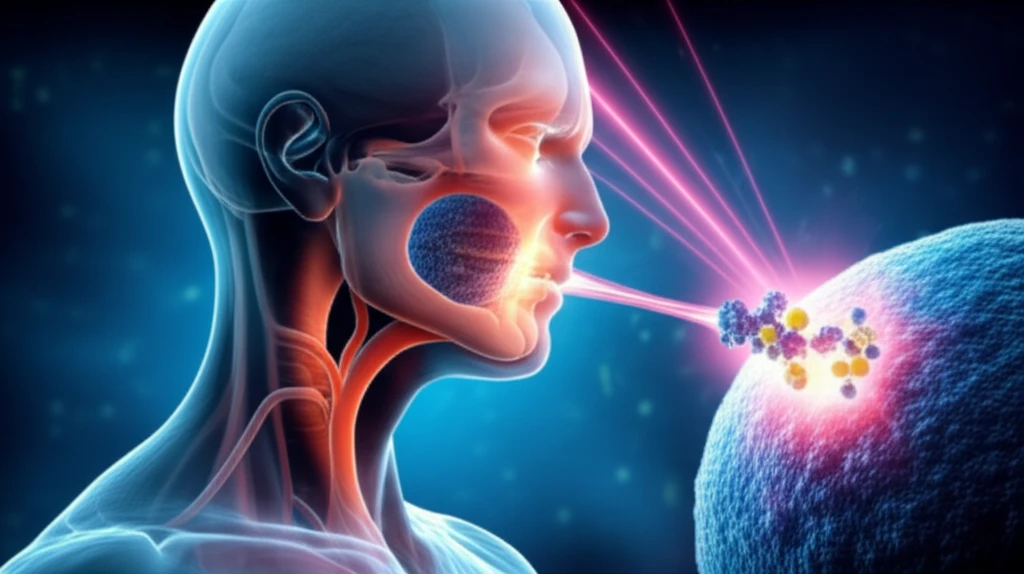
Personalized cancer therapy targeting head and neck cancer cells with radiation and molecular inhibitors

Dual PI3K/MTOR Inhibitors: A Promising Advance in Head and Neck Cancer Treatment?

"Exploring the potential of PF-04691502 in enhancing radiation therapy and overcoming treatment resistance in head and neck squamous cell carcinoma."


Head and neck squamous cell carcinoma (HNSCC) is a challenging disease with nearly 300,000 deaths each year worldwide. While treatments have advanced, outcomes have not significantly improved in the last two decades, especially for those with HPV-negative tumors.

Targeting specific pathways in cancer cells has emerged as a promising strategy. The PI3K/AKT/mTOR pathway, crucial for cell survival and growth, is frequently altered in HNSCC, making it an attractive target for new therapies. Inhibiting this pathway could enhance the effects of radiation, a standard treatment for HNSCC.

A new study investigates PF-04691502, a dual inhibitor of PI3K and mTOR, in combination with radiation therapy. The results shed light on its potential to improve treatment outcomes, while also highlighting the complexities of cancer cell response.

Unlocking the Potential: How PI3K/mTOR Inhibition Works

Personalized cancer therapy targeting head and neck cancer cells with radiation and molecular inhibitors

The PI3K/AKT/mTOR pathway is a critical regulator of cell functions, including survival, growth, and metabolism. This pathway becomes active when growth factors bind to receptors on the cell surface, triggering a cascade of events that ultimately promote cell proliferation. In cancer, this pathway is often hyperactive due to genetic mutations or other abnormalities.

Inhibiting the PI3K/AKT/mTOR pathway can disrupt these processes, leading to reduced tumor growth and increased sensitivity to treatments like radiation. Dual inhibitors, such as PF-04691502, target both PI3K and mTOR, potentially providing a more complete blockade of the pathway compared to inhibitors that target only one component.

  • PI3K: Phosphatidylinositol 3-kinases (PI3Ks) are a family of enzymes involved in cell growth, proliferation, differentiation, motility, survival and intracellular trafficking, which are involved in cancer,
    • AKT: A serine/threonine-specific protein kinase that plays a key role in multiple cellular processes such as glucose metabolism, apoptosis, cell proliferation, transcription, and cell migration.
    • mTOR: (mammalian target of rapamycin) A protein kinase that regulates cell growth, proliferation, survival, protein synthesis, and transcription.
  • PTEN: a tumor suppressor gene that helps regulate the PI3K/AKT/mTOR pathway.
Researchers examined two HNSCC cell lines, UT-SCC-14 and UT-SCC-15, with radiation and PF-04691502 to assess the effectiveness of this dual inhibition strategy. They observed that PF-04691502 enhanced radiation's effects in the UT-SCC-14 model, derived from a primary tumor. However, this combination was less effective in the UT-SCC-15 model, which originated from a recurrent tumor.

Looking Ahead: Personalized Approaches to Cancer Therapy

This research underscores the importance of personalized cancer therapies. While agents like PF-04691502 hold promise, their effectiveness varies depending on the genetic and molecular characteristics of the tumor. Understanding these differences is crucial for tailoring treatments to individual patients and improving outcomes in HNSCC.

About this Article -

This article was crafted using a human-AI hybrid and collaborative approach. AI assisted our team with initial drafting, research insights, identifying key questions, and image generation. Our human editors guided topic selection, defined the angle, structured the content, ensured factual accuracy and relevance, refined the tone, and conducted thorough editing to deliver helpful, high-quality information.See our About page for more information.

Everything You Need To Know

1

What is the PI3K/AKT/mTOR pathway, and why is it important in head and neck squamous cell carcinoma (HNSCC)?

The PI3K/AKT/mTOR pathway is a critical signaling cascade that regulates cell functions, including survival, growth, and metabolism. In HNSCC, this pathway is often dysregulated, contributing to uncontrolled cell proliferation and tumor growth. The pathway is activated by growth factors binding to cell surface receptors, triggering a series of events involving PI3K, AKT, and mTOR. Disrupting this pathway with agents like PF-04691502 can reduce tumor growth and enhance sensitivity to treatments like radiation. The components include PI3K, a family of enzymes; AKT, a protein kinase; and mTOR, a protein kinase that regulates cell growth, proliferation, survival, protein synthesis, and transcription. The PTEN tumor suppressor gene also plays a role in regulating this pathway, and its loss or mutation can lead to pathway activation, furthering cancer development.

2

How does PF-04691502, a dual PI3K/mTOR inhibitor, work in treating head and neck cancer?

PF-04691502 is designed to target and inhibit both PI3K and mTOR, which are key components of the PI3K/AKT/mTOR pathway. By blocking these targets, PF-04691502 aims to disrupt the signals that promote cancer cell survival and growth. This dual inhibition strategy can potentially provide a more comprehensive blockade of the pathway compared to inhibitors that target only one component. The study investigated the combination of PF-04691502 with radiation therapy in HNSCC cell lines to determine if the drug could enhance the effectiveness of radiation. The aim is to reduce tumor growth and make cancer cells more vulnerable to radiation therapy.

3

What were the key findings of the study using PF-04691502 in combination with radiation therapy for HNSCC?

The study examined the effects of PF-04691502 combined with radiation therapy on two HNSCC cell lines: UT-SCC-14 and UT-SCC-15. The research found that PF-04691502 enhanced the effects of radiation in the UT-SCC-14 model, which was derived from a primary tumor. However, the combination was less effective in the UT-SCC-15 model, originating from a recurrent tumor. These findings highlight that the effectiveness of PF-04691502 and similar treatments can vary depending on the specific characteristics of the tumor.

4

Why is the PI3K/AKT/mTOR pathway a good target for cancer treatment, and what are the potential benefits of targeting it?

The PI3K/AKT/mTOR pathway is an attractive target because it is frequently dysregulated in various cancers, including HNSCC. The pathway is crucial for cell survival, growth, and metabolism; therefore, when it becomes hyperactive due to genetic mutations or other abnormalities, it drives uncontrolled cell proliferation and tumor development. Inhibiting this pathway can disrupt these processes, potentially leading to reduced tumor growth and increased sensitivity to treatments like radiation therapy. Dual inhibitors, such as PF-04691502, which target both PI3K and mTOR, may offer a more complete blockade of the pathway, leading to better outcomes.

5

What do the different outcomes observed in the UT-SCC-14 and UT-SCC-15 cell lines suggest about the future of HNSCC treatment?

The varied responses of the UT-SCC-14 and UT-SCC-15 cell lines to PF-04691502 and radiation highlight the importance of personalized cancer therapies. These different outcomes underscore that treatment effectiveness can vary based on the genetic and molecular characteristics of the tumor. Future treatments need to consider these differences by tailoring treatment plans to individual patients. Understanding these characteristics is crucial for improving outcomes in HNSCC and other cancers. This could involve identifying biomarkers to predict treatment response and developing therapies that target specific pathways based on the individual tumor profile.

Newsletter Subscribe

Subscribe to get the latest articles and insights directly in your inbox.