
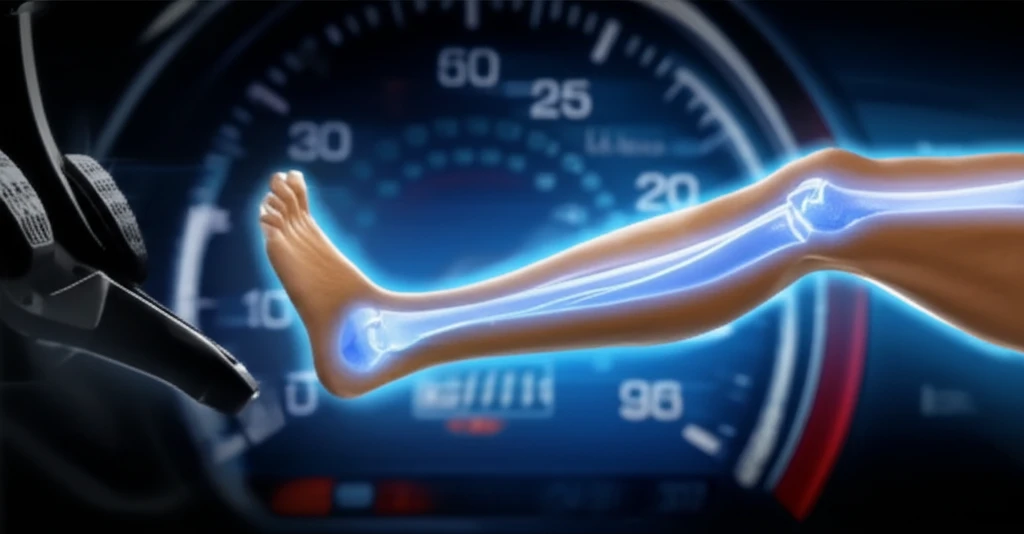
Knee range of motion for driving.

Driving After Knee Surgery: When Can You Get Back on the Road?

"Understanding the range of knee motion needed for safe driving after surgery or injury."


Driving is more than just a convenience; it's often a necessity for maintaining independence and participating in daily life. But what happens when musculoskeletal issues, especially those affecting the knees, threaten your ability to drive safely? Conditions like knee osteoarthritis or recovery from knee surgery can significantly impact your mobility and, consequently, your driving fitness.

The big question on everyone's mind: When is it safe to get back behind the wheel? Doctors play a crucial role in determining a patient's driving readiness, but clear guidelines on the necessary knee range of motion for driving have been lacking. This article bridges that gap, providing insights into the specific knee movements required for operating a vehicle.

Drawing from a detailed study on knee range of motion during driving, we'll explore the demands placed on your knees while driving. Whether you're navigating city streets or cruising on the highway, understanding these movements is key to ensuring your safety and the safety of others. This information is especially valuable for those recovering from knee surgery or managing chronic knee conditions.

Decoding Knee Movement: What's Needed to Drive?

Knee range of motion for driving.

Researchers used electrogoniometers to meticulously record the knee movements of healthy participants while they drove on city streets, country roads, and highways. This technology allowed them to capture precise data on the degree of flexion (bending) and extension (straightening) required for various driving tasks. The results shed light on the different demands placed on each knee.

The study revealed a clear distinction between the roles of the right and left knees in driving a manual transmission car:

  • Right Knee: Primarily responsible for accelerating and braking. This knee operates within a relatively limited range of motion, typically between 40 and 80 degrees of flexion.
  • Left Knee: Plays a more active role, especially in cars with manual transmissions where it's used for clutch operation and gear changes. The left knee requires a greater range of motion, flexing between 20 and 85 degrees.
  • Gear Changes: Changing gears demands the most significant range of motion from the left knee.
These findings highlight that driving isn't just about pressing pedals; it requires a complex interplay of movements. The data emphasizes that the left knee, which is essential for clutch operation, requires a larger range of motion compared to the right knee. Factors such as pain, muscular function, or movement restriction of the knee can affect an individual's ability to safely operate a vehicle.

Key Takeaways: What This Means for You

This research provides concrete data on the knee range of motion needed for driving, offering valuable insights for patients and physicians alike. If you're recovering from knee surgery or managing a knee condition, understanding these ranges can help you assess your readiness to drive.

The study suggests that common driving activities like accelerating or braking can be achieved with a limited range of motion in the right knee. However, the left knee requires greater flexibility, especially for those driving manual transmission vehicles. Before returning to driving, it's important to ensure you can comfortably and safely achieve these movements.

Remember, driving safety depends on several factors, including muscle strength, coordination, and reaction time. Always consult with your healthcare provider to determine when it's safe for you to resume driving. Future research exploring the interplay between hip, knee, and ankle movements will further refine our understanding of driving capability.

About this Article -

This article was crafted using a human-AI hybrid and collaborative approach. AI assisted our team with initial drafting, research insights, identifying key questions, and image generation. Our human editors guided topic selection, defined the angle, structured the content, ensured factual accuracy and relevance, refined the tone, and conducted thorough editing to deliver helpful, high-quality information.See our About page for more information.

This article is based on research published under:

DOI-LINK: 10.1016/j.knee.2018.11.005, Alternate LINK

Title: Doctor, When Can I Drive? — Range Of Motion Of The Knee While Driving A Car

Subject: Orthopedics and Sports Medicine

Journal: The Knee

Publisher: Elsevier BV

Authors: David Latz, Erik Schiffner, Johannes Schneppendahl, Konstantin Klein, Lisa Oezel, Lars Fabian Seiler, Pascal Jungbluth, Robert Alexander Kaufmann, Joachim Windolf, Sebastian Viktor Gehrmann

Published: 2019-01-01

Everything You Need To Know

1

What is the typical range of motion needed for the right knee while driving?

The right knee is mainly responsible for accelerating and braking, typically requiring a range of motion between 40 and 80 degrees of flexion. This is essential for controlling the vehicle's speed and stopping safely. The implications of this are significant for anyone recovering from knee surgery or managing a knee condition, as restricted movement in this range could impact their ability to operate the pedals effectively. Furthermore, understanding this range is critical to determining when it's safe to resume driving after an injury or surgical procedure.

2

How does the left knee's role in driving differ from the right knee, and what is the required range of motion?

The left knee, especially in cars with manual transmissions, plays a more active role, flexing between 20 and 85 degrees for clutch operation and gear changes. This range of motion is critical, particularly during gear changes, as it demands a greater flexibility. Individuals with limited mobility in the left knee, such as after surgery, might find it challenging to safely operate a manual transmission vehicle. This highlights the importance of considering the vehicle's transmission type when assessing driving readiness after knee surgery or injury.

3

What role do doctors play in determining when it is safe to drive after a knee injury or surgery?

Doctors are crucial in determining a patient's readiness to drive following knee surgery or injury, although there have been limited guidelines on the specific range of motion necessary for driving. This includes assessing knee range of motion. They assess factors like pain levels, muscular function, and overall movement restriction. Their evaluations help patients safely resume driving. It is important for patients to follow their doctor's recommendations and any associated rehabilitation protocols.

4

What technology was used to measure knee movements in the driving study, and why is it important?

The study used electrogoniometers to measure the knee movements of healthy participants, capturing precise data on flexion and extension during driving tasks. This technology provides insights into the specific knee movements required for operating a vehicle, including the range of motion. This data helps doctors and patients understand the physical demands of driving after a knee injury or surgery and assess when it is safe to return to driving. Without this technology, the specific range of motion needed would not be known.

5

How can knowledge of knee range of motion help someone recovering from knee surgery or managing a knee condition?

If recovering from knee surgery or dealing with a knee condition, the research on the knee range of motion provides essential insights. Understanding the specific flexion and extension requirements for both the right and left knees can help you evaluate your readiness to drive. Pay attention to the range needed for acceleration, braking, and clutch operation. This knowledge facilitates a more informed dialogue with healthcare providers, enabling safer and more confident return to driving. It also highlights the need for targeted physical therapy to regain the necessary movement.

Newsletter Subscribe

Subscribe to get the latest articles and insights directly in your inbox.