
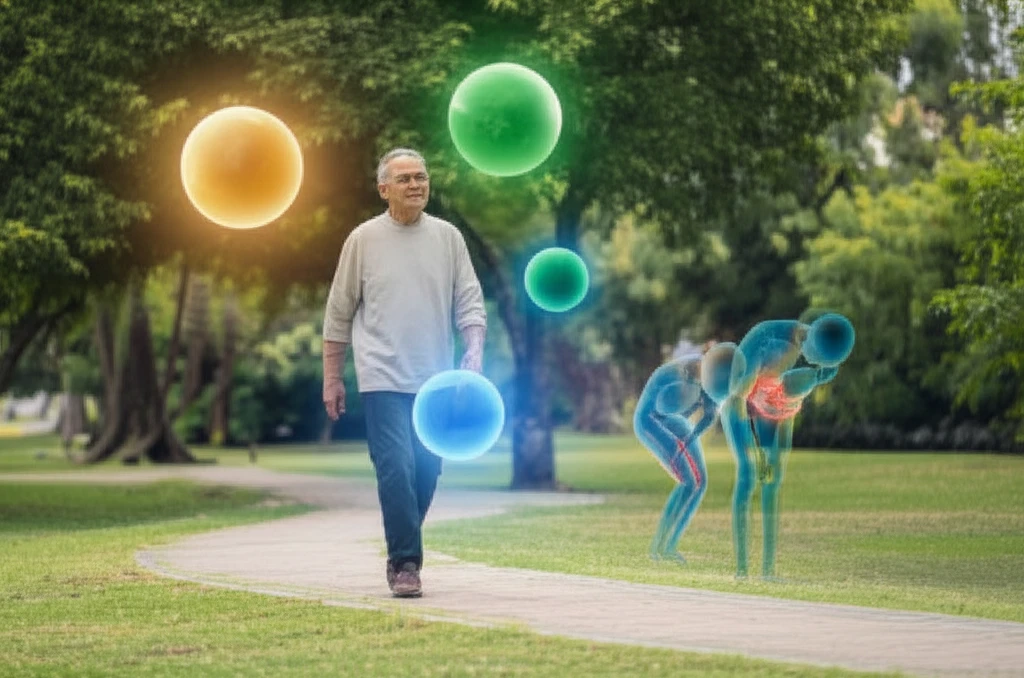
Osteoarthritis and Fall Prevention: A Comprehensive Guide for Older Adults

"Uncover the link between osteoarthritis and fall risk, and discover practical strategies to stay safe and independent."
Osteoarthritis, characterized by pain, stiffness, and instability in the affected joints, severely restricts daily activities. This limitation often leads to decreased physical function, impaired balance, and reduced agility, significantly increasing the risk of falls. Falls can result in serious injuries like fractures, leading to hospitalization or even early mortality.
Even without physical injury, the fear of falling can limit physical activity, further reducing flexibility and balance, ultimately compromising independence. Falls are multifaceted events influenced by various interconnected risk factors. Research identifies key contributors such as a history of falls, age, gender (particularly women), and living alone. Psychological factors like fear of falling and cognitive impairments also play a significant role, as do physical limitations, sensory deficits, chronic diseases, medication use, lifestyle choices, and environmental hazards.
Recognizing falls as a preventable health issue allows for targeted interventions. Fall prevention involves modifying individual risk factors through actions such as strength and balance exercises, vitamin D and calcium supplementation, and environmental modifications. For those with osteoarthritis, the disease process introduces additional challenges due to joint pain and deformity, further complicating balance and stability. Active participation in fall prevention programs and understanding personal risk factors are crucial steps toward reducing fall incidents.
The Burden of OA and Falls
Osteoarthritis most commonly affects the knees, hips, spine, and small joints of the hands, and reduced movement can contribute to muscle weakness and lower physical capacity. The CDC reports that falls are the leading cause of injury among adults aged 65 and older, with more than 14 million, or 1 in 4, older adults reporting a fall each year. Reports compiled by the Osteoarthritis Action Alliance also describe rising osteoarthritis prevalence alongside increasing medical costs, societal costs, and effects from comorbid illnesses.
Guidelines and the Evidence Gap
Current practice draws on osteoarthritis guidelines for the hand, hip, and knee, as well as fall-prevention guidelines covering community, acute-care, and nursing-home settings. The World Guidelines for Falls Prevention and Management algorithm identified a higher prevalence of reported follow-up falls among people classified as high risk in the Osteoarthritis Initiative study. However, research on osteoarthritis care has identified an evidence-practice gap, indicating that recommended fall-prevention approaches are not consistently integrated into osteoarthritis management.
Understanding the Risks: Why Osteoarthritis Increases Fall Susceptibility
Osteoarthritis significantly impacts mobility and balance, making older adults more prone to falls. Understanding the specific ways osteoarthritis contributes to this risk is crucial for effective prevention.
- Pain and Stiffness: Pain in weight-bearing joints like knees and hips can alter gait and reduce mobility, increasing the chance of falls.
- Muscle Weakness: Osteoarthritis can lead to muscle weakness around affected joints, hindering stability and support.
- Reduced Proprioception: Osteoarthritis can affect proprioception, or your sense of body position. This makes it harder to maintain balance, especially on uneven surfaces or in low-light conditions.
- Joint Instability: Damage to joint structures and supporting tissues contributes to joint instability.
Personalized Prevention and Fall-Related Beliefs
A fall-prevention program for homebound older adults with lower-extremity osteoarthritis combined weekly 70-minute group education and exercise sessions with individual counseling twice a week for emotional support and goal setting. Research on fall-related health beliefs reports that reducing fear of falling and increasing confidence in prevention may be more useful than focusing primarily on perceived susceptibility or severity. Another educational-intervention study describes fear of falling as a mediator between health beliefs and fall-prevention behaviors.
Limits of Current Prevention Evidence
The U.S. Preventive Services Task Force notes that it is difficult to identify which specific components of exercise are particularly effective for preventing falls. Reviews of osteoarthritis and falls also describe important confounding factors, including different osteoarthritis phenotypes, fall types and locations, disease duration and extent, prior surgery, overall health status, and corticosteroid injections. These factors make it difficult to draw uniform conclusions about fall risk and the effectiveness of particular interventions.
Taking Action: Implementing a Fall Prevention Strategy
Effective fall prevention requires a multi-faceted approach that addresses individual risk factors and promotes proactive measures. The study highlights the significance of knowledge, perceived risk, and self-efficacy in adopting preventive behaviors. By understanding these factors and implementing targeted interventions, older adults with osteoarthritis can significantly reduce their risk of falls and maintain a higher quality of life.
Making Prevention Relevant
Studies report that some older adults with hip or knee osteoarthritis view falls prevention as relevant mainly to people who are “old and frail.” Research therefore recommends reframing the language used to discuss falls so that people with osteoarthritis are more likely to engage with prevention activities. A person-centred program called “Be Your” was developed to evaluate the feasibility and acceptability of changing these perceptions.
Research Priorities
Recent reviews examine links between lower-limb osteoarthritis and falls, fall-related injury-prevention efforts, and recommendations for advancing research and practice. One update specifically considers studies published largely between January 1, 2020, and December 31, 2025, using PubMed and other databases. Future work is framed around clarifying risk factors, improving prevention attempts, and addressing the personal and global implications of knee osteoarthritis and falls.
OA as a Systemic Disease
A 2025 Nature Reviews article describes emerging evidence for a shift toward viewing osteoarthritis as a systemic, bidirectional disease. The review examines current data supporting this concept and outlines key aspects of the proposed framework. This perspective broadens osteoarthritis research beyond isolated joint changes, although the source presents the systemic model as an emerging interpretation rather than an established consensus.