
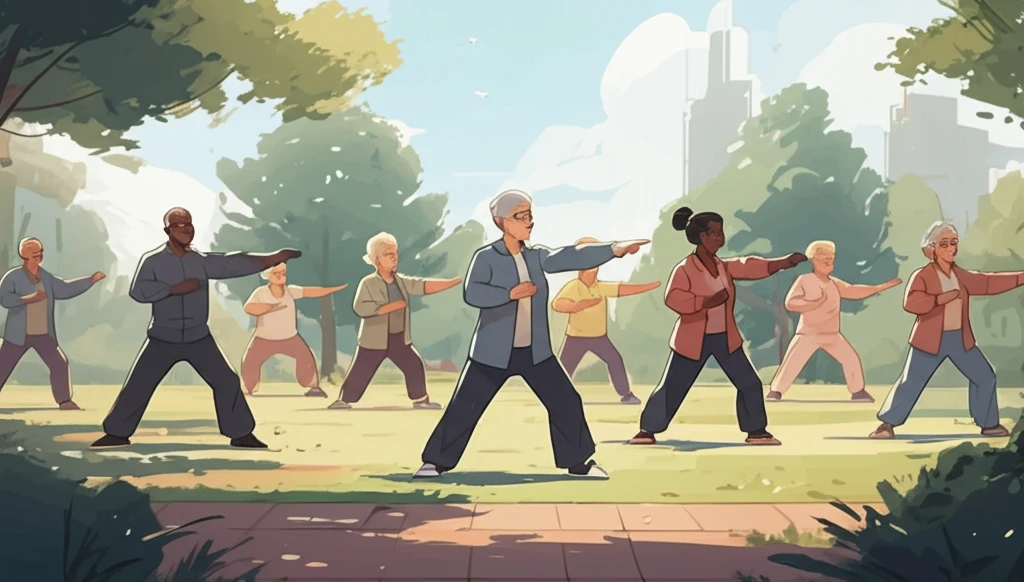
Stay on Your Feet: A Comprehensive Guide to Fall Prevention for Seniors

"Empowering older adults with practical strategies to minimize fall risks and maintain an active, independent lifestyle."
Falls are a significant health threat for older adults, often leading to injuries, reduced mobility, and a decline in overall quality of life. It's estimated that millions of seniors experience falls each year, and while not all result in serious harm, the potential consequences can be devastating.
This guide aims to provide a comprehensive overview of fall prevention strategies, empowering seniors and their caregivers with the knowledge and tools necessary to minimize risks. By understanding the contributing factors and implementing practical solutions, we can create a safer environment and promote an active, independent lifestyle for older adults.
While it's easy to associate falls with physical factors alone, the reality is often more complex. A combination of physical, psychological, and environmental elements can contribute to an increased risk. Addressing these factors holistically is key to effective fall prevention.
What “Fall” Can Mean
The word “fall” can refer to autumn, one of the four temperate seasons, when daylight shortens and temperatures cool. The 2026 autumnal equinox arrives on September 22, marking the beginning of fall in the Northern Hemisphere. Separately, Fall is the title of a 2022 survival psychological thriller directed by Scott Mann, in which two friends become stranded atop a 2,000-foot television broadcasting tower. These meanings illustrate that fall can describe both a seasonal transition and a dangerous loss of footing, but the listed sources do not provide statistics about falls among seniors.
A Multifaceted Approach
Fall prevention for seniors is generally approached as a combination of personal safety habits, environmental adjustments, and attention to health-related risk factors. Because risks differ between individuals and living environments, a strategy that helps one person may not address another person’s needs. Common approaches should therefore be treated as adaptable rather than universally sufficient. Professional assessment may be appropriate when falls are repeated, unexplained, or associated with injury.
An Evolving Field
Fall prevention has developed from a narrow focus on avoiding hazards into a broader effort that considers mobility, health, medication, and the home environment together. Earlier guidance often emphasized removing obvious obstacles, while more comprehensive approaches also consider strength, balance, vision, and individual routines. The field continues to evolve as clinicians and researchers refine ways to identify risk and support independence. Specific historical milestones are not established by the provided source material.
Understanding the Multifaceted Causes of Falls
Falls are rarely the result of a single cause. Instead, they typically arise from a combination of factors that can be broadly categorized as:
- Physical Risks: Reduced muscle strength, balance issues, vision impairment, chronic conditions.
- Medication Risks: Side effects from multiple medications.
- Psychological Risks: Fear of falling, anxiety, depression.
- Environmental Risks: Home hazards, poor lighting, uneven surfaces.
Evidence-Informed Prevention
Current fall-prevention discussions generally emphasize combining several measures instead of relying on a single intervention. Research-informed care may examine balance and strength, medication effects, vision, footwear, and household hazards as connected contributors to risk. The usefulness of any recommendation depends on how well it fits the older adult’s abilities, preferences, and surroundings. No specific recent studies or review findings were provided for this subsection.
Why Prevention Can Fall Short
Fall-prevention plans may fail when they are too general, difficult to follow, or disconnected from a person’s daily routines. A recommendation that improves safety in one setting may be impractical or ineffective in another. Overly restrictive measures can also conflict with an older adult’s desire for independence and participation. Effective planning therefore requires reassessment rather than assuming that one intervention will eliminate risk.
Comparing Prevention Strategies
Different fall-prevention strategies address different parts of the problem, so they should not be compared solely by whether they are simple or familiar. Environmental changes may reduce hazards, while exercise, clinical review, and practical education may address other contributors to risk. The strongest choice for an individual depends on the underlying risks, available support, and willingness to use the intervention. The provided source material does not establish comparative effectiveness figures.
Empowering Seniors for a Safer Tomorrow
Fall prevention is not just about avoiding injuries; it's about empowering seniors to maintain their independence, confidence, and overall quality of life. By understanding the risk factors, implementing preventive measures, and fostering a supportive environment, we can help older adults stay on their feet and continue to enjoy active, fulfilling lives. Regular check-ups and proactive engagement with healthcare providers are crucial in identifying and addressing potential risks before they lead to falls. Embrace these strategies and take the first step towards a safer, more vibrant future for yourself or your loved ones.
Putting Prevention Together
A practical fall-prevention plan brings together individual assessment, safer surroundings, mobility support, and ongoing attention to changing needs. No single step can be assumed to protect every older adult in every situation. The plan should support safety without unnecessarily limiting independence or normal activity. Expert input can help prioritize measures when risks are complex or persistent.
The Road Ahead
Future fall-prevention efforts may focus on making risk assessment more personalized and easier to integrate into everyday care. New approaches could combine clinical guidance, home-safety planning, mobility support, and monitoring while preserving autonomy. Any emerging tool should be judged by whether it is accurate, usable, accessible, and acceptable to older adults. The provided source material does not identify specific technologies, forecasts, or research priorities.
Beyond the Individual
Fall prevention is influenced not only by personal choices but also by housing conditions, access to healthcare, transportation, caregiver support, and affordability. Unequal access to these resources can make recommended measures easier for some older adults to adopt than for others. A comprehensive response therefore needs to consider both individual risk and the systems surrounding the person. Specific systemic data are not provided in the source material.
Safety With Independence
For older adults, fall prevention is closely connected to confidence, independence, and the ability to continue meaningful daily activities. Plans are more likely to help when they respect personal priorities and fit naturally into everyday life. Family members and professionals can provide support, but the older adult’s preferences should remain central whenever possible. The practical impact of prevention is therefore measured not only by fewer falls, but also by preserved participation and quality of life.