
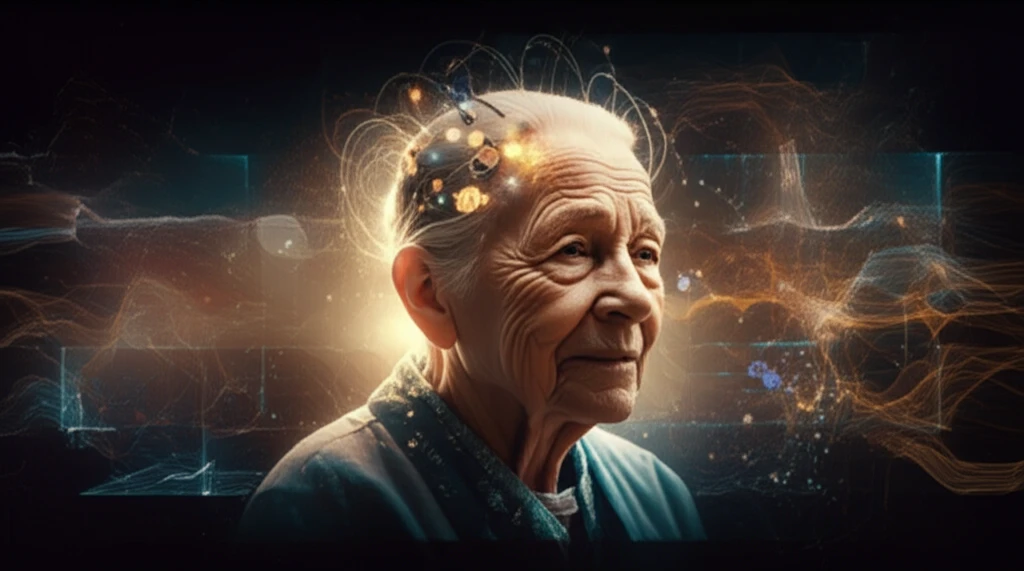
Brain Boost for Seniors: Can Stimulation Therapy Ease Pain and Sharpen Minds?

"Discover how non-invasive brain stimulation (tDCS) is emerging as a promising tool to combat age-related pain and cognitive decline, offering new hope for a better quality of life in elderly individuals."
Aging brings its share of challenges, and two of the most common are chronic pain and a decline in cognitive function. These issues can significantly impact the quality of life for seniors, making everyday tasks difficult and diminishing overall well-being. While various treatments exist, many come with side effects or limited effectiveness. This has led researchers to explore innovative approaches, including non-invasive brain stimulation techniques.
One such technique gaining attention is transcranial direct current stimulation (tDCS). This method involves applying a low-intensity electrical current to specific areas of the brain through electrodes placed on the scalp. The aim is to modulate brain activity, potentially alleviating pain and improving cognitive functions like memory and executive function. The dorsolateral prefrontal cortex (DLPFC), a brain region crucial for pain processing and executive functions, is often a target for tDCS in aging-related studies.
A recent study published in the journal Archives of Gerontology and Geriatrics investigates the feasibility of using tDCS to address pain perception and executive function in aging individuals. This article delves into the study's findings, exploring the potential benefits and limitations of tDCS as a therapeutic intervention for seniors seeking relief from chronic pain and cognitive enhancement.
The Brain’s Central Role
The brain is the center of the nervous system and receives information from the sensory nervous system. It processes, integrates, and coordinates sensory information, then directs instructions to the rest of the body. Johns Hopkins Medicine reports that it controls thought, memory, emotion, touch, motor skills, vision, respiration, and other processes that regulate the body. The cerebrum, its largest part, consists of two cerebral hemispheres.
A Complex Organ
The brain regulates movement, memory, emotions, thoughts, body temperature, breathing, hunger, and many other functions. Cleveland Clinic describes its parts as complex systems that work together to support everyday functioning. Because the brain is continuously active, conditions affecting it are common, according to that source. These facts help explain why approaches aimed at stimulation or rehabilitation must account for multiple interacting functions rather than a single process.
An Evolving Understanding
Understanding of the brain has developed over time as researchers have examined its structure, functions, and connections with the rest of the nervous system. The historical path from describing brain anatomy to investigating memory, sensation, and movement has shaped modern neuroscience. However, without specific historical sources for this subsection, broad claims about particular milestones or discoveries should be treated cautiously.
How Does tDCS Work to Combat Age-Related Decline?
The dorsolateral prefrontal cortex (DLPFC) is a key area in the brain that is vulnerable to the effects of aging. This region plays a crucial role in pain processing, executive functions (like planning and decision-making), attention, and memory. As we age, the DLPFC can experience structural and functional decline, leading to increased pain sensitivity and cognitive impairments. tDCS aims to counteract these effects by gently stimulating the DLPFC, potentially improving its activity and restoring some of its lost function.
- Reduces Pain Perception: tDCS may help decrease the intensity of pain signals reaching the brain, leading to a reduction in perceived pain.
- Enhances Executive Function: By stimulating the DLPFC, tDCS could improve cognitive abilities like planning, working memory, and decision-making.
- Improves Mood and Motivation: The DLPFC is also linked to mood regulation, so tDCS might have a positive impact on mood and motivation levels.
Evidence Still Developing
Research on stimulation therapy for pain relief and cognitive benefits is an evolving area. Potential effects may differ according to the type of stimulation, the condition being treated, and the person receiving it. Without sources specific to this subsection, no particular therapy, study result, or clinical conclusion can be established here. Claims about benefits should therefore be interpreted as provisional until supported by appropriate research.
Important Limits
Stimulation therapy should not be assumed to ease pain or sharpen thinking for every older adult. Outcomes may vary, and an intervention that appears promising may not produce consistent benefits in broader use. Because this subsection has no dedicated sources, specific failure rates, risks, or negative trial findings cannot be stated responsibly. Careful evaluation remains necessary before treating preliminary claims as established effects.
Comparing Approaches Carefully
Different stimulation approaches may vary in their goals, methods, intensity, and evidence base. Comparisons should consider both pain-related outcomes and cognitive outcomes rather than treating them as interchangeable measures. The available subsection materials do not identify particular therapies or comparative studies. Any ranking of methods would therefore be premature without direct evidence.
Looking Ahead: The Future of tDCS for Aging
The study highlights the potential of tDCS as a therapeutic tool for aging-related pain and cognitive decline. While further research is needed to optimize treatment protocols and understand long-term effects, tDCS offers a promising avenue for improving the quality of life for seniors. As technology advances and our understanding of the brain deepens, non-invasive brain stimulation techniques like tDCS may become increasingly valuable in promoting healthy aging.
A Measured Synthesis
The brain coordinates sensory information, movement, memory, emotion, and essential bodily processes. That broad role makes stimulation therapy an area of interest for both pain management and cognitive health. At the same time, interest should not be confused with proof of effectiveness. A balanced interpretation requires attention to individual differences and the quality of supporting evidence.
What Comes Next
Future work may clarify which forms of stimulation are most useful for particular symptoms or groups of older adults. Researchers may also need to distinguish short-term changes from durable improvements in pain or cognition. Without dedicated sources, no specific technology, timeline, or projected breakthrough can be identified. Progress will depend on careful studies that measure meaningful outcomes.
Beyond the Intervention
Brain health is connected to many functions, including breathing, movement, memory, emotion, and sensory processing. This complexity can make it difficult to evaluate one intervention in isolation. Broader challenges may include differences in patients, treatment settings, access, and outcome measurement. Specific systemic barriers cannot be quantified here because this subsection has no source material.
Individual Experience Matters
Pain and cognitive difficulties can affect daily activities, emotions, movement, and independence. Because the brain integrates information and coordinates the body, changes in one area may influence how a person experiences another. Individual responses to stimulation therapy may therefore differ substantially. Personal goals, practical circumstances, and clinically observed outcomes should remain central to real-world decisions.