
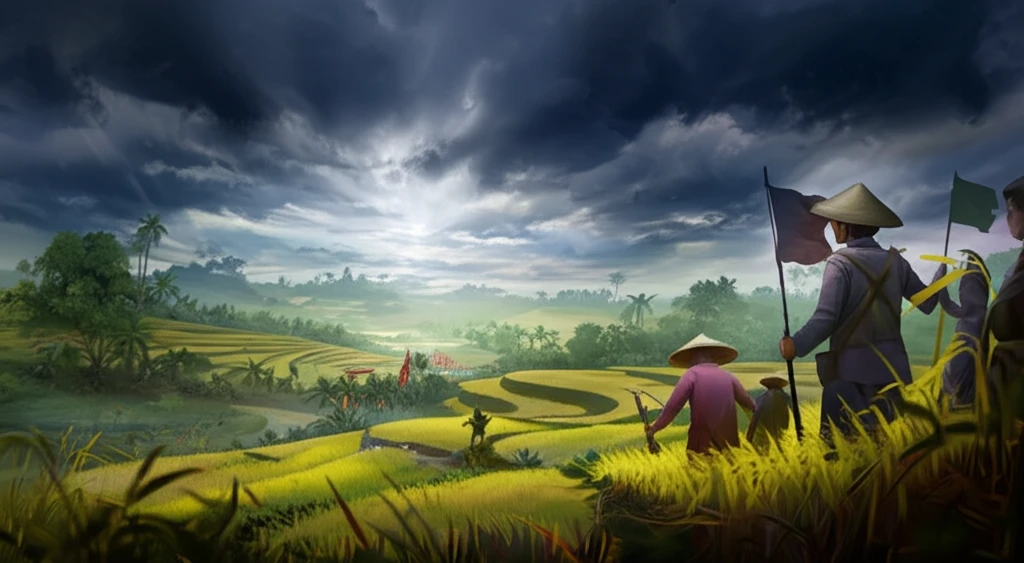
Rice fields under stormy sky symbolize harvest conflict in Southeast Asia

Does Harvest Time Impact Conflict? Unveiling Agricultural Roots of Social Unrest

"A deep dive into how shifts in employment and income during harvest seasons in Southeast Asia's rice-producing regions influence political violence and social dynamics."


In many low- to middle-income countries, even minor changes in income can significantly affect people’s behavior, sometimes leading to unlawful or violent actions. While we often think of these incidents happening in cities, where most people live and where government services are concentrated, it’s important to remember that rural areas also experience conflict due to changes in income and employment. Agriculture and conflict are closely linked, with agricultural output acting as a key factor in how climate affects conflict.

A pertinent question arises: Does conflict intensify during harvest seasons in agricultural areas? This isn’t a straightforward issue. Many different factors and motivations influence this relationship. A growing body of research links agricultural income to political violence and social unrest, often finding that conflict can lead to food insecurity and that agricultural shocks can change how often and how intensely conflicts occur.

To explore this question, we looked at over 86,000 incidents across eight Southeast Asian countries between 2010 and 2023. We distinguished between different types of conflict, such as organized armed groups involved in political violence and unorganized groups engaged in social unrest. Our analysis revealed that violence against civilians increases in areas with substantial rice production during harvest season. This finding remains consistent even when using different models and data subsets.

How Harvest Time Drives Conflict: Rapacity, Resentment, and Opportunity

Rice fields under stormy sky symbolize harvest conflict in Southeast Asia

Harvest time can exacerbate conflicts by creating opportunities for some to extort agricultural surpluses or inflict damage on their rivals. This dynamic is fueled by what we term the ‘rapacity channel.’ Additionally, the harvest period can temporarily alter the distribution of income among those involved in agricultural versus non-agricultural activities, igniting the ‘resentment channel.’ Typically, resentment leads to social unrest when there is a decrease in crop production and food supply, which can worsen existing inequalities. However, the logic of resentment can also apply when seasonal agricultural surpluses create disparities between those who have (agricultural producers) and those who do not (non-agricultural workers).

Conversely, harvest may also reduce conflict. Potential combatants might be too occupied with harvesting, or the benefits of harvesting could outweigh the advantages of engaging in conflict—this is the ‘opportunity cost channel.’

  • Rapacity: The lure of agricultural spoils tempts groups to seize or destroy resources.
  • Resentment: Income disparities between agricultural and non-agricultural groups flare during harvest periods.
  • Opportunity Cost: The act of harvesting itself can deter individuals from participating in conflicts.
To truly understand these dynamics, it's crucial to distinguish between different actors in conflict situations. Organized groups, such as state forces, rebel factions, and militias, often engage in battles with one another or perpetrate violence against civilians. In contrast, unorganized actors, predominantly civilians, participate in protests against the government, sometimes escalating to riots. The reasoning behind these actions, the importance of agricultural income, and the seasonal patterns are likely to differ significantly, depending on who is involved and the nature of the conflict.

Conclusion: The Seasonality of Strife

Our research underscores the critical role of the harvest season in understanding the agricultural roots of social conflict. By analyzing 14 years of monthly data on social conflict across 376 cells in Southeast Asia, we’ve shown how different forms of conflict—political violence and social unrest—are influenced by seasonal changes in agricultural output. Political violence, especially when targeted against civilians, can be better understood through the ‘rapacity channel,’ where organized armed groups target civilians when and where it matters most. Social unrest, on the other hand, is often driven by the ‘opportunity cost channel,’ as farmers are less likely to engage in protests when they are busy harvesting or have recently benefited from positive harvest-related income. The presence of a ‘resentment channel’ can reinforce the rapacity channel or mitigate the opportunity cost channel, depending on whether the income inequality is perceived as transient or persistent.

About this Article -

This article was crafted using a human-AI hybrid and collaborative approach. AI assisted our team with initial drafting, research insights, identifying key questions, and image generation. Our human editors guided topic selection, defined the angle, structured the content, ensured factual accuracy and relevance, refined the tone, and conducted thorough editing to deliver helpful, high-quality information.See our About page for more information.

Everything You Need To Know

1

How does harvest time influence conflict dynamics in Southeast Asia?

Harvest time significantly impacts conflict in Southeast Asia through multiple channels. The 'rapacity channel' suggests that organized armed groups may exploit the harvest for agricultural surpluses, increasing violence. The 'resentment channel' highlights how income disparities created during harvest periods between agricultural and non-agricultural workers can fuel social unrest. Conversely, the 'opportunity cost channel' suggests that the harvest itself may deter individuals from engaging in conflict because of the time commitment and potential benefits from the harvest. The research, analyzing data from 2010 to 2023 across eight Southeast Asian countries, demonstrates these complex interactions, with political violence, particularly against civilians, increasing during harvest seasons.

2

What are the main channels through which harvest periods affect conflict?

The main channels are 'rapacity', 'resentment', and 'opportunity cost'. 'Rapacity' involves organized armed groups exploiting the harvest for resources, which can increase violence. 'Resentment' arises from income disparities between agricultural producers and non-agricultural workers during the harvest, potentially leading to social unrest. 'Opportunity cost' describes how the time and effort required for harvesting may deter participation in conflict. The interplay of these channels determines the overall impact of the harvest on conflict levels, with each channel influencing the likelihood and nature of conflict.

3

How does the 'rapacity channel' contribute to conflict during harvest seasons?

The 'rapacity channel' intensifies conflict as harvest time creates opportunities for organized groups to seize or destroy agricultural surpluses. Armed groups, including state forces, rebel factions, and militias, target civilians and their resources. The primary motivation is often to gain control over valuable agricultural produce or to weaken rivals. The study revealed that this type of violence increases during harvest seasons in areas with significant rice production, indicating a direct link between the harvest cycle and organized conflict driven by the pursuit of agricultural spoils.

4

What is the difference between organized armed groups and unorganized groups in the context of harvest-related conflict?

Organized armed groups, such as state forces, rebel factions, and militias, typically engage in political violence against each other or target civilians. This can be fueled by the 'rapacity channel', where harvest periods offer opportunities for resource control. Unorganized groups, mainly civilians, are involved in social unrest, such as protests and riots, often influenced by the 'resentment' and 'opportunity cost channels'. The 'resentment channel' arises from income inequality between agricultural producers and non-agricultural workers. The 'opportunity cost channel' suggests that farmers are less likely to protest when they are occupied by harvesting activities. The distinction is crucial for understanding the different motivations and dynamics driving conflict during the harvest season.

5

How can understanding the harvest's impact on conflict inform policymakers?

Understanding the influence of harvest seasons on conflict offers critical insights for policymakers to design effective interventions. By recognizing how factors like the 'rapacity channel', 'resentment channel', and 'opportunity cost channel' affect conflict, policymakers can develop targeted strategies. This includes measures to protect agricultural resources, address income disparities, and provide alternative economic opportunities during harvest periods. Knowledge of the seasonality of conflict, as demonstrated by the study, can also help in resource allocation, conflict prevention initiatives, and targeted support to vulnerable populations in Southeast Asia. This focused approach can lead to improved social stability and reduced conflict.

Newsletter Subscribe

Subscribe to get the latest articles and insights directly in your inbox.