
Decoding the Secret Language of Cells: How Protein Interactions Shape Life

"Unraveling the complexities of protein-protein interactions (PPIs) offers new insights into disease, drug discovery, and the very nature of life itself."
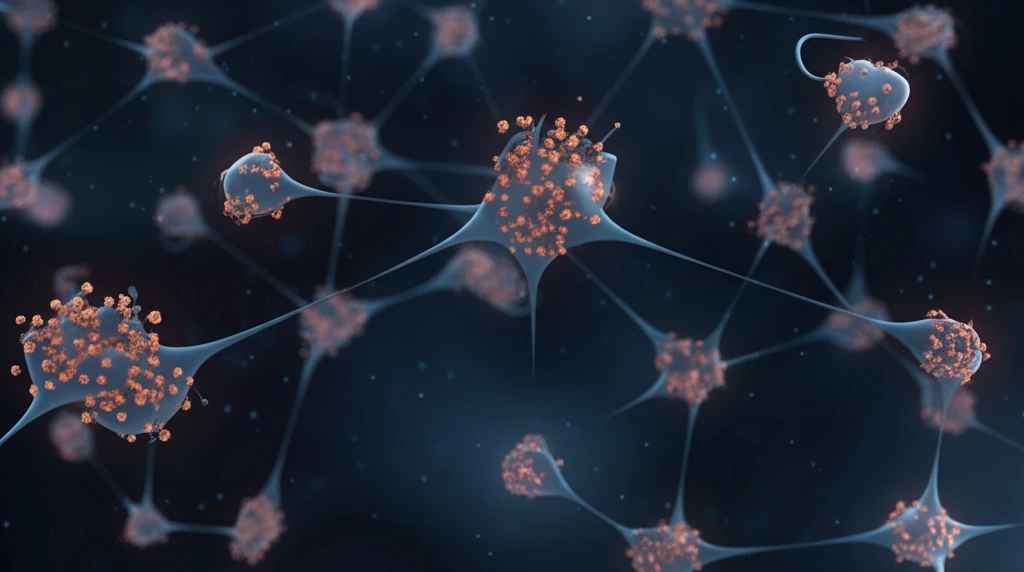
Imagine the cells in your body as bustling cities, each packed with millions of tiny workers called proteins. These proteins aren't just idly standing by; they're constantly interacting, forming complex networks that dictate everything from your metabolism to your immune response. These interactions, known as protein-protein interactions (PPIs), are the fundamental language of cells, and understanding them is key to understanding life itself.
For decades, scientists have been working to map these intricate networks, identifying which proteins interact with each other and how these interactions influence cellular processes. Traditional methods of studying PPIs are time-consuming and resource-intensive, making it difficult to get a complete picture of the interactome – the entire network of protein interactions within an organism.
But now, thanks to advances in computational biology and large-scale data analysis, researchers are developing new ways to predict and analyze PPIs. This article explores how these methods are revolutionizing our understanding of cellular function and opening new doors for drug discovery and personalized medicine.
The Scale of Protein Interactions
Protein-protein interactions underpin most biological processes, yet determining the affinity and abundance of binding partners remains challenging due to the involvement of multiple ligands and binding sites. The STRING database catalogs functional protein association networks across 12,535 organisms, encompassing approximately 59.3 million proteins. This vast scale reflects both the ubiquity of protein interactions and the difficulty of comprehensively mapping them. Researchers can explore proteome data through web interfaces, programmatic APIs, or bulk downloads to analyze these complex networks.
Methods for Studying Protein Interactions
Protein interactions can be classified as simultaneously possible or mutually exclusive based on binding site specificity, with several reported methods distinguishing interaction types using three-dimensional protein complex structures. NMR spectroscopy stands out as one of the most powerful and versatile methods available to characterize the structure, dynamics, kinetics, and thermodynamics of protein-protein interactions. Machine learning approaches, particularly support vector machines, have been developed to discriminate between interacting and non-interacting protein pairs using statistical pattern recognition. These computational methods complement experimental techniques but face challenges in predicting interaction specificity from sequence data alone.
Foundations of Interaction Biology
Protein-protein interactions regulate enzymatic activity, control progression through the cell cycle, and allow the assembly of large protein complexes that carry out closely related reactions with common biological functions. Proteins can bind to or be integrated into cell membranes, forming the structural and functional basis of cellular organization. The understanding that any interactions between two protein molecules enabled by electrostatic forces like the hydrophobic effect constitute protein-protein interactions has been foundational to the field. These principles established the framework for modern interactomics and systems biology approaches.
Mapping the Interactome: New Tools, New Discoveries
The traditional approach to studying PPIs involves painstaking experiments to identify which proteins bind to each other under specific conditions. These experiments often provide valuable information, but they are limited in scale and can only capture a small fraction of the total number of PPIs in a cell. As the amount of available data grows, machine learning is used to predict and infer interactions. This allows scientists to create tools that can find millions of potential interactions.
- It can predict novel PPIs that have never been observed before.
- It can be applied to a wide range of organisms, including those that are less well-studied.
- It leverages the wealth of evolutionary information encoded in protein sequences.
Advances in Interaction Analysis
Until the late 1990s, protein function analyses mainly focused on single proteins, but the field has since shifted toward understanding interaction networks. Studies now suggest promiscuous protein-protein interactions between beta-barrel outer membrane proteins in Escherichia coli govern their local and global dynamics, engendering spatiotemporal patterning of the outer membrane into micro-domains. The quality of large-scale protein interaction data, once widely questioned, has improved significantly, with recent screens demonstrating high reproducibility. Protein-protein interactions in bacteria have become a promising yet challenging target for therapeutic development given their involvement in myriad vital cellular processes.
Challenges in Targeting Interactions
While protein-protein interactions represent attractive drug targets due to their specificity in permitting highly selective pharmacological interference with defined cellular processes, significant technical hurdles remain. Traditional bulk methods often fail to capture weak or transient binding events that are critical to biological function. Proteins, nucleic acids, and other biomolecules frequently bind and unbind in dynamic equilibrium, but these transient interactions can be too weak for conventional detection approaches. Choosing appropriate experimental membranes and conditions is critical for achieving high sensitivity, low background noise, and reliable reproducibility in interaction studies.
Network Perspectives on Interactions
Comprehensive analyses of protein-protein interactions in Saccharomyces cerevisiae and systematic analyses of protein complexes have established foundational interactome maps. Protein-protein docking studies examine how proteins interact from individual binding events to network-level interactome organization. Research on histone conformations has shown that linear conformations in predicted complexes exhibit statistically significant higher binding affinity than helical counterparts at 99% confidence levels. Engineering novel protein-protein interactions represents a potential mechanism for developing cell-based therapies, protein-based therapeutics, synthetic biology tools, or biosensors.
The Future of PPI Research
As computational methods for predicting and analyzing PPIs continue to improve, we can expect to see even more exciting discoveries in the years to come. These discoveries will not only deepen our understanding of fundamental biological processes but also pave the way for new treatments for a wide range of diseases. By mapping the intricate networks of protein interactions within our cells, we are unlocking the secrets of life itself.
Drug Discovery at Interaction Interfaces
Protein-protein interactions form the basis of numerous intra- and extracellular processes, making their rational identification and inhibition a key challenge for the pharmaceutical industry in the post-genomic era. Hot-spot analysis has emerged as a valuable approach for drug discovery targeting protein-protein interfaces. Network analysis of protein-protein interactions enables systematic mapping of how individual interactions contribute to larger cellular networks. These integrated approaches combine computational prediction with experimental validation to identify therapeutically accessible interaction sites.
Predicting Interaction Networks
The structural interaction of proteins and their domains in networks represents one of the most basic molecular mechanisms for biological cells. Protein-protein interaction prediction methods increasingly incorporate homology information and inter-domain linker region analysis to improve accuracy. These computational approaches aim to bridge the gap between known interactions and the vast space of predicted but unvalidated protein partnerships. Advances in prediction algorithms will be essential for completing comprehensive interactome maps across diverse organisms.
From Networks to Disease Understanding
Protein-protein interaction networks represent the complex web of physical or functional associations between proteins within a cell, enabling researchers to understand how localized mutations can lead to systemic phenotypic consequences. Genome-scale human protein-protein interaction networks are critical to understanding cell biology and interpreting genomic data, though they remain challenging to produce experimentally. Integrating different types of protein-protein interactions is crucial for developing broad interaction networks that capture the full complexity of cellular systems. These networks provide frameworks for understanding rare genetic disorders and identifying potential therapeutic targets.
Translating Interactions to Therapies
Many experiments stall because researchers do not truly know which proteins interact, how those interactions change under stress, or what drives functional outcomes. Interactomics, the large-scale study of protein interactions, addresses this knowledge gap by systematically mapping interaction landscapes. The Protein-Protein Interactions Hub is utilizing existing tools to map protein complexes and develop mechanism-based small molecules that can modulate disrupted protein complexes to bolster therapeutic development, particularly for autism spectrum disorders. Despite the challenges of targeting protein-protein interactions, several studies have provided evidence for developing small molecules that modulate these critical biological processes.