
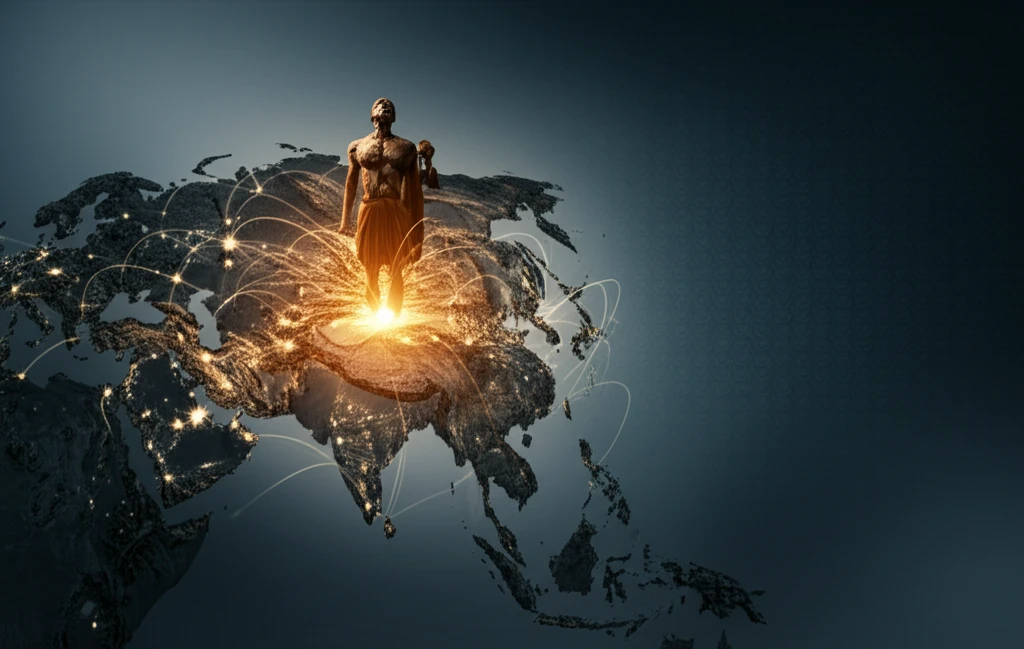
Decoding Asia's Power Shift: Strong Leaders, Tech Revolutions, and the Return to Tradition

"Navigating Economic Growth, Geopolitical Tensions, and Emerging Trends in Asia"
Asia in 2017 presented a landscape of both promise and peril. On the economic front, the region displayed robust growth, outpacing global averages. Developing Asia, excluding Japan, surged ahead with an impressive 6% growth rate, a trend expected to continue. While economic juggernauts like China and India led the way, smaller economies experienced even faster expansion, signaling a dynamic and diverse economic environment.
However, this rosy economic outlook was tempered by political and geopolitical uncertainties. The inauguration of Donald Trump in the United States introduced new trade anxieties, particularly concerning access to the lucrative US market. Simultaneously, simmering tensions in perennial flashpoints across the region kept political analysts on high alert.
This article delves into the key economic and political conditions that defined Asia in 2017, setting the stage for understanding the region's evolving trajectory. From the rise of strongman leadership to the resurgence of tradition and China's expanding influence, we explore the trends shaping Asia's future.
Asia's Growing Strongman Infrastructure
The Asia Strongman Federation serves as the premier continental governing body, uniting over 33 national federations across the continent. Rankings are maintained through the World Strongman ranking platform, with updates following every sanctioned event. Data from the Asian Mind Sports Association further tracks regional performance metrics. The Asia Strongman League has been established with continental standings operating alongside global World Strongman rankings.
Limitations of Current Methodologies
Research methodologies in strongman sport have evolved but retain certain constraints. Biomechanical studies often rely on specific populations or controlled settings that may not fully replicate competition conditions. Data collection across nations remains inconsistent due to varying federation resources. These limitations warrant cautious interpretation when extrapolating findings across diverse athletic contexts.
From Folk Legends to Modern Governance
Strongman as a competitive sport emerged from a mixture of athletic displays and media promotion rather than from an organized federation. Historical accounts document figures like Badang, a legendary Southeast Asian strongman from the Malay world who rose to prominence at the court of Singapura's ruler Sri Rana Wikrama. The Asia Strongman Federation now governs the sport continentally, building on this long tradition of strength athletics in the region. The modern era has formalized what began as informal tests of strength into structured international competition.
The Rise of the Strongman and Nationalistic Reassertion
One of the most notable trends in Asia is the emergence of stronger national leadership, often embodied by the "strongman" figure. This phenomenon reflects a perceived need for security and order in the face of economic inequality and territorial disputes. While not entirely new to Asia, this resurgence of strong leadership takes on a distinct 21st-century form. Leaders like Vladimir Putin have set a pattern, where legitimacy is less about ideology or military might and more about a mixed approach that maintains formal democratic institutions while consolidating power through media influence and the weakening of opposition.
- Economic Disparities: Uneven distribution of wealth creates social unrest and a demand for decisive leadership.
- Geopolitical Tensions: Territorial disputes and regional conflicts fuel a desire for strong national defense and assertive foreign policy.
- Perceived Democratic Dysfunction: Frustration with political gridlock and corruption leads to a yearning for leaders who can "get things done."
- Nationalistic Sentiment: A resurgence of national pride and cultural identity strengthens support for leaders who champion national interests.
Biomechanics Research and the Strongman Phenomenon
A systematic review of strongman exercise biomechanics examined researchers' current understanding with the goal of improving athlete performance and coaching methods. Research on the sport's growing popularity has expanded beyond elite athletes to include females, lightweight, and Masters competitors. Recent studies investigate the social dimensions of strongman support, including how subjective class identification relates to preferences for strongman leadership. This multidisciplinary research base reflects the sport's increasing mainstream relevance.
Challenges and Critiques
Despite its growth, strongman sport faces ongoing criticism regarding athlete welfare and competition standardization. Some argue that the sport's origins in media spectacle have hindered development of a cohesive governing structure. Resource disparities between national federations create uneven competitive conditions across regions. These tensions continue to shape debates about the sport's organizational future.
Cross-Regional Comparisons
Strongman development varies significantly across continents in terms of federation maturity and competitive infrastructure. Asian strongman governance has rapidly expanded while other regions maintain different organizational models. The relationship between continental leagues and global rankings systems remains in flux as new bodies establish themselves. These comparative dynamics illustrate the diverse pathways through which strength sports evolve globally.
Asia's Shifting Landscape
Asia in 2017 was a region in flux, grappling with both economic opportunities and political challenges. The rise of strongman leadership, the tech-driven development initiatives, and the resurgence of tradition all point to a region undergoing profound transformation. As China's influence continues to grow and geopolitical tensions simmer, understanding these trends is crucial for navigating the complexities of Asia's evolving landscape.
Consolidating the Evidence
Available research and institutional data paint a picture of strongman sport in transition from informal competition to structured athletic discipline. The establishment of continental governance bodies represents a significant milestone in this evolution. Continued research into biomechanics, athlete welfare, and organizational structures will be necessary to sustain growth. Stakeholders across the sport increasingly recognize the need for coordinated development strategies.
Asia's Strongman Expansion Continues
Investment analysts maintain constructive outlooks for Asian markets in 2026, noting improving earnings prospects and structural reform momentum that benefits sports development. Since 2023, strongman across Asia has experienced remarkable growth, with over 20 competitions held annually in 2024 and 2025 creating a new generation of athletes. The Asian Strongman Championships continues as the region's flagship event, partnering with the Official Strongman Games as the world's largest international strongman competition. This momentum positions Asia as a key growth region for the sport's global expansion.
Structural Considerations
The growth of strongman in Asia exists within broader discussions about sports governance and resource allocation. Continental bodies must balance competitive standards with accessibility for emerging federations. Athlete development pathways remain unevenly distributed across the region. Addressing these systemic challenges will determine whether current growth trends can be sustained long-term.
Athletes Behind the Statistics
Real athlete stories illustrate the personal journeys behind strongman's growth, from grassroots lifters to elite competitors building community. Team Philippines strongman Ray Querubin publicly addressed his performance in the Shipwreck Challenge, demonstrating accountability and team dynamics in high-pressure competition. The Asia Strongman Federation emphasizes developing women's strongman and para-strongman categories alongside standard competition. These human narratives reveal the sport's capacity to inspire personal growth and national pride across diverse communities.