
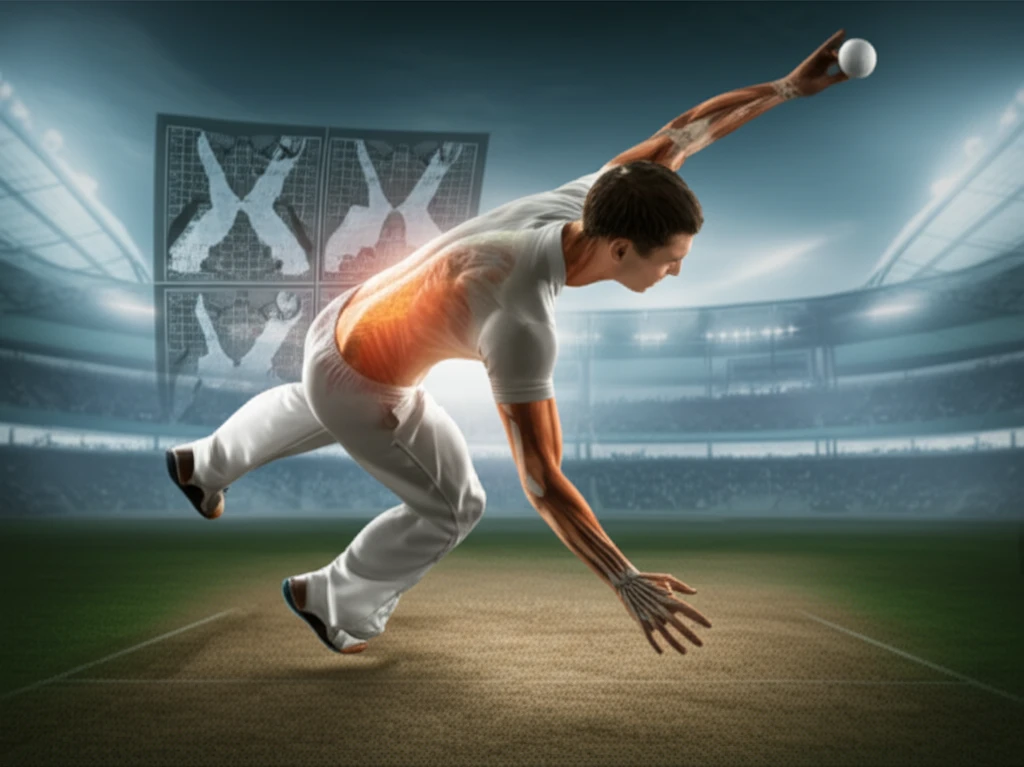
Cricket Injuries: Are Young Bowlers at Risk?

"A systematic review reveals potential risk factors for non-contact injuries in adolescent cricket pace bowlers. Learn how to protect young athletes."
Cricket, a sport celebrated worldwide, places unique demands on its athletes, particularly pace bowlers. Adolescent players are especially vulnerable to injuries due to the repetitive, high-impact nature of their bowling action. Understanding the specific risks faced by these young athletes is the first step in creating effective injury prevention strategies.
While adult cricket injuries have been studied, adolescent players present a different picture. They're more prone to back and trunk injuries, overuse issues, and growth-related conditions affecting their lower limbs. This underscores the need for research specifically focused on this age group.
This article breaks down the findings of a systematic review that investigated risk factors for non-contact injuries in adolescent cricket pace bowlers. We'll explore biomechanical, workload-related, and neuromuscular factors that contribute to these injuries, offering insights for coaches, parents, and young athletes themselves.
Decoding the Risks: What the Research Reveals
A comprehensive review of sixteen studies, encompassing 687 participants, has shed light on several key risk factors for non-contact injuries in adolescent cricket pace bowlers. These factors can be broadly categorized into biomechanical, workload-related, and neuromuscular components.
- Bowling Biomechanics: Excessive lateral trunk flexion (bending to the side while bowling) and atypical pelvis/hip movements increase injury risk.
- Reduced Trunk Endurance: Weakness in the muscles supporting the spine can make young bowlers vulnerable.
- Poor Lumbo-Pelvic-Hip Control: Difficulty coordinating movement between the lower back, pelvis, and hips contributes to instability and injury.
- Early Signs of Lumbar Bone Stress: Changes detected via MRI may indicate increased risk of stress fractures.
Protecting Young Bowlers: Practical Steps and Future Directions
The findings of this review offer valuable insights for developing targeted injury prevention programs. Coaches can focus on improving bowling technique to reduce excessive trunk flexion and optimize hip/pelvis movements. Strength and conditioning programs should emphasize trunk endurance and lumbo-pelvic-hip control.
It's also crucial to monitor bowling workload and ensure adequate rest between sessions. While the ideal workload remains unclear, avoiding spikes in activity and providing sufficient recovery time are likely beneficial.
Future research should focus on prospective cohort studies with injury-free participants at baseline, careful control of confounding factors, and detailed monitoring of bowling biomechanics and workload. Further investigation into the role of mixed techniques and QL asymmetry is also warranted.