
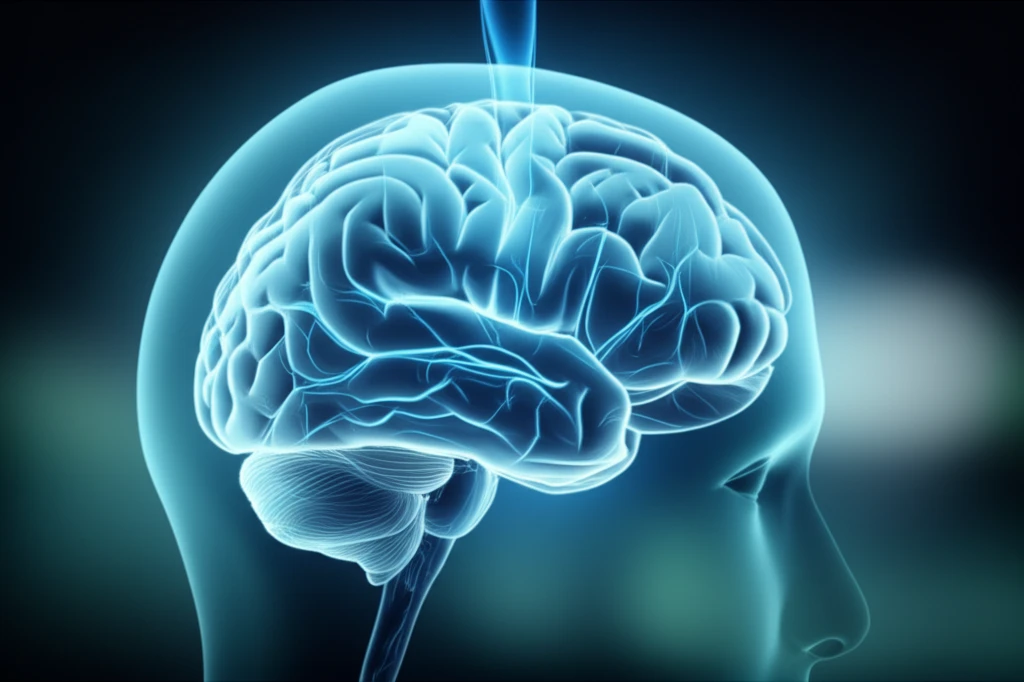
Illustration of cooling brain to represent stroke recovery

Cooling Down Stroke Damage: A New Approach to Brain Recovery

"Can targeted hypothermia combined with clot removal offer hope for better outcomes after severe stroke?"


When a major artery in the brain becomes blocked, cutting off vital blood flow, the result is an acute ischemic stroke. The current standard of care involves quick action: administering intravenous tissue plasminogen activator (tPA) to dissolve the clot and/or performing an endovascular thrombectomy to physically remove it. However, even when these treatments successfully restore blood flow, some patients still experience significant brain damage and limited recovery.

The problem? Ischemia/reperfusion (I/R) injury. This occurs when blood flow returns to the oxygen-starved tissue, paradoxically causing further damage. Scientists have been exploring ways to protect the brain from this secondary injury, and one promising avenue is hypothermia, or targeted cooling. The idea is that lowering the brain's temperature can reduce the harmful effects of I/R injury.

Now, a clinical trial is underway to investigate the safety of combining endovascular thrombectomy with regional transarterial hypothermic infusion – essentially, delivering cool saline directly to the affected area of the brain. This article breaks down the study's protocol and explores how this innovative approach could potentially improve outcomes for acute ischemic stroke patients.

The Cooling Protocol: How It Works

Illustration of cooling brain to represent stroke recovery

The study focuses on patients experiencing acute ischemic stroke with a blockage in a major cerebral artery who are eligible for endovascular thrombectomy. The key inclusion criteria include a moderate to severe stroke as indicated by a National Institutes of Health Stroke Scale (NIHSS) score of 5-29. Importantly, even if patients are already taking oral anticoagulants or antiplatelet medications, they are still eligible for the trial.

The process unfolds as follows:

  • Rapid Assessment: Upon arrival at the hospital, patients undergo immediate assessment, including cerebral MRI and MR angiography (MRA) or CT scans, to confirm the stroke and identify the location of the blockage.
  • Standard Treatment: Eligible patients receive intravenous tPA to begin dissolving the clot. If the artery remains blocked, endovascular thrombectomy is performed.
  • Hypothermic Infusion: If, after successful clot removal, the patient shows no improvement in their NIHSS score, the cooling intervention begins. Cold saline (15°C) is administered through a microcatheter placed in the internal carotid artery on the same side as the stroke. The saline is delivered at a rate of 10mL/min for 10 minutes, totaling 100mL.
  • Close Monitoring: Throughout the procedure, the patient's vital signs and neurological status are carefully monitored for any adverse reactions.
The researchers chose a saline temperature of 15°C based on previous studies. While lower temperatures have shown promise, concerns exist about potential endothelial damage at temperatures below 8°C. The 15°C target aims to strike a balance between therapeutic benefit and patient safety.

Why This Trial Matters: Potential and Future Directions

This clinical trial is an essential first step in evaluating a novel approach to stroke treatment. The primary goal is to confirm the safety of regional transarterial hypothermic infusion when combined with standard endovascular thrombectomy. Researchers will carefully track mortality, morbidity, and any adverse events.

If the procedure proves safe, the next step would be a larger clinical study to determine its effectiveness. This future trial could assess whether the cooling intervention leads to improved neurological outcomes, reduced brain damage, and enhanced recovery for stroke patients.

Ultimately, this research could pave the way for a significant shift in stroke treatment, offering a new strategy to minimize the devastating effects of I/R injury and improve the lives of those affected by this condition.

About this Article -

This article was crafted using a human-AI hybrid and collaborative approach. AI assisted our team with initial drafting, research insights, identifying key questions, and image generation. Our human editors guided topic selection, defined the angle, structured the content, ensured factual accuracy and relevance, refined the tone, and conducted thorough editing to deliver helpful, high-quality information.See our About page for more information.

This article is based on research published under:

DOI-LINK: 10.1136/bmjopen-2017-016502, Alternate LINK

Title: Regional Transarterial Hypothermic Infusion In Combination With Endovascular Thrombectomy In Acute Ischaemic Stroke With Cerebral Main Arterial Occlusion: Protocol To Investigate Safety Of The Clinical Trial

Subject: General Medicine

Journal: BMJ Open

Publisher: BMJ

Authors: Kikutaro Tokairin, Toshiya Osanai, Takeo Abumiya, Ken Kazumata, Kota Ono, Kiyohiro Houkin

Published: 2017-08-01

Everything You Need To Know

1

What is an acute ischemic stroke, and what are the current standard treatments?

An acute ischemic stroke happens when a major artery in the brain is blocked, preventing blood flow. This lack of blood flow leads to oxygen starvation, causing brain damage. Standard treatments often include administering intravenous tissue plasminogen activator (tPA) to dissolve the clot, or performing an endovascular thrombectomy to physically remove it. Even with these treatments, damage can still occur due to the ischemia/reperfusion (I/R) injury. This trial explores a new approach to reduce this damage.

2

What is ischemia/reperfusion (I/R) injury, and why is it a concern in the context of stroke treatment?

Ischemia/reperfusion (I/R) injury is the secondary damage that occurs when blood flow is restored to oxygen-starved brain tissue after an acute ischemic stroke. Paradoxically, the return of blood flow can trigger further damage. The clinical trial explores the use of regional transarterial hypothermic infusion to mitigate the effects of I/R injury. This involves delivering cool saline directly to the affected area of the brain after successful clot removal, aiming to protect the brain from further damage.

3

What is the process or protocol used in the clinical trial?

The study's protocol involves several steps. First, patients undergo rapid assessment using cerebral MRI, MRA, or CT scans to confirm the stroke and blockage location. Then, patients receive standard treatments, including tPA. If the artery remains blocked, an endovascular thrombectomy is performed. After successful clot removal, if the patient shows no improvement, the cooling intervention begins. This involves administering cold saline (15°C) through a microcatheter placed in the internal carotid artery, at a rate of 10mL/min for 10 minutes. Throughout the procedure, vital signs and neurological status are closely monitored.

4

What is regional transarterial hypothermic infusion, and how does it work?

Regional transarterial hypothermic infusion involves delivering cool saline (15°C) directly to the affected area of the brain. This is done through a microcatheter placed in the internal carotid artery. The cool saline aims to reduce the brain's temperature, which can protect it from further damage after an acute ischemic stroke. The cooling is initiated after the clot is removed, and if the patient's condition does not improve post-treatment. The temperature of 15°C was chosen to balance therapeutic benefits and patient safety, as lower temperatures may cause endothelial damage.

5

Who is eligible for this clinical trial, and what outcomes are being monitored?

The trial is focused on patients experiencing acute ischemic stroke with a blockage in a major cerebral artery. The eligibility criteria include a moderate to severe stroke as indicated by a National Institutes of Health Stroke Scale (NIHSS) score of 5-29. Importantly, even if patients are taking oral anticoagulants or antiplatelet medications, they are still eligible. The researchers will carefully monitor outcomes, including mortality, morbidity, and any adverse events. This study is a crucial first step in evaluating the safety and efficacy of combining endovascular thrombectomy with regional transarterial hypothermic infusion.

Newsletter Subscribe

Subscribe to get the latest articles and insights directly in your inbox.