
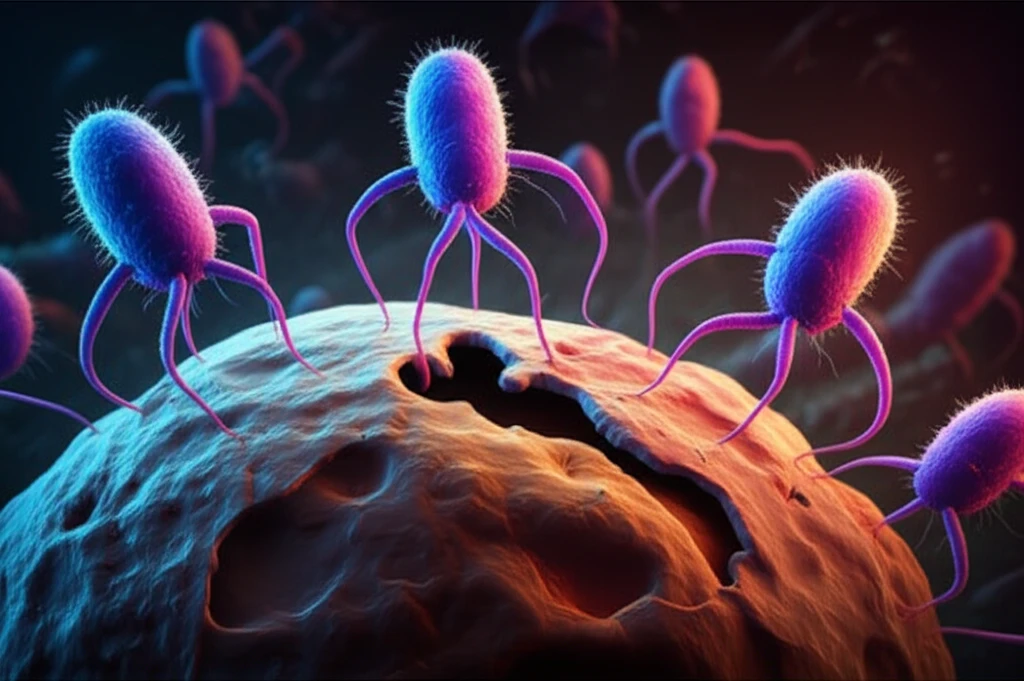
Chlamydia bacteria failing to prevent cell death.

Chlamydia's Surprising Weak Spot: Why It Can't Always Stop Cell Death

"New research reveals that while Chlamydia tries to block cell death, it often fails, leading to unexpected consequences for infection control."


Chlamydia trachomatis is a sneaky bacterium. As the culprit behind common sexually transmitted infections and ocular diseases, it has a reputation for being a master of manipulation. Scientists have long believed that Chlamydia prevents infected cells from dying, ensuring a safe haven for replication. But is this really the case?

A recent study challenges this assumption, revealing that Chlamydia's anti-cell death defenses aren't as foolproof as we once thought. While it's true that Chlamydia can fend off certain types of cellular suicide (apoptosis) early in infection, it seems to falter when faced with other death-inducing triggers.

This discovery sheds new light on how Chlamydia infections progress and opens doors to innovative treatment strategies. By understanding Chlamydia's weaknesses, we can potentially develop therapies that disrupt its life cycle and reduce its spread.

Necrosis vs. Apoptosis: Why It Matters in Chlamydia Infections

Chlamydia bacteria failing to prevent cell death.

To understand Chlamydia's vulnerability, it's important to grasp the difference between two main types of cell death: apoptosis and necrosis. Apoptosis is a programmed form of cell death, a tidy and controlled process where the cell breaks itself down without causing inflammation. Necrosis, on the other hand, is a messy affair. It occurs when a cell is overwhelmed by damage and bursts open, releasing its contents and triggering inflammation.

The study found that Chlamydia-infected cells, when exposed to pro-apoptotic stimuli (triggers that normally cause apoptosis), often died through a process resembling necrosis. This was unexpected because Chlamydia is known to actively suppress apoptosis. The researchers used time-lapse video microscopy and analyzed cell membrane integrity to reach this conclusion.

  • Time-Lapse Microscopy: This technique allowed scientists to watch the fate of infected cells in real-time, observing how they responded to death-inducing signals.
  • Plasma Membrane Integrity: By monitoring whether the cell membrane remained intact or ruptured, researchers could distinguish between apoptosis (intact membrane initially) and necrosis (membrane rupture).
  • Caspase Activity: Caspases are enzymes that play a key role in apoptosis. The researchers measured caspase activity to determine whether the apoptotic machinery was activated.
Interestingly, this necrotic death occurred at a similar pace to apoptosis in uninfected cells, suggesting Chlamydia couldn't significantly prolong the infected cell's life when under attack. This challenges the idea that Chlamydia's primary strategy is to indefinitely extend the host cell's survival.

Implications for Treatment: Targeting Necrosis to Combat Chlamydia

These findings suggest that future Chlamydia treatments might benefit from focusing on strategies that promote necrosis in infected cells, especially when combined with pro-apoptotic signals. By understanding the specific pathways that lead to necrosis in this context, researchers could design drugs that exploit this vulnerability and disrupt Chlamydia's replication cycle. This could lead to more effective treatments and help curb the spread of this common infection.

About this Article -

This article was crafted using a human-AI hybrid and collaborative approach. AI assisted our team with initial drafting, research insights, identifying key questions, and image generation. Our human editors guided topic selection, defined the angle, structured the content, ensured factual accuracy and relevance, refined the tone, and conducted thorough editing to deliver helpful, high-quality information.See our About page for more information.

Everything You Need To Know

1

What is Chlamydia trachomatis and why is it significant?

Chlamydia trachomatis is a bacterium responsible for causing common sexually transmitted infections and ocular diseases. Its significance lies in its widespread prevalence and its ability to manipulate host cells, making it a major public health concern. This pathogen's impact extends beyond the immediate symptoms, potentially leading to long-term complications if left untreated.

2

How does Chlamydia attempt to manipulate cell death, and what did the recent study reveal?

Historically, it was believed that Chlamydia prevented infected cells from dying through apoptosis to ensure a safe environment for replication. However, the recent study revealed that Chlamydia's defenses against cell death are not always effective. While it can fend off apoptosis early in infection, it often fails when exposed to other death-inducing triggers, leading to a necrotic form of cell death.

3

What is the difference between apoptosis and necrosis, and why is this distinction crucial in understanding Chlamydia infections?

Apoptosis is programmed cell death, a controlled process that doesn't cause inflammation, whereas necrosis is a messy form of cell death resulting from overwhelming damage, leading to cell rupture and inflammation. The distinction is crucial because the study found that Chlamydia-infected cells, when exposed to death-inducing signals, often die through necrosis, despite Chlamydia's attempts to suppress apoptosis. This finding challenges previous assumptions and opens up new avenues for treatment.

4

What methods did the researchers use to determine how Chlamydia affects cell death, and what were the key findings?

Researchers used time-lapse video microscopy to observe infected cells in real-time and analyze cell membrane integrity to distinguish between apoptosis and necrosis. They also measured caspase activity, which is a key indicator of apoptosis. The key finding was that Chlamydia-infected cells, exposed to death-inducing stimuli, underwent necrotic cell death, occurring at a similar pace as apoptosis in uninfected cells. This suggests Chlamydia's inability to indefinitely extend the host cell's life under attack.

5

How could understanding Chlamydia's vulnerability to necrosis lead to better treatments?

The findings suggest that future treatments might focus on promoting necrosis in infected cells, especially when combined with pro-apoptotic signals. By understanding the specific pathways leading to necrosis in the context of Chlamydia infections, researchers could design drugs that exploit this vulnerability. This approach could disrupt Chlamydia's replication cycle more effectively, potentially leading to more effective treatments and helping to reduce the spread of this common infection.

Newsletter Subscribe

Subscribe to get the latest articles and insights directly in your inbox.