
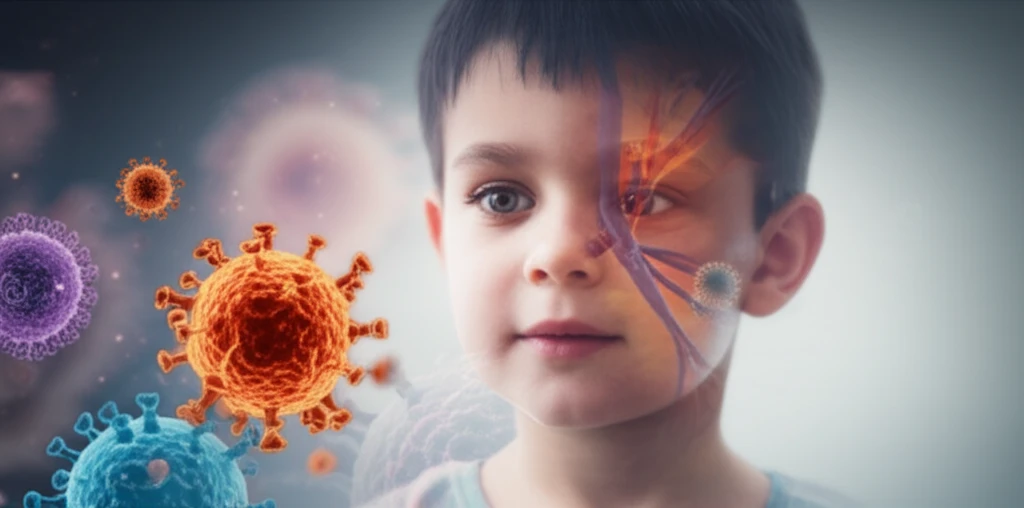
Illustration showing the connection between childhood asthma, respiratory infections, and eosinophils.

Childhood Asthma: Unlocking the Connection Between Infections and Eosinophils

"Is your child struggling with asthma? Learn how early infections and a specific type of white blood cell might be playing a surprising role."


Asthma is a complex condition influenced by both genetics and environmental factors. Understanding the underlying mechanisms is crucial for developing more effective treatments. While the role of respiratory pathogens in asthma has been extensively studied, many questions remain unanswered.

One of the key areas of interest is the potential link between early childhood infections and the development of asthma. Researchers are exploring whether certain pathogens are more likely to trigger asthma, and if these infections actually cause the disease or simply affect children who are already predisposed to it.

This article explores the interactions between respiratory infections and asthma, with a particular focus on the role of eosinophils—a type of white blood cell that is often elevated in asthma and allergy.

The Viral Culprits: How Respiratory Infections Can Set the Stage for Asthma

Illustration showing the connection between childhood asthma, respiratory infections, and eosinophils.

Many viruses and bacteria are associated with wheezing and asthma. Some pathogens, like respiratory syncytial virus (RSV), are strongly linked to wheezing illnesses and asthma exacerbations. Understanding how these early infections might lead to asthma is a major research focus.

RSV is a common virus that most children contract before age three, and it's a major cause of bronchiolitis in infants. While a direct causal relationship between RSV and asthma hasn't been definitively proven, studies indicate a connection. For example, children born just before the peak of the winter virus season, when RSV is prevalent, have a higher risk of developing asthma by age six.

  • Human Rhinovirus (HRV): Recognized as a significant cause of wheezing illnesses. Some studies suggest that HRV infections in early life can increase the risk of asthma later on.
  • Human Bocavirus (HBoV): Linked to acute wheezing in children, with some research suggesting it may play a role in asthma exacerbations.
  • Other Viruses: Parainfluenza, influenza A, and human metapneumovirus (HMPV) have also been associated with recurrent wheezing and asthma development.
These infections don't act alone. Instead, they often work together with respiratory allergies to create the perfect storm for asthma development. This combination triggers immune and physiological responses that make a child more susceptible to asthma.

Taking Action: Partnering with Your Pediatrician for Asthma Prevention

The interplay between viral and bacterial infections and asthma is complex. Understanding these connections is crucial for better prevention and management strategies. If your child is experiencing recurrent respiratory infections or showing early signs of asthma, talk to your pediatrician. Early intervention and personalized care are key to helping your child breathe easier and live a healthier life.

About this Article -

This article was crafted using a human-AI hybrid and collaborative approach. AI assisted our team with initial drafting, research insights, identifying key questions, and image generation. Our human editors guided topic selection, defined the angle, structured the content, ensured factual accuracy and relevance, refined the tone, and conducted thorough editing to deliver helpful, high-quality information.See our About page for more information.

Everything You Need To Know

1

What is the connection between childhood asthma, respiratory infections, and eosinophils?

There's a complex interplay between childhood asthma, respiratory infections, and eosinophils. Early respiratory infections, caused by pathogens like Respiratory Syncytial Virus (RSV), Human Rhinovirus (HRV), Human Bocavirus (HBoV), Parainfluenza, influenza A, and human metapneumovirus (HMPV), can increase the risk of asthma. These infections often interact with respiratory allergies. The body's response to these infections, coupled with the presence of allergens, can trigger immune responses that make a child more prone to asthma. Eosinophils, a type of white blood cell, are frequently elevated in asthma and allergies, highlighting their role in the inflammatory processes associated with both conditions.

2

Which specific respiratory infections are most strongly linked to asthma development in children?

Several respiratory infections are linked to asthma development. Respiratory Syncytial Virus (RSV) is strongly associated with wheezing illnesses and asthma exacerbations, and is a common virus that many children contract before age three. Human Rhinovirus (HRV) infections in early life can increase the risk of asthma later on. Human Bocavirus (HBoV) has also been linked to acute wheezing in children, and may play a role in asthma exacerbations. Other viruses like Parainfluenza, influenza A, and human metapneumovirus (HMPV) have also been associated with recurrent wheezing and asthma development. These infections can trigger immune responses that contribute to the onset of asthma.

3

How might early childhood infections like RSV affect asthma risk?

Early childhood infections, such as those caused by Respiratory Syncytial Virus (RSV), can significantly impact asthma risk. Studies indicate a connection between RSV and asthma development. For instance, children born just before the peak of the winter virus season, when RSV is prevalent, have a higher risk of developing asthma by age six. While a direct causal relationship hasn't been definitively proven, the association suggests that RSV and other respiratory infections could potentially trigger asthma. However, the exact mechanisms need further investigation to fully understand whether these infections directly cause the disease or affect children already predisposed to it.

4

What role do eosinophils play in asthma and how are they connected to respiratory infections?

Eosinophils are a type of white blood cell often elevated in asthma and allergies, playing a key role in the inflammatory processes associated with these conditions. They are involved in the immune response and contribute to airway inflammation. Respiratory infections can trigger an increase in eosinophils, which then exacerbate the asthma symptoms. This heightened inflammatory response, driven by both the infection and the eosinophils, can worsen the child's asthma and make them more susceptible to future episodes. Understanding the role of eosinophils helps in developing targeted treatments to manage asthma and alleviate its symptoms.

5

What steps can parents take to prevent or manage asthma in children, considering the role of infections?

Parents can take several steps to prevent and manage asthma, especially considering the role of respiratory infections. First and foremost, parents should consult their pediatrician if their child is experiencing recurrent respiratory infections or showing early signs of asthma. Early intervention and personalized care are key. Since some infections like RSV are prevalent during certain seasons, parents can take preventive measures during those times, as guided by their pediatrician. This might include avoiding exposure to infected individuals, practicing good hygiene, and potentially considering preventative medications if advised. Understanding the links between infections and asthma is crucial for better prevention and management strategies, and a close partnership with a pediatrician is highly recommended.

Newsletter Subscribe

Subscribe to get the latest articles and insights directly in your inbox.