
Cancer's New Frontier: How Cutting-Edge Theranostics Are Revolutionizing Treatment

"Combining Diagnostics and Therapy, Theranostics Offers a Personalized Approach to Cancer Care, Promising More Effective and Less Invasive Treatments."
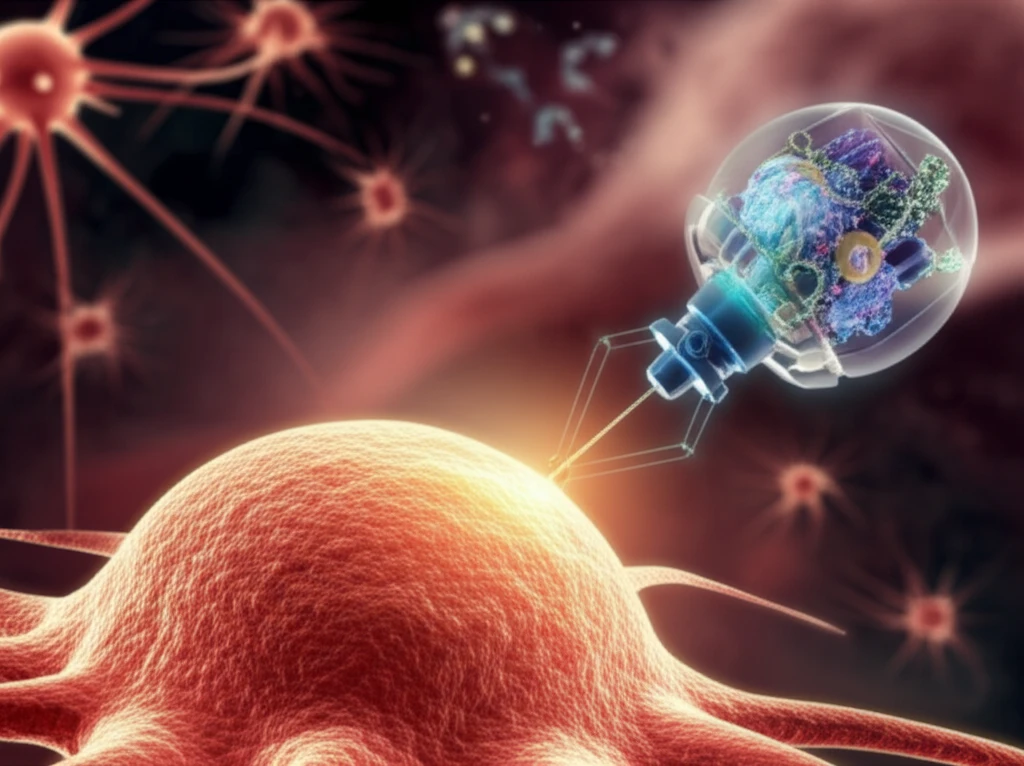
The fight against cancer has entered a new era, marked by the convergence of advanced diagnostic tools and targeted therapies. At the forefront of this revolution is theranostics, a cutting-edge medical approach that combines diagnostic imaging with therapeutic interventions. This innovative strategy allows medical professionals to pinpoint cancer cells with unprecedented accuracy and deliver treatments directly to the tumor site, minimizing harm to healthy tissues.
Unlike traditional cancer treatments that often rely on a one-size-fits-all approach, theranostics offers a personalized treatment plan tailored to each patient's unique condition. This means that doctors can select the most effective treatment options based on the specific characteristics of the tumor, leading to improved outcomes and reduced side effects. This is achieved by using a variety of methods, including antibodies, nanoparticles, and imaging techniques like PET scans.
This article dives deep into the world of theranostics, exploring its underlying principles, the technologies involved, and the significant advancements that are transforming cancer care. By understanding the power of combining diagnostics and therapy, we can gain insights into the future of cancer treatment and the promise of a healthier, brighter future.
A Growing Precision-Medicine Approach
Theranostics is an emerging approach in cancer care that links molecular diagnosis with targeted treatment. Its potential lies in using information about a tumor's biological features to help guide therapy, but its clinical impact continues to develop. Outcomes and accessibility may vary as research, validation, and implementation progress.
Targeted Treatment, Persistent Challenges
Theranostics combines diagnostic and therapeutic strategies to reduce steps in cancer care and support targeted, efficient treatment. In precision oncology, identifying molecular targets linked to an individual tumor can enable therapies based on that patient's genetic and proteomic profile. However, cancer heterogeneity and other significant challenges limit widespread application. Molecular theranostics also requires careful consideration of radiation dosimetry, including the limitations of reactive dosimetry and the potential value of predictive or pre-treatment approaches.
From Nuclear Medicine to Precision Oncology
Theranostics originated in nuclear medicine, where radioactive substances could support both diagnostic imaging and targeted therapy. Iodine-131 for the diagnostic study and treatment of thyroid cancer is described as one of its earliest applications. The modern concept developed from efforts to link therapeutic selection and delivery to diagnostic testing, an effort that gained momentum in the 1990s. In practice, the broader nuclear-medicine concept dates back more than 50 years, with peptide receptor scintigraphy and peptide receptor radionuclide therapy becoming important examples for neuroendocrine tumors.
Understanding Theranostics: A Symbiotic Approach to Cancer Treatment
Theranostics, a term derived from 'therapy' and 'diagnostics,' represents a paradigm shift in how we approach cancer treatment. At its core, theranostics is a synergistic approach that uses diagnostic tools to identify and characterize cancerous cells and then employs targeted therapies to eliminate them. This integration allows for a more precise, effective, and personalized treatment strategy.
- Improved Accuracy: Theranostics offers more precise targeting of cancer cells, reducing damage to healthy tissues.
- Personalized Treatment: Treatments are tailored to each patient's unique tumor characteristics, leading to better outcomes.
- Early Detection: Advanced imaging techniques allow for the early detection of cancer, improving the chances of successful treatment.
- Real-time Monitoring: Imaging tools enable doctors to monitor the effectiveness of treatments in real-time, allowing for adjustments as needed.
- Reduced Side Effects: Targeted therapies minimize side effects, leading to a better quality of life for patients.
Expanding Targets and Technologies
Recent reviews highlight advances in oncology PET imaging and theranostics, particularly the development of emerging radionuclides and molecular targets. These innovations are expected to broaden the scope of precision cancer diagnosis and treatment. The field is also moving beyond standalone devices toward coordinated multi-device theranostic networks. One recent review describes more than 20,000 theranostics articles published during the past decade, reflecting rapid research activity.
Promise Requires Careful Validation
The potential of molecular theranostics does not eliminate uncertainty about how treatment should be measured and optimized. A major issue is the balance between reactive dosimetry and predictive or pre-treatment dosimetry in precision radiation medicine. Reviews describe theranostics as powerful, but emphasize that challenges and limitations remain. Because the approach combines diagnosis with therapy, its benefits must be assessed alongside the practical and technical limits of radiopharmaceutical treatment.
An Integrated Alternative
Compared with approaches that separate diagnosis from treatment, theranostics is designed to connect the two within a single clinical strategy. This integration may support more targeted decision-making by using diagnostic information to identify suitable therapeutic targets. Its advantages remain conditional on accurate target identification, appropriate treatment selection, and effective clinical implementation. The approach is therefore best understood as a developing complement to established cancer-care methods rather than a universal replacement.
The Future of Cancer Care: Embracing Theranostics
Theranostics represents a pivotal advancement in cancer care, offering hope for more effective and personalized treatments. As research continues and technologies evolve, theranostics is poised to revolutionize the way we diagnose and treat cancer, paving the way for a healthier future for millions around the globe. Embrace the promise of theranostics and its potential to transform the landscape of cancer care, offering hope and improved outcomes for patients worldwide.
A Promising but Developing Discipline
Theranostics brings together molecular imaging, target identification, and treatment in an effort to make cancer care more individualized. The available material supports substantial promise, but also points to unresolved questions involving dosimetry, tumor diversity, validation, and access. Its significance will depend on whether research advances can translate into reliable, clinically useful treatment decisions.
Toward Broader Precision-Medicine Use
Future growth is expected to be driven by technological innovation that combines diagnostic and therapeutic functions for precision medicine. Market forecasts and industry analyses identify North America as a leader in the global theranostics market and describe a 2025–2032 future market scenario. Researchers and industry stakeholders are also expected to explore new disease areas and develop innovative solutions while addressing current limitations. Siemens Healthineers characterizes theranostics as one of oncology's fastest-growing fields and highlights five trends shaping its future.
Integration Beyond the Individual Treatment
The broader development of theranostics depends not only on discovering targets but also on integrating them into a wider precision-medicine strategy. This includes improving dosimetry, advancing imaging for different radionuclide therapies, and testing FDA-approved and emerging radiopharmaceuticals in clinical trials. Reviews also point to expanding existing theranostic agents into broader treatment indications. These requirements make implementation, evidence generation, and coordination across the theranostic pathway central systemic challenges.
Early Patients and Practical Applications
On April 1, 2026, Huntsman Cancer Institute reported that the first three patients had been treated in an early-stage clinical trial of a new radiopharmaceutical medicine. The treatment marked an important step in developing new cancer therapies, although an early-stage trial does not establish broad effectiveness. Real-world applications also include Alacris Theranostics' collaboration with Google Cloud Platform to better match cancer patients with drug therapies. Reported case studies describe radiolabelled antibodies for solid tumors and peptide receptor radionuclide therapy for neuroendocrine tumors.