
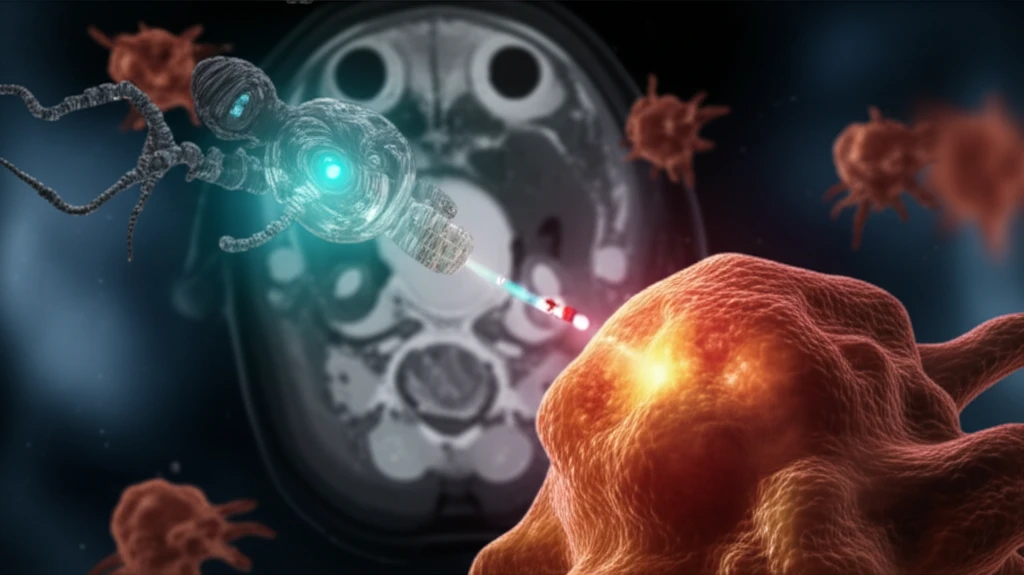
Next-Gen Theranostics: How Smart Drugs & Imaging Are Revolutionizing Cancer Treatment

"Unlocking Precision Medicine: Exploring the cutting-edge advancements in targeted drug delivery and real-time imaging for personalized cancer therapies."
The convergence of therapeutics and diagnostics, known as “Theranostics,” is revolutionizing medical approaches. This innovative field aims to integrate treatment and diagnosis into a single, streamlined process, offering unprecedented opportunities for personalized medicine. Researchers are diligently working to develop systems that not only target diseases with precision but also provide real-time feedback on treatment efficacy.
At the heart of this revolution lies the development of novel drug delivery systems (DDS). These systems are designed to deliver therapeutic agents directly to the site of disease, minimizing side effects and maximizing treatment efficacy. One promising approach involves the use of novel amphiphilic polymers to create micelle-like structures, acting as carriers for both diagnostic and therapeutic agents.
This article explores recent advancements in theranostics, focusing on the development of a novel drug delivery system combined with PET imaging for cancer treatment. We will delve into the creation of targeted therapies using human antibody fragments and explore the potential of these technologies to revolutionize cancer care.
Market Growth and Clinical Promise
The theranostics market is projected to expand at a 15.46% compound annual growth rate through 2034, driven by advances in imaging agents that unify diagnostics and therapy. This integrated approach bridges molecular imaging, biomarkers, and targeted drug delivery to achieve precision medicine, enabling simultaneous disease detection, therapy selection, and treatment monitoring. Nanomedicine implementation is advancing human disease treatment through targeted cell-specific therapy, controlled drug release, personalized dosage forms, and companion diagnostics. Theranostics with enhanced pharmacokinetic properties can increase drug efficacy and safety while reducing toxicity through targeted site delivery.
Conventional Theranostics and Current Constraints
Cancer-targeted drug delivery systems represent a promising approach to reduce side effects and improve treatment efficacy by selectively delivering therapeutic agents to tumor cells. Conventional theranostics combines diagnostics with targeted therapies using biological pathways, nanotechnology, and molecular engineering to diagnose diseases and deliver personalized treatments. However, molecular theranostics faces challenges including limitations of reactive radiation dosimetry and the need for predictive or pre-treatment dosimetry approaches. These systems must overcome hurdles in data standardization, regulatory challenges, and limited multicenter validation to achieve broader clinical adoption.
From Concept to Clinical Paradigm
Theranostics emerged as a fusion of therapy and diagnostics, representing a paradigm shift in precision medicine with the core principle of using a single molecular targeting agent to both diagnose and treat disease. Early development aimed at early diagnosis and therapy for primary tumors and metastases, offering advantages over traditional non-targeted chemotherapy drugs. Nanoparticles were engineered to carry therapeutic payloads, imaging agents, and targeting ligands, enabling multimodal theranostic approaches. A common historical failure in targeted systems involved opsonization of particles upon bloodstream entry, rendering them recognizable by the body's defense mechanisms.
What is 89Zr-Labeled PET Imaging and Why Is It a Game Changer?
Molecular imaging, a technique that visualizes biological processes at the cellular and molecular level, is transforming disease diagnosis and treatment. Modalities such as Positron Emission Tomography (PET), Single Photon Emission Computed Tomography (SPECT), Magnetic Resonance Imaging (MRI), and fluorescence imaging are now indispensable tools in modern medicine.
- Extended Imaging Window: 89Zr's half-life allows for tracking of long-circulating agents, providing insights into their biodistribution and target accumulation over several days.
- Stable Complex Formation: 89Zr forms stable complexes with chelators, ensuring that the radioisotope remains attached to the targeting molecule, providing accurate imaging data.
- Collaboration and Advancement: Okayama University, RIKEN, and Sumitomo Heavy Industries have partnered to develop 89Zr production and purification systems, making it more accessible for research and clinical applications.
Emerging Nanotheranostics and AI Integration
Recent research highlights the emergence of nanotheranostics for targeted drug delivery and real-time monitoring in neuro-oncology applications. AI-driven algorithms are being applied for improved image interpretation and therapy guidance, enhancing the precision of theranostic interventions. Current reviews emphasize the integration of biologics, theranostics, and personalized medicine in drug delivery systems to advance treatment precision. However, significant limitations persist including data standardization challenges, regulatory hurdles, and limited multicenter validation across clinical settings.
Prospects and Problems in Clinical Translation
A special issue dedicated to theranostic drug delivery explicitly acknowledges both prospects and problems, encompassing research from 14 different countries on diverse applications of theranostic techniques for disease diagnosis and cure. The collection includes multiple review papers and research articles highlighting that despite advances, significant challenges remain in clinical translation. These challenges span technical limitations in delivery systems, biological barriers, and the complexity of achieving reliable theranostic performance across diverse patient populations. The field continues to grapple with the gap between preclinical promise and clinical reality.
Theranostics Versus Conventional Approaches
Theranostic approaches fundamentally differ from conventional cancer treatments by integrating diagnostic imaging with targeted therapy in a single platform, enabling real-time treatment monitoring and dose adjustment. Traditional chemotherapy relies on systemic drug distribution with limited tumor specificity, whereas theranostics uses molecular targeting agents to concentrate therapeutic payloads at disease sites. The comparative advantage lies in the ability to visualize drug delivery, assess treatment response non-invasively, and adapt therapy based on individual patient biology. However, theranostic systems face greater complexity in development, manufacturing, and regulatory approval compared to conventional single-modality treatments.
The Future of Theranostics: Personalized Cancer Treatment is Within Reach
The theranostic approach, as described, combines multiple technological elements, each of which requires further optimization and refinement. These include the lactosome, scFv with high specificity and affinity for MSLN, CPP for cell penetration, and RNAi induction via light irradiation. At the same time, PDT based on PpIX accumulation in cancer cells via ALA administration, induction of PpIX intracellular accumulation by ABC transporter knockdown, and selective induction of apoptosis in cancer cells by light irradiation are being clarified. By integrating these technologies, it will be possible to achieve EPR effects, drug delivery via antibody-mediated active targeting, and treatment.
Converging Technologies Reshaping Oncology
The convergence of nanomedicine, molecular imaging, and targeted therapeutics is creating a new paradigm where diagnosis and treatment become inseparable components of a unified clinical workflow. Experts suggest that overcoming current limitations in particle stability, targeting efficiency, and dosimetry precision will require interdisciplinary collaboration across materials science, oncology, and regulatory science. The field's trajectory indicates a shift from reactive treatment monitoring toward predictive, pre-treatment planning enabled by advanced imaging biomarkers. Success will depend on solving manufacturing scalability and establishing standardized validation frameworks across institutions.
Expanding Horizons Beyond Oncology
The future of theranostics is positioned for transformative growth, with emerging trends poised to expand beyond cancer into new disease areas including cardiovascular and neurological conditions. Market analyses project revolutionary growth driven by increasing chronic disease incidence, escalating investments, and growing demand for targeted medicine through 2032. Researchers are exploring innovative solutions to address current limitations including improved nanoparticle engineering, AI-enhanced image analysis, and novel biomarker discovery. The next frontiers involve developing theranostic platforms capable of multi-parametric monitoring and adaptive therapy adjustment in real-time clinical settings.
Implementation Barriers in Healthcare Systems
Progress in human disease treatment through nanomedicine implementation faces systemic challenges including the need for targeted cell-specific therapy, controlled drug release mechanisms, and personalized dosage forms that integrate with existing healthcare infrastructure. Companion diagnostics require co-development and co-approval pathways that current regulatory frameworks are still adapting to accommodate. Wearable drug delivery systems and point-of-care imaging integration present opportunities but demand new reimbursement models and clinical workflow redesign. The complexity of translating theranostic platforms from bench to bedside involves navigating intellectual property, manufacturing standards, and health equity considerations across diverse populations.
Patient-Centered Outcomes and Access
The ultimate promise of theranostics lies in its potential to transform the patient experience from passive treatment recipients to active participants in precisely monitored, adaptive care pathways. Real-world impact will be measured not only by tumor response rates but by quality of life preservation, treatment personalization, and reduction of unnecessary toxicities that burden patients and caregivers. Equitable access to these advanced platforms remains a critical concern as healthcare systems grapple with cost-effectiveness thresholds and infrastructure requirements for molecular imaging-guided therapy. Patient advocacy and community engagement will be essential in shaping clinical trial designs and implementation strategies that reflect diverse patient needs and values.