
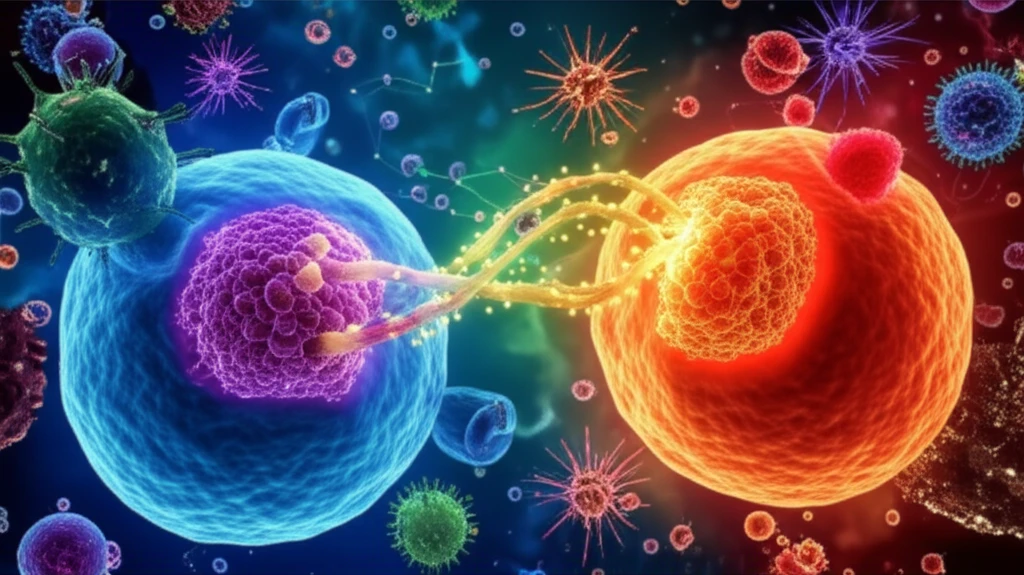
Cancer cells undergoing immunological cell death, surrounded by activated immune cells.

Can This New Compound Make Cancer Treatment Less Toxic?

"Researchers are exploring EY-6, a chemotherapeutic candidate, for its potential to selectively kill tumor cells while boosting the body's immune response and reducing harm to healthy cells."


The quest for effective cancer treatments that minimize harm to healthy cells is a long-standing challenge in medical science. Traditional chemotherapy, while often effective in killing cancer cells, can also damage healthy tissues, leading to a range of side effects that significantly impact a patient's quality of life.

Now, a new study is offering hope for a less toxic approach to cancer treatment. Researchers have been investigating a compound called EY-6 for its potential to induce immunological cell death in human tumor cell lines. This type of cell death not only eliminates cancerous cells but also stimulates the immune system to recognize and attack similar cells, potentially preventing the cancer from spreading or returning.

This article explores the exciting possibilities of EY-6 as a new type of immuno-chemotherapeutic agent, examining how it works, which types of cancers it may be effective against, and what challenges and future research lie ahead.

How Does EY-6 Trigger Immunological Cell Death?

Cancer cells undergoing immunological cell death, surrounded by activated immune cells.

Immunological cell death (ICD) is a form of programmed cell death that triggers an immune response. Unlike other forms of cell death, ICD causes the dying cell to release signals that attract immune cells, such as dendritic cells (DCs), which then present tumor-associated antigens to T cells, leading to a targeted immune response against the cancer.

The study, published in Immune Network, investigated EY-6's ability to induce ICD in several human tumor cell lines, including colon carcinoma (HCT15, HCT116), gastric carcinoma (MKN74, SNU668), and myeloma (KMS20, KMS26, KMS34) cells. The researchers found that EY-6 treatment led to cell death in these lines in a dose-dependent manner, meaning that higher concentrations of EY-6 resulted in greater cell death.

The study highlighted several key mechanisms of EY-6-induced ICD:
  • CRT Exposure: EY-6 treatment increased the expression of calreticulin (CRT) on the surface of colorectal and gastric cancer cells. CRT is an "eat-me" signal that encourages immune cells to engulf and destroy the dying cancer cells.
  • Cytokine Secretion: EY-6 stimulated the secretion of immune-stimulating cytokines, such as IFN-γ and IL-12, from treated tumor cells. These cytokines play a crucial role in activating and directing the immune response against the tumor.
  • Selective Toxicity: Importantly, EY-6 demonstrated the ability to kill tumor cells without harming normal immune cells, suggesting a potential for reduced side effects compared to traditional chemotherapy.
These findings suggest that EY-6 has the potential to act as an immuno-chemotherapeutic agent, directly killing cancer cells while also stimulating the immune system to mount a targeted attack against the remaining tumor.

The Future of Cancer Treatment with EY-6

While these early results are promising, further research is needed to fully understand the potential of EY-6 as a cancer treatment. Future studies will focus on confirming the efficacy of EY-6 in in vivo models, optimizing its delivery and dosage, and identifying potential biomarkers to predict which patients are most likely to benefit from this therapy. As cancer treatment evolves, compounds like EY-6 offer hope for therapies that are not only effective but also kinder to the body, harnessing the power of the immune system to fight cancer from within.

About this Article -

This article was crafted using a human-AI hybrid and collaborative approach. AI assisted our team with initial drafting, research insights, identifying key questions, and image generation. Our human editors guided topic selection, defined the angle, structured the content, ensured factual accuracy and relevance, refined the tone, and conducted thorough editing to deliver helpful, high-quality information.See our About page for more information.

Everything You Need To Know

1

What is EY-6, and how does it differ from traditional chemotherapy?

EY-6 is being explored as a chemotherapeutic candidate with the potential to selectively kill tumor cells while also stimulating the body's immune response. This differs from traditional chemotherapy, which can harm healthy cells alongside cancerous ones. EY-6 aims to induce immunological cell death (ICD) in tumor cells, which not only eliminates the cancerous cells but also alerts the immune system to target similar cells, potentially preventing the cancer from spreading or recurring. The implications of this are significant, as it could lead to less toxic and more effective cancer treatments.

2

What is immunological cell death (ICD), and why is it important in the context of cancer treatment?

Immunological cell death (ICD) is a type of programmed cell death that triggers an immune response. When cells die through ICD, they release signals that attract immune cells like dendritic cells (DCs). These dendritic cells then present tumor-associated antigens to T cells, initiating a targeted immune response against the cancer. This is significant because it harnesses the body's own immune system to fight the cancer, potentially leading to more effective and longer-lasting treatment outcomes. Traditional chemotherapy doesn't necessarily stimulate this kind of immune response, which is a key difference.

3

How does EY-6 stimulate the immune system to target cancer cells?

The study found that EY-6 treatment increased the expression of calreticulin (CRT) on the surface of colorectal and gastric cancer cells. Calreticulin acts as an "eat-me" signal, encouraging immune cells to engulf and destroy the dying cancer cells. EY-6 also stimulated the secretion of immune-stimulating cytokines, such as IFN-γ and IL-12, from treated tumor cells. These cytokines play a crucial role in activating and directing the immune response against the tumor. The importance of this is to boost the immune system.

4

Does EY-6 harm healthy cells, and why is that important?

EY-6 demonstrated the ability to kill tumor cells without harming normal immune cells. This is a crucial finding because it suggests that EY-6 has the potential to cause fewer side effects compared to traditional chemotherapy, which often damages healthy tissues along with cancerous ones. The selective toxicity of EY-6 could significantly improve a patient's quality of life during cancer treatment. The implications could mean a less toxic and more effective treatment option.

5

What are the next steps in researching EY-6 as a cancer treatment?

Future studies will focus on confirming the efficacy of EY-6 in in vivo models (i.e., within living organisms), optimizing its delivery and dosage, and identifying potential biomarkers to predict which patients are most likely to benefit from this therapy. This is important because it will help researchers understand how EY-6 works in a more complex biological environment, determine the most effective way to administer the drug, and identify the patients who are most likely to respond positively to the treatment. Additional, yet unmentioned, research will explore long-term effects and potential resistance mechanisms.

Newsletter Subscribe

Subscribe to get the latest articles and insights directly in your inbox.