
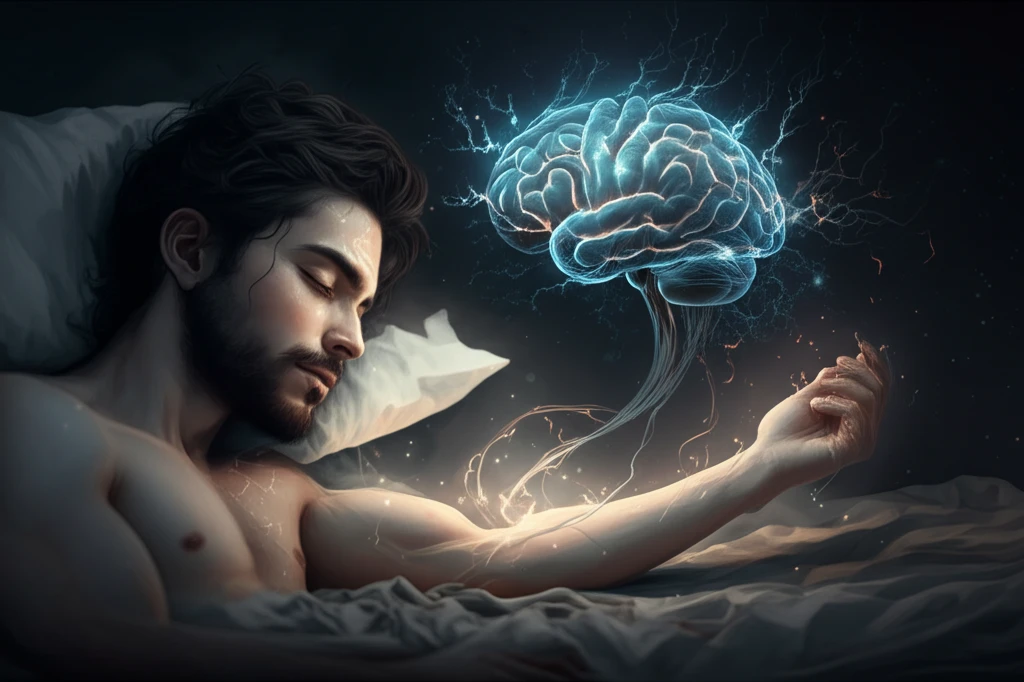
Can Subthreshold Brain Stimulation During Sleep Improve Cognitive Function?

"Exploring the potential of rhythmic electrocutaneous stimulation to enhance sleep quality and cognitive processing."
We all know a good night's sleep is essential. It’s when our bodies repair themselves, and our minds consolidate memories. But what if we could enhance the benefits of sleep even further? Scientists have been exploring ways to influence sleep quality using various methods, including rhythmic stimulation. One intriguing approach involves low-frequency subthreshold electrocutaneous stimulation—essentially, gently stimulating the skin with a mild electrical current during sleep. The goal? To deepen sleep and improve cognitive functions.
Researchers have previously shown that this type of stimulation can improve sleep quality, but the underlying mechanisms are not fully understood. One key area of interest is how the brain processes sensory information during sleep. Event-related potentials (ERPs), which measure the brain's electrical activity in response to specific stimuli, offer a window into this process. By studying how these potentials change during stimulation, we can gain insights into how the brain adapts and learns during sleep.
A recent study delved into the characteristics of somatosensory event-related potentials (sERPs) during rhythmic subthreshold electrocutaneous stimulation. The focus was on understanding how the brain habituates to this stimulation during the slow-wave stage of daytime sleep. Habituation, a simple form of learning where the brain becomes less responsive to repeated stimuli, plays a crucial role in filtering out irrelevant information and optimizing cognitive processing.
How Does Subthreshold Stimulation Affect the Brain During Sleep?
The study, conducted by researchers at the Institute of Higher Nervous Activity and Neurophysiology in Russia, investigated the effects of rhythmic (1 Hz) subthreshold electrocutaneous stimulation on sERPs during the slow-wave stage of daytime sleep. Slow-wave sleep is the deepest stage of non-rapid eye movement (NREM) sleep, characterized by slow, high-amplitude brain waves and reduced sensory awareness.
- Participants: 18 healthy subjects (11 men, 7 women) aged 19-25 years.
- Stimulation: Subthreshold electrocutaneous stimulation (1 Hz) applied to the forearm during slow-wave sleep.
- Data Recording: EEG, electrooculogram, and electromyogram recorded to monitor brain activity and sleep stages.
- sERP Analysis: Event-related potentials (sERPs) analyzed to assess brain responses to stimulation.
What Does This Mean for the Future of Sleep Therapy?
The findings suggest that the brain's ability to habituate to rhythmic stimulation during sleep may play a role in the effectiveness of this type of sleep therapy. By reducing the brain's sensitivity to repetitive stimuli, habituation may promote deeper, more restorative sleep. This could open new avenues for improving sleep quality and enhancing cognitive function in individuals with sleep disorders or cognitive impairments. Additional research is needed to fully understand the mechanisms underlying habituation and to optimize stimulation parameters for maximum therapeutic benefit.