
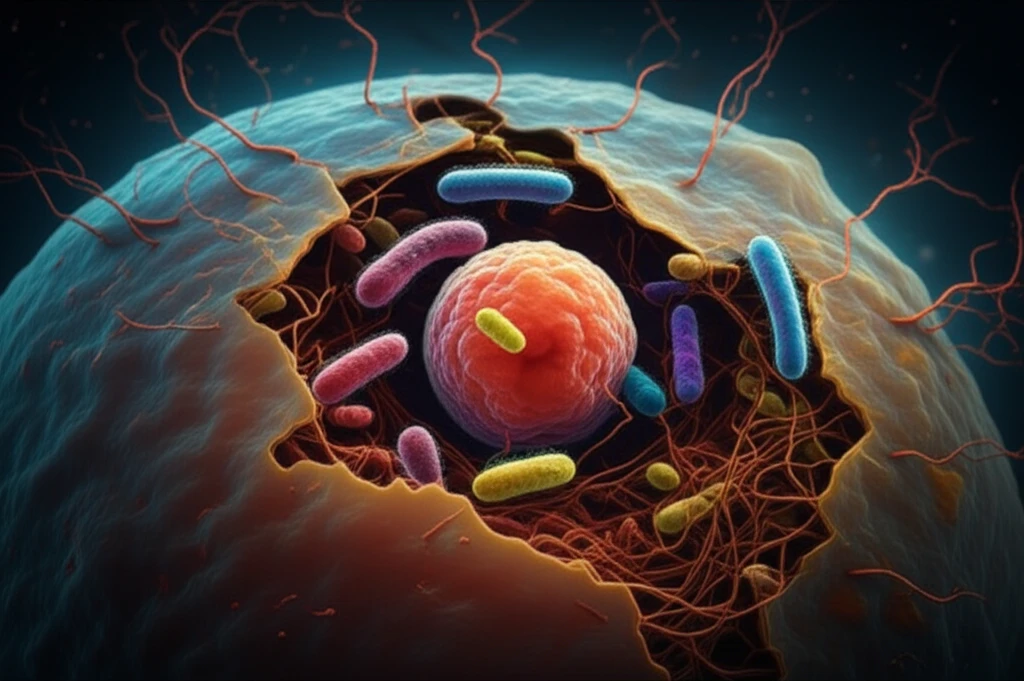
Can Chlamydia Hijack Your Cells? The Truth About This STD's Survival Tactics

"New research reveals how Chlamydia's survival strategy might not be as foolproof as scientists once thought, opening doors to better treatments."
Chlamydia trachomatis is a sneaky bacterium. As the culprit behind many ocular and sexually transmitted infections, it has a reputation for being difficult to eradicate. A key reason for this lies in its ability to manipulate the inner workings of our cells.
For years, scientists believed that Chlamydia had a near-perfect strategy: prevent infected cells from undergoing apoptosis, a form of programmed cell death. By blocking this process, the bacteria could maintain a safe and resource-rich environment, known as a replicative niche, until it was ready to spread to new cells.
However, recent research is challenging this long-held assumption. A study published in Cell Death & Differentiation sheds light on how Chlamydia's anti-apoptosis tactics aren't always successful, and how infected cells can still be vulnerable to other forms of cell death. This discovery could pave the way for novel treatment strategies that target these weaknesses.
When Chlamydia's Shield Fails: Necrosis Takes Over
The researchers discovered that while Chlamydia does protect cells from apoptosis in the early and middle stages of infection, this protection isn't absolute. When infected cells are exposed to pro-apoptotic stimuli—triggers that normally induce programmed cell death—they don't simply survive unscathed. Instead, they often succumb to necrosis, a more chaotic and inflammatory form of cell death.
- Timing Matters: Necrotic death occurred at a similar pace to apoptosis in uninfected cells, suggesting Chlamydia couldn't significantly extend the host cell's lifespan under stress.
- Bacterial Involvement: Inhibiting bacterial protein synthesis partially prevented necrotic death, indicating the bacteria actively contribute to the switch from apoptosis to necrosis.
- TNF-α's Role: Tumor necrosis factor alpha (TNF-α), a molecule that can trigger necrosis, induced cell death in infected cells through pathways that bypassed typical necroptosis regulators (RIPK1, RIPK3, or MLKL). Instead, it depended on CASP8.
What Does This Mean for Future Treatments?
This research highlights that Chlamydia's control over cell death is more complex than previously appreciated. By understanding the specific pathways that lead to necrosis in infected cells, scientists can explore new therapeutic targets. Instead of solely focusing on preventing infection, future treatments might aim to trigger or enhance necrotic death in infected cells, ultimately reducing the spread of this common STD. The key is to find ways to exploit these vulnerabilities without harming healthy cells.