
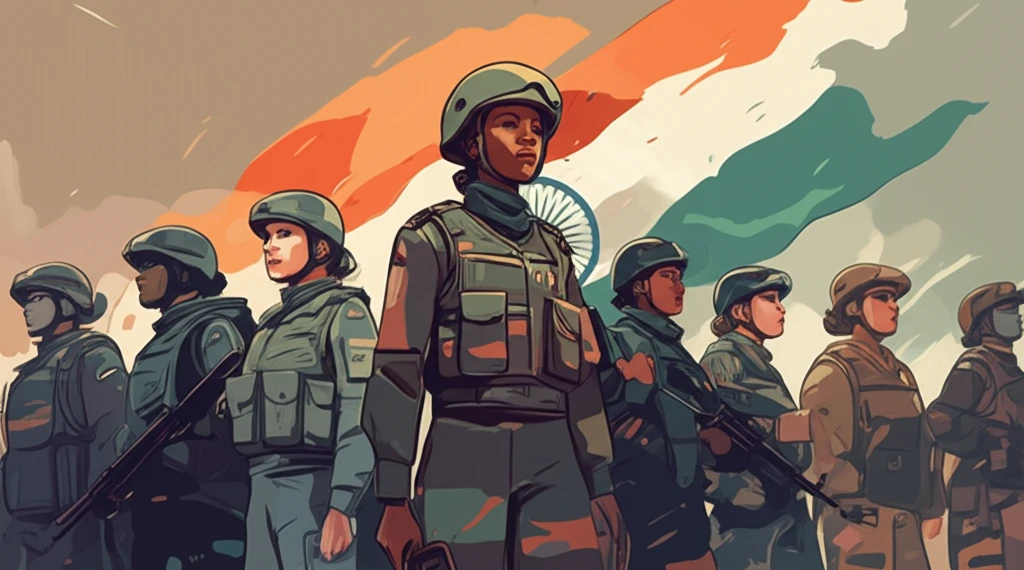
Breaking Barriers: How HR Policies Can Drive Gender Equality in the Indian Army

"Explore the impact of human resources strategies on promoting inclusivity and empowering women within the ranks of the Indian Army."
Inclusion isn't just a buzzword; it's about creating a sense of belonging, where everyone feels valued and respected. In today's world, organizations are increasingly recognizing the importance of a diverse workforce. A gender-inclusive environment isn't just the right thing to do, it significantly boosts performance.
The Indian Army, a traditionally male-dominated institution, is also evolving. This article explores the connection between HR policies and gender inclusion in the Indian Army. It examines how current strategies are shaping opportunities for women and what changes are needed to create a truly equitable environment.
Based on insights from officers across different branches and extensive research, this analysis dives deep into the existing policies, identifies areas for improvement, and highlights the path toward effective gender inclusion. It's about understanding not just the 'what,' but the 'how' – how policies can translate into tangible change.
Defining the Terms: Biological Sex vs. Social Gender
Any discussion of gender equality in the Indian Army must begin with a clear working definition of gender itself. Among scholars of gender and sexuality, a consistent delineation is drawn between sex—the biological marker tied to chromosomes, hormones, and reproduction—and gender, which encompasses behavioral, cultural, and psychological traits (Merriam-Webster; Simply Psychology). Gender is understood as a socially constructed category encompassing the roles, behaviors, activities, and expectations a society attaches to femininity and masculinity. The word is commonly used to describe how people express masculine or feminine traits, traits largely shaped by cultural norms rather than anatomy. Because these roles are social rather than biological, they are subject to change through policy, which is precisely why institutional reform can meaningfully shift outcomes in an organization as defined by norms as the military.
Policy Levers and Their Known Constraints
Conventional approaches to advancing gender equality in uniformed organizations generally rely on a combination of legislative mandates, revised recruitment and promotion criteria, and accommodations intended to level the playing field across inherently uneven physical and administrative grading systems. In general terms, these methods aim to remove formal barriers first—such as entry restrictions—before addressing the subtler cultural and institutional biases that persist after formal rules are changed. The accepted methods are widely regarded as necessary first steps, yet they face well-documented limitations, including slow cultural change, the persistence of informal networks and stereotypes, and the difficulty of measuring progress in areas that resist quantification. As such, the effectiveness of any individual reform typically depends less on its formal provisions than on sustained leadership commitment and the strength of the surrounding accountability structures, which vary considerably across institutions.
Gender Identity as a Foundational Concept
A foundational concept underpinning modern gender policy is that of gender identity, which refers to how a person identifies themselves concerning their gender. According to MedicineNet, this identification may operate regardless of a person's anatomy or genetics, meaning an individual may identify as male, female, neither, both, or some other category independent of their biological sex characteristics. This understanding shifts the emphasis from externally assigned traits to internal self-identification, a shift that has informed how institutions frame inclusion and accommodation. The recognition that identity need not correspond to visible or biological markers helps explain why equality policies in forces like the Indian Army increasingly address identity, culture, and individual dignity alongside formal access and representation.
Why Gender Inclusion Matters in the Modern Army: Beyond the Battlefield
For decades, the presence of women in the military, particularly in the Indian Army, was largely confined to nursing roles. Times have changed. Today, a gender-inclusive army is about leveraging diverse perspectives and skill sets to enhance overall effectiveness. It's about recognizing that talent knows no gender.
- Increased Innovation: Diverse teams are more likely to generate creative solutions.
- Improved Decision-Making: Different perspectives lead to more well-rounded assessments.
- Enhanced Organizational Performance: Inclusive environments attract and retain top talent.
- Stronger Public Image: A commitment to gender equality boosts public trust and support.
An Emerging but Evolving Evidence Base
Research on gender integration in military institutions is a developing field, and current findings should be treated as provisional rather than settled. Recent studies and reviews generally point in a similar direction: that formal inclusion policies can improve representation and morale, but that outcomes depend heavily on implementation details and institutional culture. However, the evidence base remains relatively small and heavily drawn from a few well-studied armed forces, which limits how confidently conclusions can be generalized to other national contexts such as India's. Much of the existing literature also focuses on recruitment and retention metrics rather than on the deeper questions of career progression, operational effectiveness, and lived experience over time. Consequently, practitioners should interpret current research as a useful starting point for experimentation and evaluation rather than as a definitive playbook.
Resistance, Setbacks, and Unfinished Reforms
Attempts to expand gender equality within armed forces have regularly encountered counterarguments rooted in concerns about physical standards, unit cohesion, and operational readiness. Such objections are often raised proactively whenever entry roles or combat positions are opened to women, reflecting genuine debates within the professional military community. Beyond open opposition, reforms have also been weakened by subtler failures, including uneven enforcement, slow changes to informal culture, and inadequate infrastructure and support systems. In several cases internationally, policies were adopted on paper only to be hollowed out in practice by assignment patterns, promotion bottlenecks, and facility constraints. These experiences suggest that the gap between policy intent and observable outcome is a recurring pattern rather than an isolated exception to be treated as a likely risk in any ambitious reform program.
Comparisons Across Contexts: Useful but Cautious
Comparative analysis of gender integration across different nations' militaries can offer instructive parallels, though such comparisons must be drawn with care. Armed forces differ widely in role definitions, recruitment models, social expectations, and political oversight, all of which shape how gender policies play out in practice. A policy that succeeds in one national context may translate poorly to another where distinct cultural, demographic, or operational conditions prevail. Comparative findings, especially those still emerging from ongoing reforms, should therefore be read as directional insights rather than settled conclusions. Used judiciously, cross-country comparison can still help identify recurring enablers—such as leadership sponsorship and transparent progress tracking—that appear to matter across multiple settings.
The Path Forward: Building a Truly Inclusive Army
The journey toward gender inclusion in the Indian Army is ongoing. While progress has been made, there are still challenges to overcome. By prioritizing HR policies that promote equality, address biases, and create a supportive environment, the Indian Army can unlock the full potential of its workforce and build a stronger, more effective fighting force for the future. The key is to move beyond symbolic gestures and implement concrete changes that create lasting impact. This requires commitment from leadership, engagement from all personnel, and a continuous process of evaluation and improvement.
Small Steps, Larger Architecture
Synthesizing the available discussion, the path to gender equality in the Indian Army is best understood not as a single transformative event but as a layered process of formal reform, cultural change, and sustained accountability. Expert commentary in this space generally converges on the view that entry and representation milestones, while essential, only mark the beginning of the journey. The harder work lies in ensuring that women can progress, serve, and lead on equal terms once they are inside the institution, which requires attention to promotions, postings, infrastructure, and everyday conduct. A common conclusion is that durable change depends on treating equality as an institutional priority rather than a compliance exercise, with progress measured transparently over long time horizons.
Where the Reform Agenda May Head Next
Looking ahead, the frontier of gender policy in military institutions is likely to move beyond recruitment access toward deeper questions of career trajectory, senior leadership representation, and the redesign of service conditions around the realities of a mixed workforce. Future reforms may increasingly emphasize flexible structures, mental health and family support, and deliberate pathways into senior command roles. Emerging areas such as technology-enabled remote roles and changes in how physical and cognitive standards are assessed may also reshape the terms of the debate, potentially enlarging the pool of roles open to women. While specific projections are inherently uncertain, the general direction of international practice suggests a steady broadening of both role availability and institutional accountability. The pace of change, however, will ultimately be determined by leadership intent and the strength of the supporting policy architecture within India itself.
Entrenched Institutions Move Slowly
Gender reforms in a large, hierarchical institution like a national army sit within a broader context of systemic challenges that are larger than any single personnel policy. Deep-seated cultural assumptions about gender, long institutional histories, and structures that were designed around a single gender profile all create inertia that formal policy alone may struggle to overcome. Systemic challenges also include wider societal norms, regional variations in expectations, and the resource demands of providing accommodation, facilities, and support on par with men's. Because these forces are mutually reinforcing, isolated reforms often produce limited results unless accompanied by changes across the institution's broader ecosystem. Realistic planning for gender equality therefore requires anticipating friction across multiple dimensions—cultural, procedural, and material—simultaneously.
People, Morale, and Lived Experience
At its core, the debate over gender equality in the armed forces is about people—the individuals whose careers, dignity, and sense of belonging are shaped by institutional rules and culture. Real-world impact appears in the everyday experiences of service members: whether they are posted equitably, mentored fairly, and able to balance service with family responsibilities. Improvements in these human dimensions are widely thought to influence morale, retention, and the willingness of capable women to commit to long-term careers. Conversely, where policies fail at the human level—through subtle bias, isolation, or inadequate support—even well-designed formal rules lose their intended effect. Sustained attention to lived experience, including feedback from within the ranks, is therefore essential to converting policy change into genuine and durable equality.